See Part 1 (#1-12) Here…
13. Sonic Prime Dash (2023)
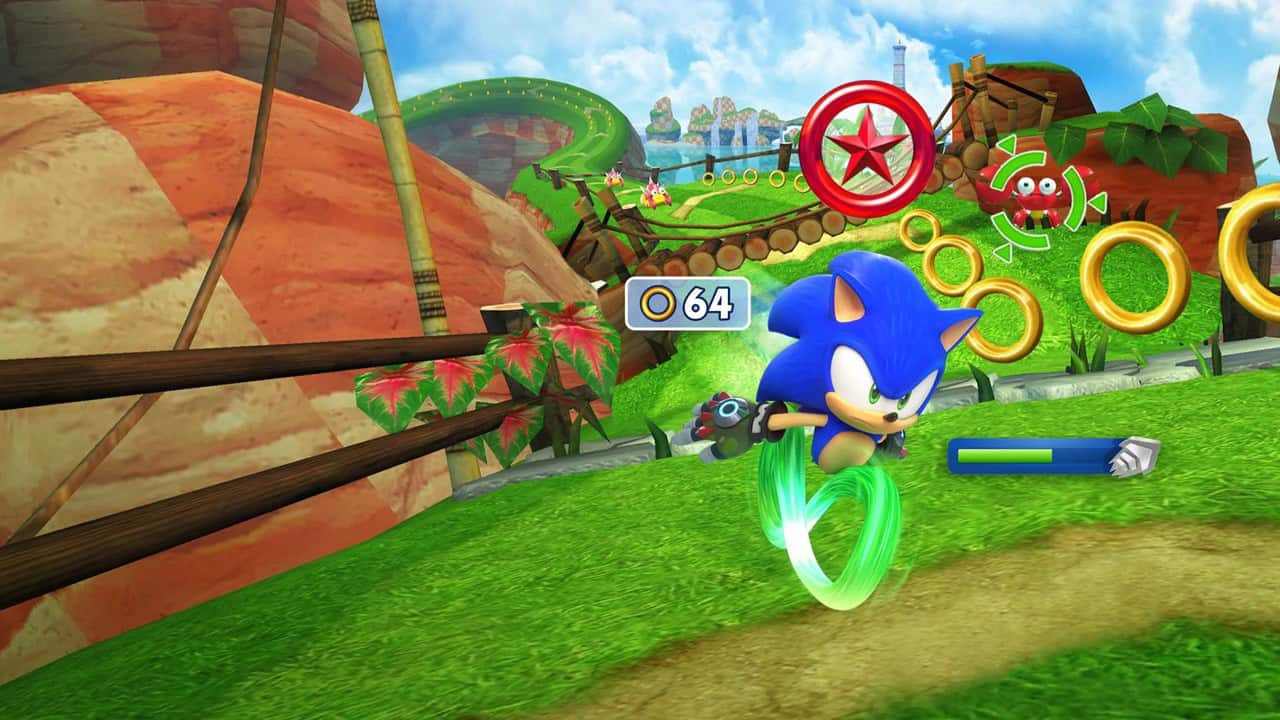
The first mobile game on our list, Sonic Prime Dash is Netflix’s sequel to the once excellent Sonic Dash. Like all Netflix games, it has no ads, no microtransactions, and no pay-to-win mechanics. Sonic Dash would be in this spot if it were still in its original state, but in modern times it’s one of those mobile games you cannot go more than a minute without seeing an ad, with the game constantly prompting you to watch more ads for power-ups. Sonic Prime Dash simply updates the character designs to match the animated Netflix series Sonic Prime and presents what is more or less the same infinite runner game. It also has the benefit of working vertically and one-handed! It’s fun, easy to pick up for three minutes at a time, and well designed. All in all, this is the best experience you can get as far as mobile Sonic games.
14. Sonic Generations (2011)

This is probably a contentious position for Sonic Generations, as fans tend to speak very highly of it, but we have officially reached the section of this list where the games become… fine. Sonic Generations has players control both Modern Sonic from the 3D games and Classic Sonic from the 2D games, each with their own stages and their respective number of dimensions. Generations acts as a highlight reel, remixing the best stages from Sonic the Hedgehog all the way to Sonic Colors. While Classic Sonic controls much like he used to, the 2D levels are very poorly designed and generally are a slog to get through. There is often just one or two feasible paths to clear these stages, and it requires constant starting and stopping. The 3D stages are better, but the boost gameplay still makes them feel too slow. It does have a fun story and amazing visuals, so it evens out to a pretty good time, but with half the game being downright bad and the other half being a worse version of past games, I can’t muster the excitement for it that many other fans do.
15. Sonic Colors (2010)
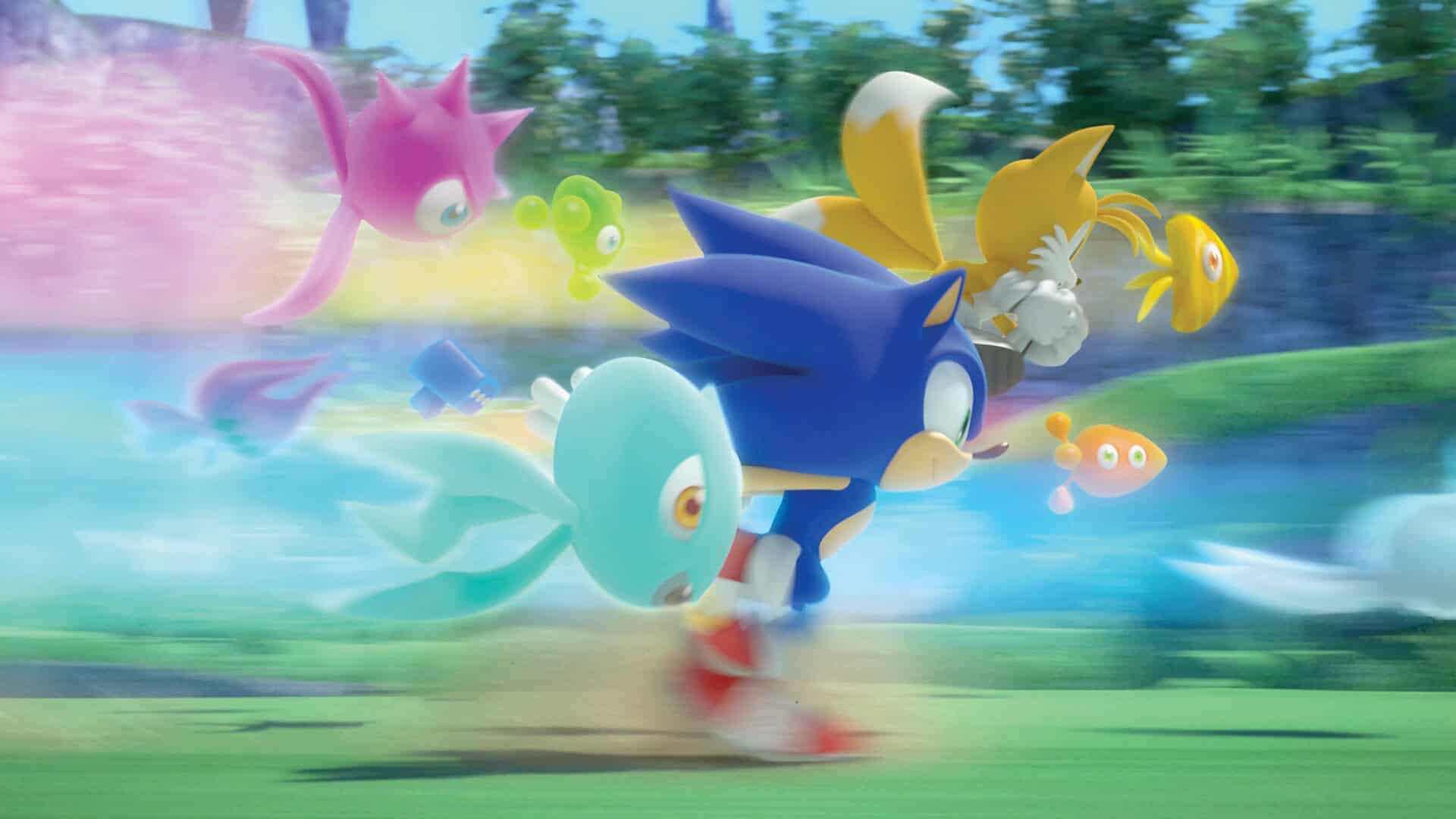
Much like Sonic Generations, the Nintendo Wii-exclusive Sonic Colors stands out in memory as a good game because it was surrounded by what I’d conservatively call garbage-tier games. Playing through Sonic Colors Ultimate, the multi-platform remaster, will be enough to remind you that Colors is actually pretty boring. The level design is very straightforward and uninspired, with full reliance on the boost gameplay that essentially makes the entire game collecting wisps and boosting and repeating. The challenges aren’t very fun, and although Sonic controls very well, he’s given next to nothing to do. I do love the space visuals though, so points for that, although at the time it was very hard to believe it wasn’t aping Super Mario Galaxy from a few years prior. Regardless, Sonic Colors is inoffensive, and revisiting it without the awful taste of the Storybook Chronicles games still on your tongue will make you realize it was never that sweet.
16. Sonic Battle (2003)
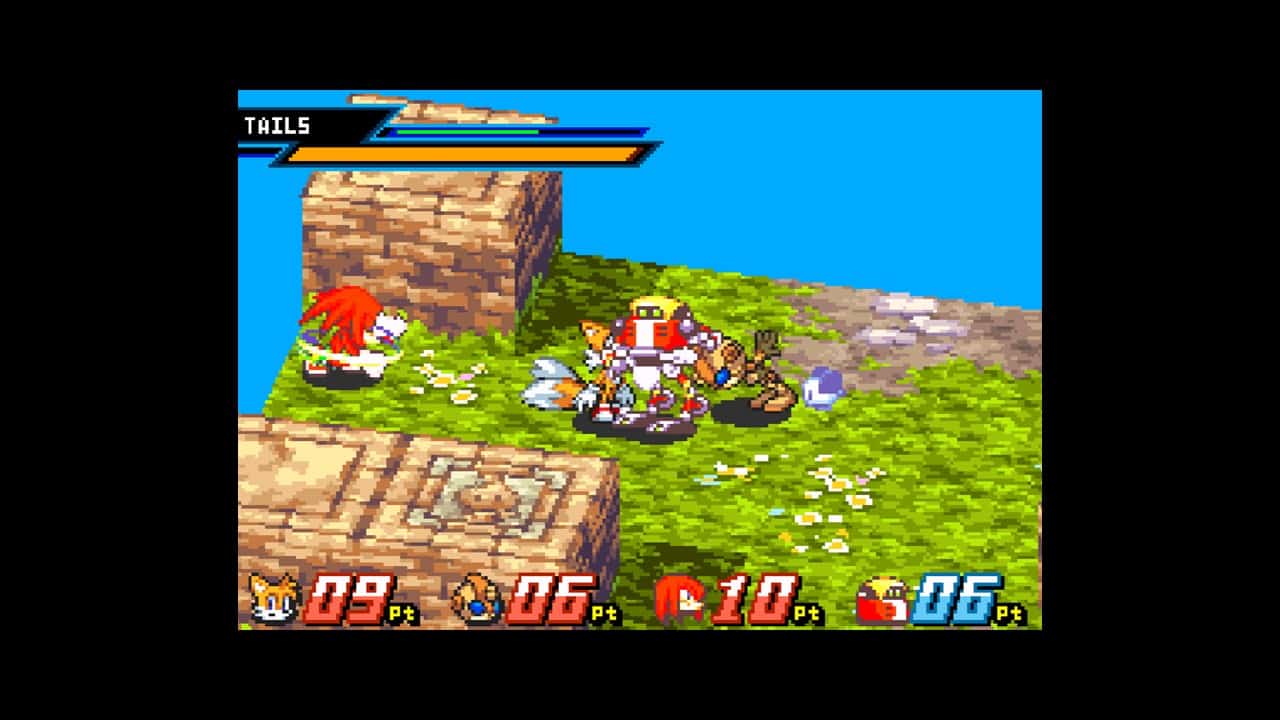
One of the franchise’s very few fighting games, Sonic Battle was a strange isometric brawler for the Game Boy Advance. Players controlled one of ten characters who were themselves 2D, although in a 3D arena. You could move around in 3D space as 2D sprites, much like in Square Enix’s 2D-HD games like Octopath Traveler. I have to assume this was a compromise for the weaker Game Boy Advance hardware, but it did make the hitbox tracking for a fighting game a bit hard to understand. It’s kind of an unremarkable entry in the series, but was solid fun for a few hours before you realize there isn’t much mechanical depth. There is a story mode, which is full of insane lore, as is the want of this franchise, but it’s obviously better playing against a friend. Again, the only world I can conjure is inoffensive.
17. Sonic Advance 3 (2004)

While still a perfectly fine game, Sonic Advance 3 has too much going on to reach the bar set by the previous two games. It becomes unfocused, like so many games on this list, by adding in features that don’t complement the core gameplay loop. You’ll control one of five characters partnered with one of the others and traverse 2D levels, this time with 3D animations. The unique thing about Advance 3 is the team-up mechanic, where each unique combination of characters results in different powers. Some are useful, like Sonic + Cream, which allows Sonic to breathe underwater. Some are seemingly detrimental, like how Tails + Amy makes it so Tails does not automatically enter ball mode when jumping, but can enter it by pressing B again. With 25 team-up powers at your disposal, there’s way too much to remember, and much of it does not improve the game. But, again, a fine game.
18. Sonic Riders (2006)
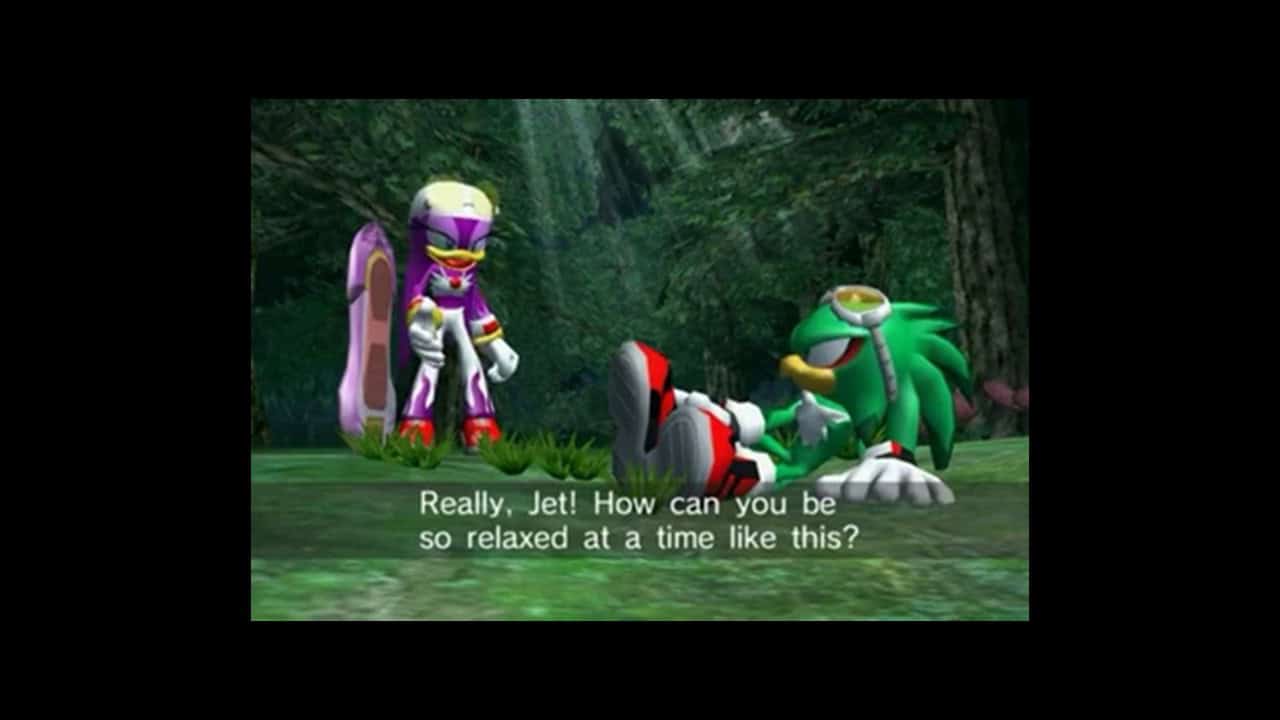
I know a number of fans have a nostalgic love for Sonic Riders, a perfectly good air-board racing game, but it’s a fairly shallow game that is near impossible to control. However, it did introduce us to the Babylon Rogues, a future air-boarding gang of teen birds that were too cool for school, including Jet the Hawk, Storm the Albatross, and Wave the Swallow. The Babylon Rogues are essentially just a copy-paste of Sonic, Tails, and Knuckles, but edgier! You’ll notice that throughout Sonic’s history, SEGA keeps deeming him to not be cool enough and introduces a subsequent new, slightly edgier guy. First Knuckles, then Shadow, then Jet, then Mephiles, then Infinite… Regardless, the Babylon Rogues have been cool enough to stick around in Sonic games to this day, doing this or that in the background. Sonic Riders controls extraordinarily poorly and is a game you have to already be great at to really enjoy, so proceed with caution.
19. Mario & Sonic at the 2008 Olympic Games (2007)
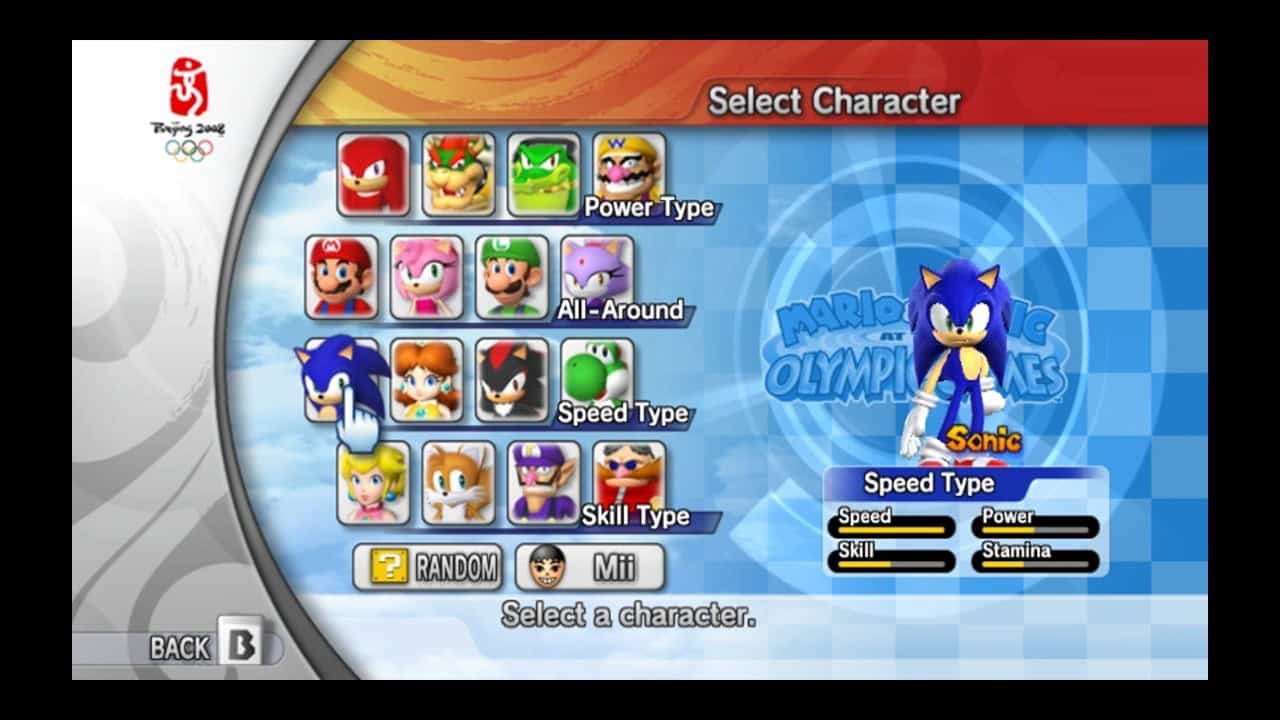
It’s likely that most of you have played at least one of the games in the Mario & Sonic at the Olympic Games series. This first game in the series, when the mascots finally met to face off for the first time, was a huge deal for fans. With a squad of characters from both universes, players could grab their Wii remotes to play through a single-player mission mode or engage in multiplayer shenanigans. All of the events were real Olympic events being played at the 2008 games in Beijing, and the game was set in a sort of cyberpunk near-future version of the Chinese capital city as well. Each event used the real rule sets from the Olympics too, with a few dream events allowing characters to get a little more crazy and use their powers. All in all, this was a fun game, but the fact that the only difference between Vector the Crocodile and Luigi was that one was a little better at power-based events kind of made all the characters feel the same. Still, it’s a decent collection of 24 mini-games, and there are cutscenes where Mario and Sonic high-five. What more do you want?
20. Sonic Rush (2005)
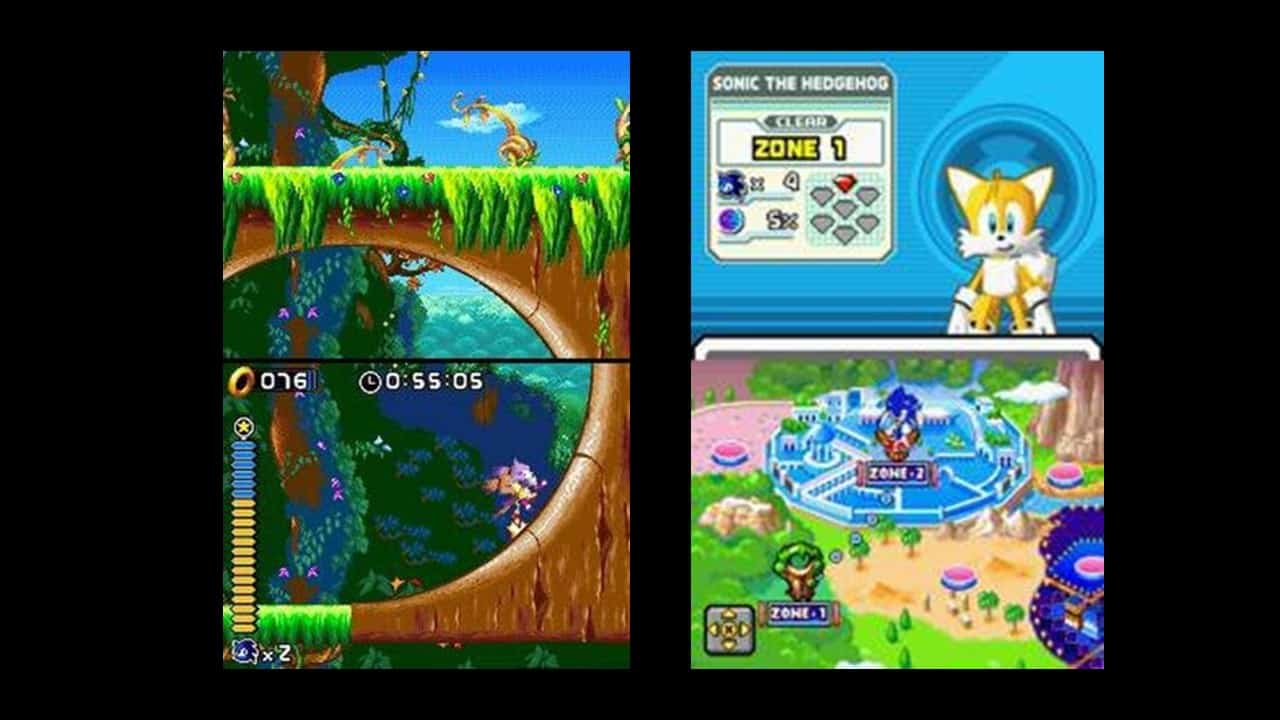
Sonic Rush, known as Sonic DS in Japan, introduced the world to a core member of the cast, Blaze the Cat. She’s an inter-dimensional princess who has crossed millions of timelines to save the Sol Emeralds, which are like the Chaos Emeralds but not, and she needs Sonic’s help! You’ll alternate playing as Sonic and Blaze to defeat Eggman and save the emeralds. Sonic Rush looked beautiful when it launched, and took full advantage of the higher quality graphics the Nintendo DS could handle. The problem is that, like many of the 2D games, the characters move so quickly it is impossible to control them and do any actual platforming. Wanna jump on a ledge? Come to a full stop, carefully jump, and then slowly start running again. There are some interesting boss fights in 3D stages as well, but I think Sonic Rush‘s biggest crime is just being forgettable. It actually got wildly positive reviews at launch, which surprised me looking back on it, but the DS was the shiny new toy of the year and having a game utilize the dual screens without stylus-only controls was noteworthy on its own.
21. Shadow the Hedgehog (2004)
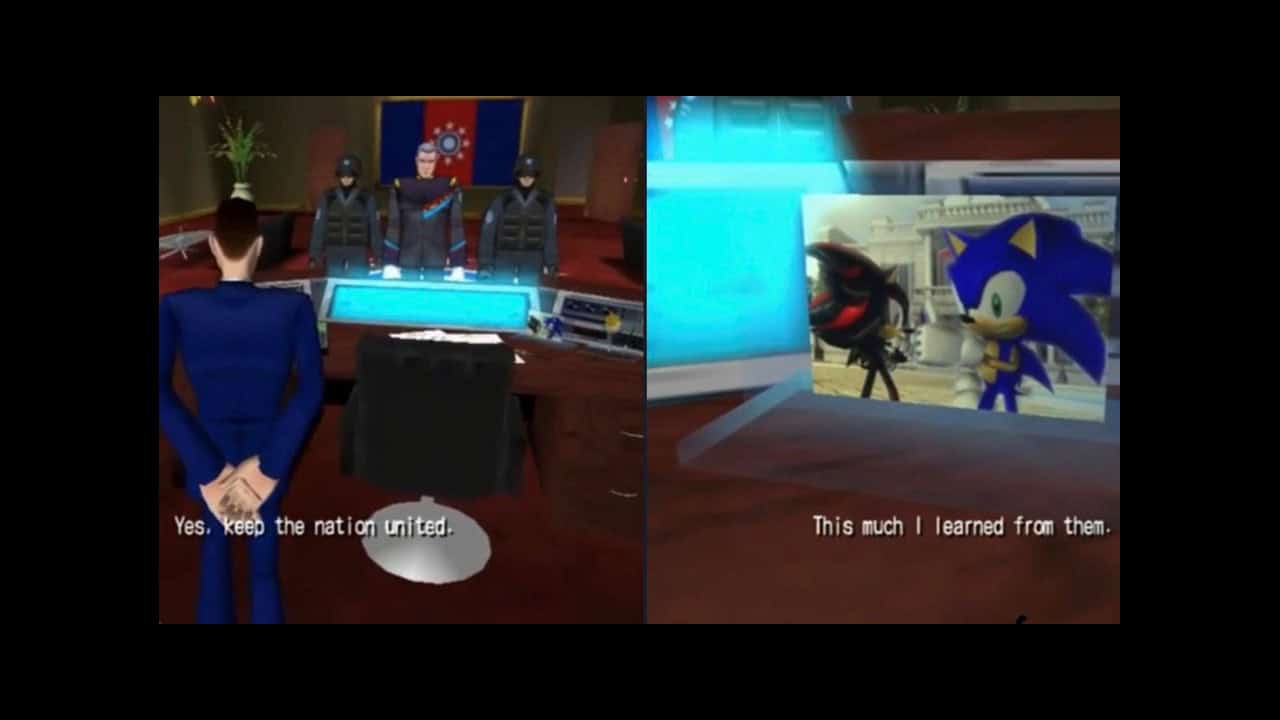
We have now entered the “bad games” section of the list. It hurts my heart to place Shadow the Hedgehog so low on the list, because it was a very core part of my development as both a human and gamer. Shadow’s first solo entry introduces more lore than a Kingdom Hearts game as we watch the story of Shadow unfold. He is the son of an alien demon named Black Doom, but fused with the power of Chaos by Dr. Gerald Robotnik, Eggman’s grandfather. Black Doom needs Shadow to unleash the Chaos energy so he can control armies of Black Aliens to defeat the real United States military and make him the president. Of course, this title is famous for giving Shadow a wide selection of guns that feel awful to use, a motorcycle that is impossible to drive, and blending every game genre from third-person shooter to mecha action to platforming. And he swears! It also has a great local multiplayer battle mode I must have played for dozens of hours.
Now the kicker: each stage, Shadow must decide to do the hero mission, dark mission, or neutral mission, and can alter what mission he’s doing at any time. He has a hero companion and dark companion as well in each stage, like an angel and devil looking over his shoulder telling him what to do. There are, I am not kidding you, 326 unique combinations of story progression through these stages that each have a unique name. This game would be much higher on the list with a chapter select function, but as it is, you have to replay the game from the start a minimum of 10 times to see the whole story. Shadow the Hedgehog is such an avant-garde meta commentary on itself while simultaneously being so incredibly dumb that the human brain does not possess the processing power necessary to behold it.
22. Sonic Unleashed (2008)

Sonic Unleashed is, while not very good, definitely a memorable entry in the franchise. And for that, points! Eggman uses the Chaos Emeralds to summon an elder god called Dark Gaia from the core of the Earth. This somehow (?) afflicts Sonic with a lycanthropic curse that turns him into a werehog by night. Yeah, I said werehog. During the day, he’ll traverse long track levels as regular Sonic in the style of the stages from Sonic ’06, but much better designed. The daytime levels are really good, and if they had just all been that way, you’d find Unleashed near the top of the list. But by night, beware! Sonic transforms into the accursed werehog! The night stages are some of the most miserable Sonic levels ever, letting you platform for about 15 seconds before trapping you in a small arena, blasting jazz music, and throwing waves of the same enemy at you over and over in a single-button brawler where Sonic can basically just punch. Then, rinse and repeat. Don’t ignore the fact that the Wii version of the game requires you to waggle the Wii remote in order to do anything, and makes it near-impossible to progress. The platforming is bad, the puzzles are terrible, and the enemy variety is sorely lacking. But we get to meet Chip, the new companion! He’s a lovable scoundrel who is definitely not another Tails reskin.
23. Sonic Superstars (2023)
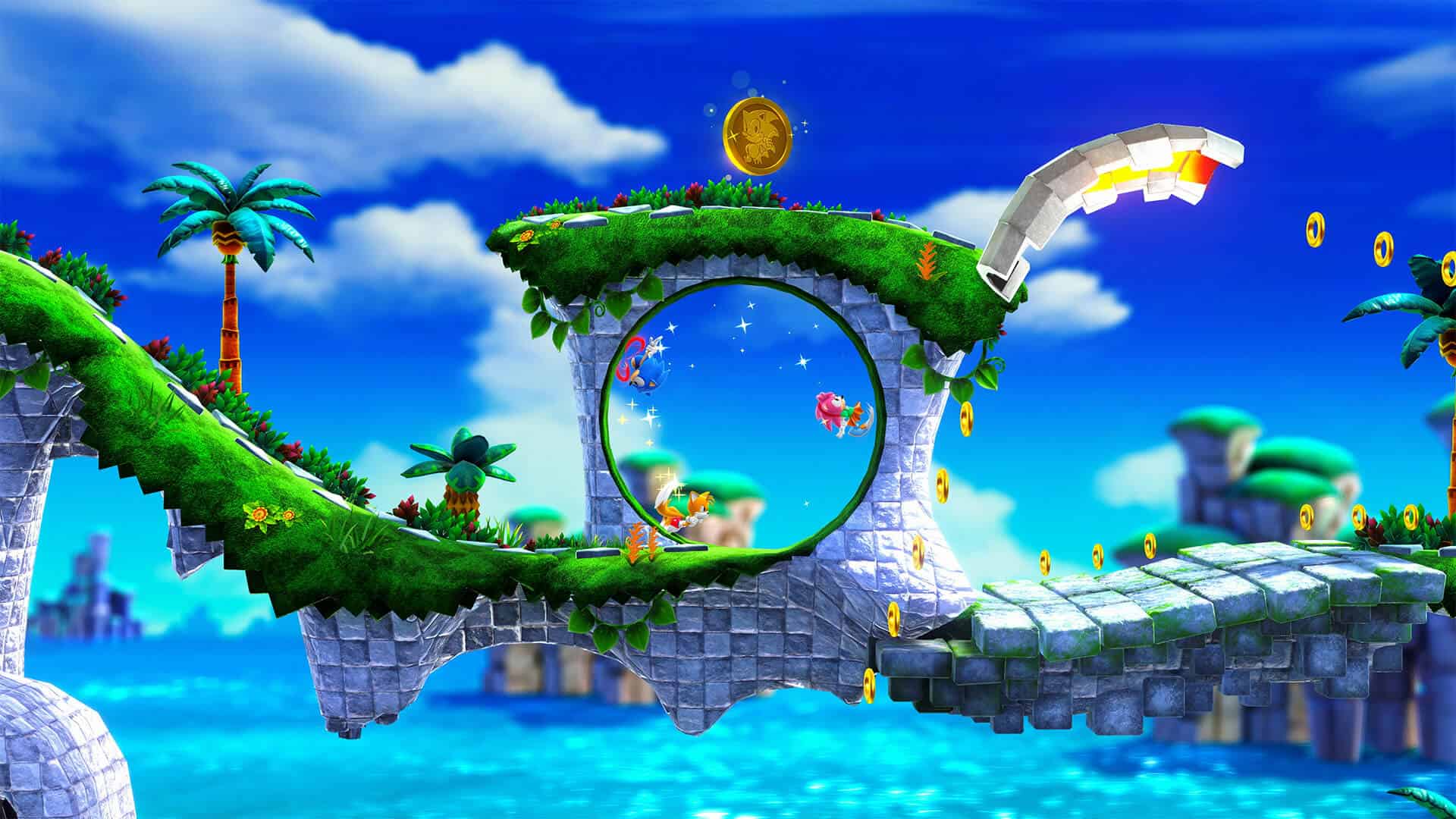
I don’t honestly have a lot to say about Sonic Superstars, because it is just so incredibly mediocre and forgettable. The levels feel uninspired but aren’t a pain to navigate. The music is okay but not great. The art design is passable but not offensive. It controls okay, but not to the point that it’s actually fun to play. The most notable thing about Superstars was that it began as a project by Christian Whitehead, developer of Sonic Mania. Whitehead’s partnership with SEGA fell through for unknown reasons, and they salvaged the project and had Sonic Team develop it instead. Especially as a sequel to Sonic Mania, Superstars is a massive disappointment. It’s also not anywhere near as poorly made as the actually bad games on this list, which we will be reaching here very soon.
24. Sonic Dash (2013)
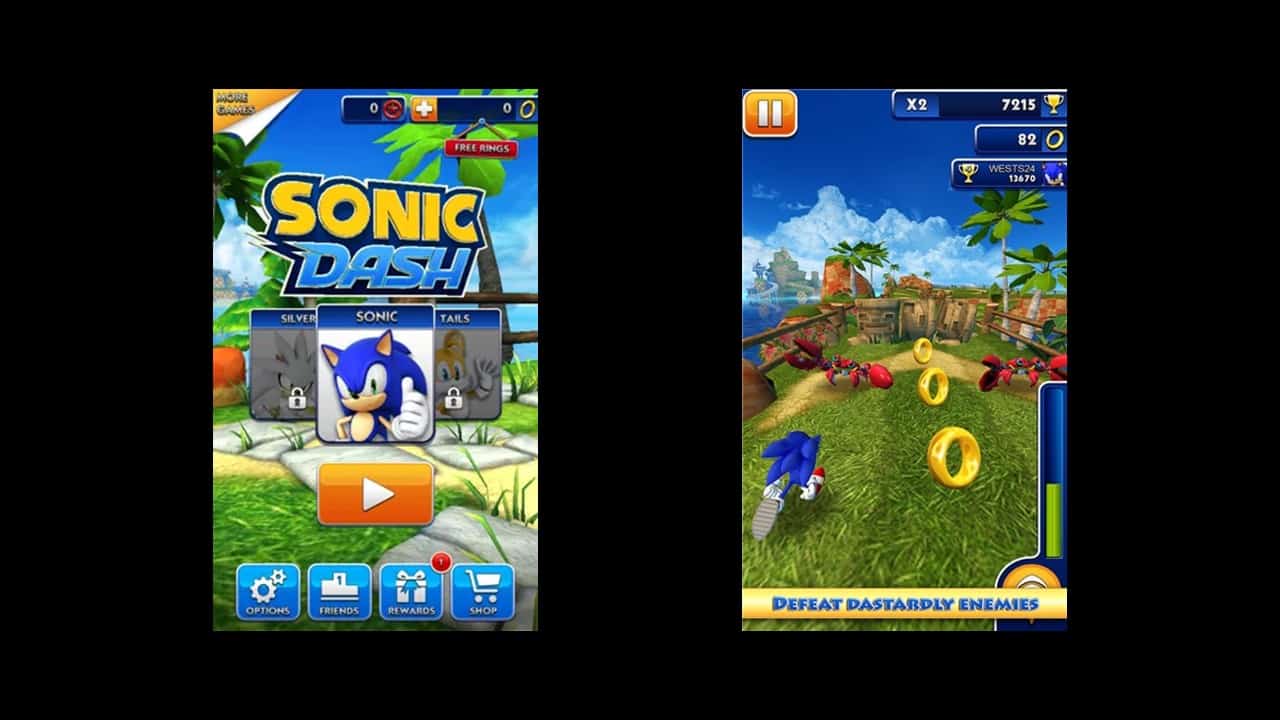
Choosing a spot for Sonic Dash is difficult because when it launched in 2013, it was a shining star among licensed mobile games. One-handed vertical gameplay, unobtrusive ads, no constant begging for microtransactions or forcing you to watch ads to continue playing – just a video game with a small pop-up here and there. This infinite runner has, over time, become everything gamers hate about mobile games. With it constantly banging players over the head with microtransactions, loot boxes, spin-the-wheels, daily and weekly check-ins, timed exclusive events that are impossible to finish, making several different types of currencies, pushing dozens of powerups every round, creating a cash shop with what is effectively gambling, forcing you to watch ads to continue after dying… It’s truly, truly horrendous. The Netflix edition, Sonic Prime Dash, is as close as you can get to the old game now. So here it sits, near the bottom, a monument to capitalism. Despair!
25. Sonic and the Secret Rings (2007)
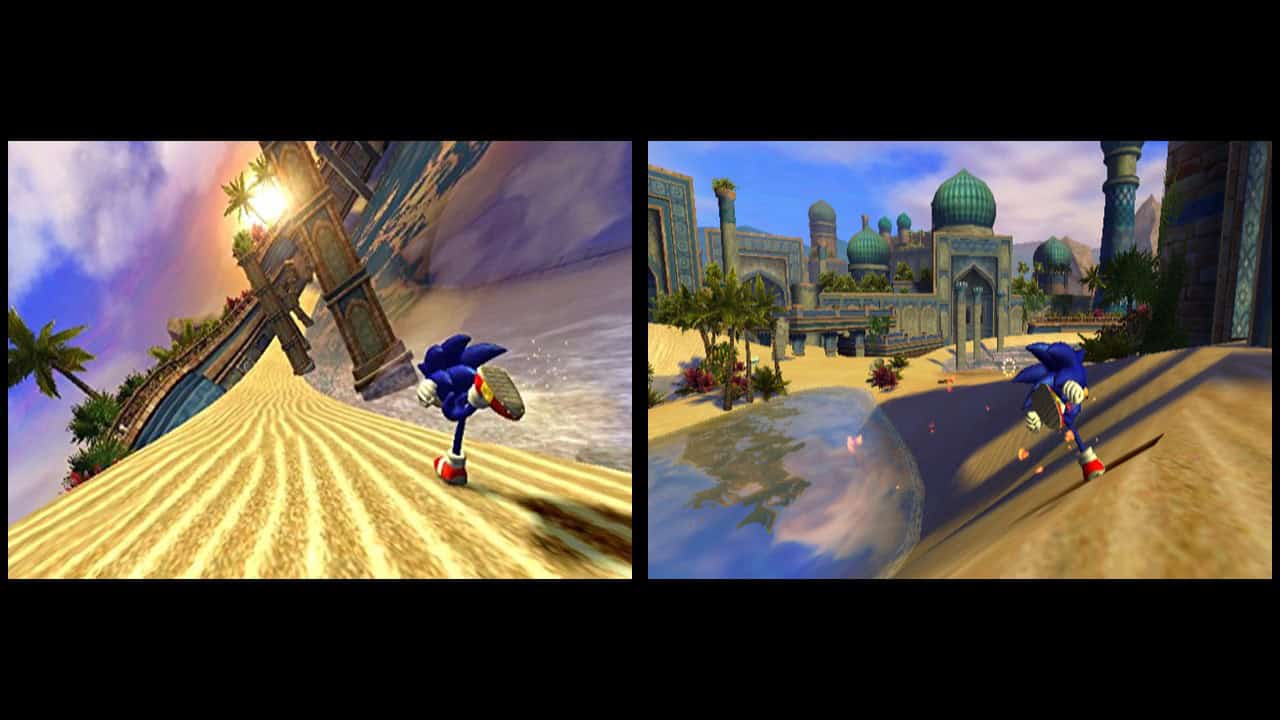
Sonic and the Secret Rings was a Wii-exclusive entry that, for the ninth time, promised to take Sonic back to his roots. This game is the first in The Sonic Storybook Chronicles, a series which has two entries. What this means is that there are exactly two fully rendered cutscenes in the game, one at the beginning and one at the very end, with the rest of the cutscenes being rendered as a visual novel for artistic (see: budget) reasons. Sonic is transported into the world of the book 1,000 Arabian Nights and is guided by a new companion called Shahra the Genie to defeat the amazingly named villain Erazor Djinn and escape the storybook world. Erazor Djinn is canonically Aladdin’s Genie, who was sealed inside the lamp for thousands of years, and now has emerged with an unstoppable hatred of all life on Earth.
The Middle East-inspired visuals, music, monsters, and story are all actually very fun – so why is this so far down on the list? Sonic and the Secret Rings is played by holding the Wii remote sideways and tilting it left and right to steer. Sonic is always running straight in this 100% on-rails game, which essentially reduces this to a glorified infinite runner. To add insult to injury, you must hold down the 2 button on the Wii remote and release it to jump. That’s right, Sonic jumps not when you push the button, but when you release it. Misery. Pure, abject misery. As much as my teenage self had a big ole crush on Shahra, I couldn’t stomach actually playing much of this game.
 ObserverCrew Picks
 bserver