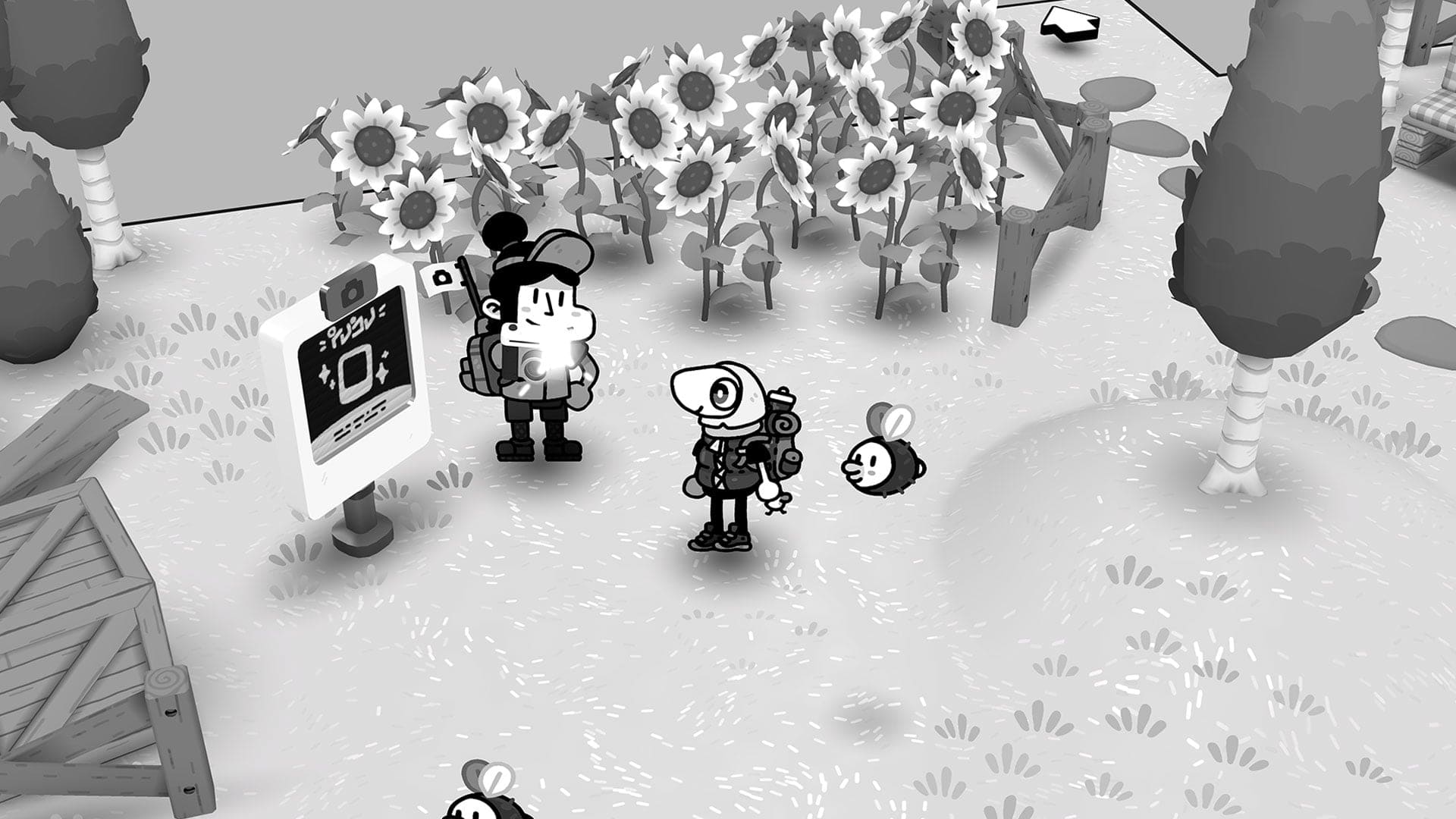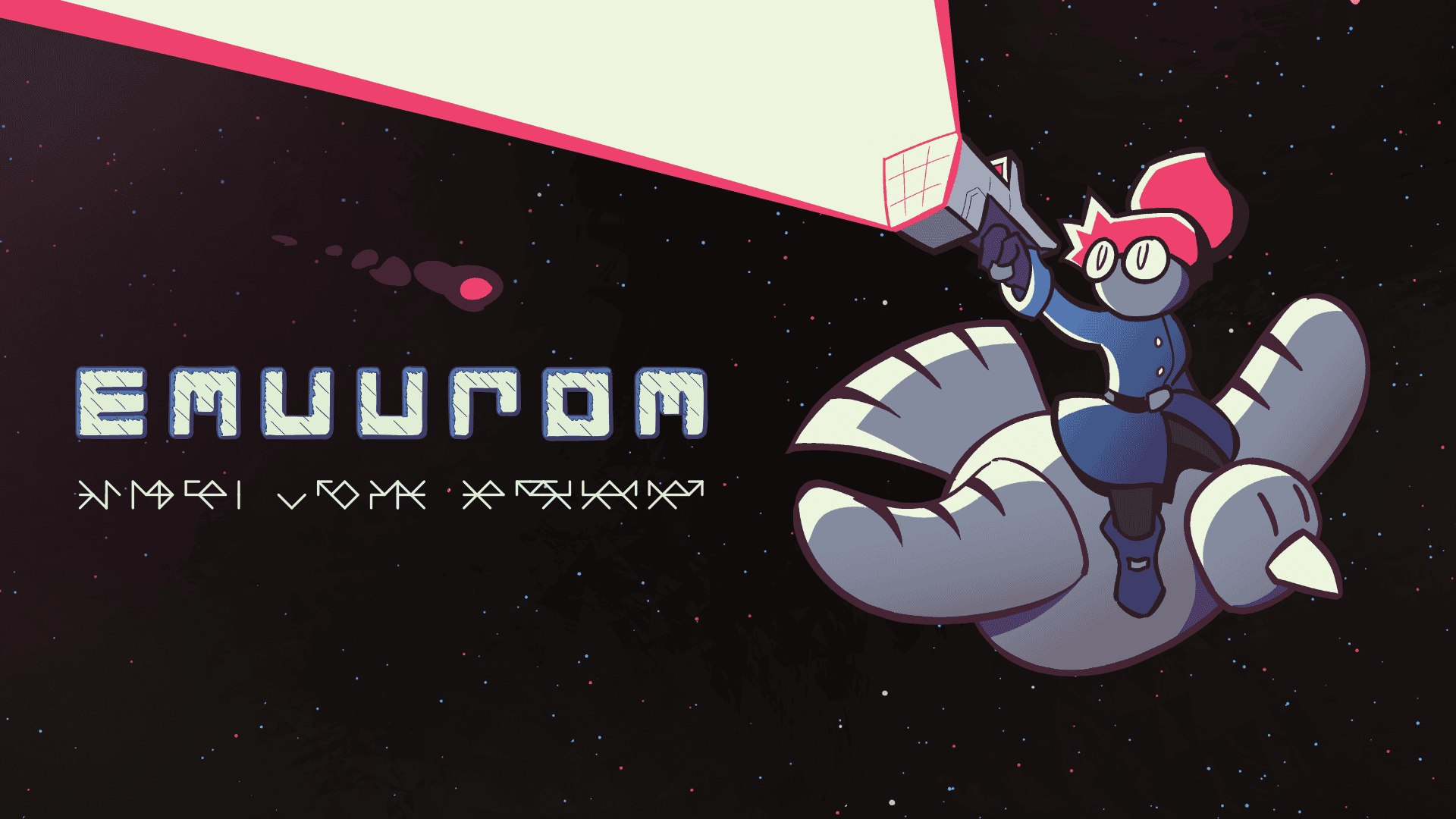
An Island full of mysterious creatures that was destroyed, a researcher with a scan gun and a mission. That’s the very simple set up for EMUUROM, a new puzzle platformer by solo developer borbware. But don’t let the simple setup fool you, there’s a lot to discover in this non-violent puzzle metroidvania. The creator calls it a “metroidbraina” and likens it to Animal Well, both of which are apt comparisons, but neither quite gets at the heart of the matter.
When I say non-violent you probably think I mean that the main character cannot deal damage, and while that’s true, the game also cannot hurt you. Enemies can bump you and knock you away, but this doesn’t harm you, and you often need the help of various creatures “attacks” to navigate the game world. In a normal metroidvania, the way you gain movement techniques is by finding an item that grants a new trick you can do. EMUUROM doesn’t have anything like that. From the start of the game, the main character Maire has the exact same ability to move and jump as she does at the end. The game provides no double jump, air dash, or wall jump. The only actual upgrade in the entire game is the scanner, the tool you use to both learn about and interact with the Emuurom themselves. Everything else is either interacting with the Emuurom by jumping, scanning and using knowledge gained from traversing the game world to unlock a new area. Using the scanner freezes Maire in place as she uses it, and using it long enough on an Emuurom will scan it, freezing it in place. Many Emuurom can also be partly scanned to entice them to act.
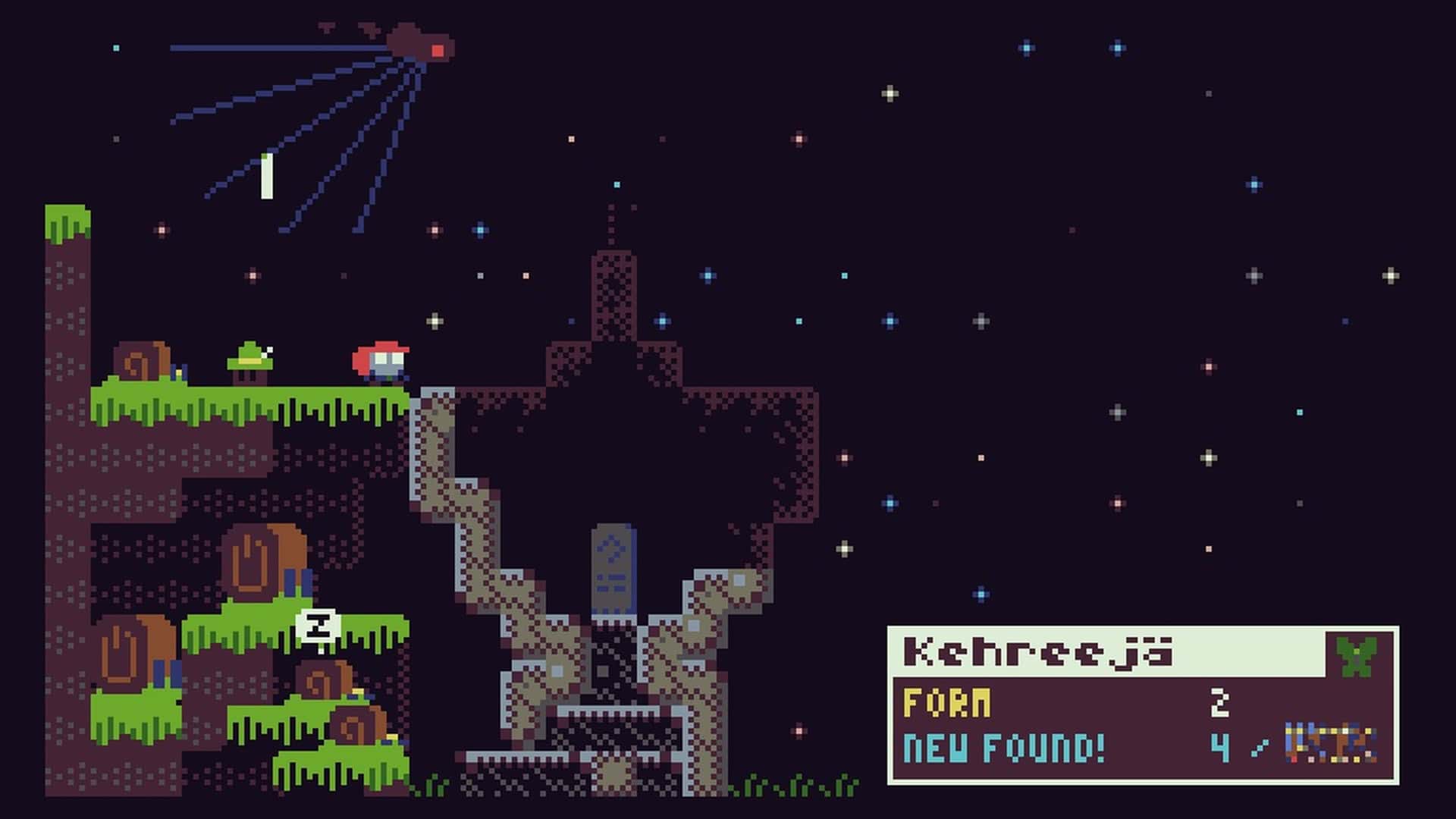
Scanning is the primary method of interaction, but also the primary motivator, as Maire has come to the Island of Emuulehto, home of the Emuurom, in order to catalogue them before they’re gone forever. Her goal is simple: get in, scan everything she can, and leave safely with the information. Each time she scans a new Emuurom – which come in all sorts of forms, animal and vegetable – she adds its information to your Emuudex, learning its name and a little bit about it. Scan all of a given type of Emuurom and additional information will be added to its Emuudex entry. Scans can add information about the Emuurom, but it can also just be a friendly interaction with the more intelligent ones, such as a talking cat, or a moose that works construction and has a sidequest involving proper headwear. You can also scan stones from previous travellers, constellations in the sky, and yourself if you find the right spot. What starts as a simple cataloging becomes an adventure to uncover the secrets of the island and perhaps even save it in the end.
If you scan all the Emuurom in a given area, a new special Emuurom called a Kehreeja will appear. These are vitally important but the game doesn’t initially explain why. Of course, scanning an entire room’s worth of Emuurom is not even remotely as simple as it first sounds. Sure, there are some rooms where all the Emuurom will be scannable on your first visit, but some rooms don’t start with all their available Emuurom in them, requiring you to solve puzzles in the room or bring an Emuurom from another room to cause a change to something in it to unlock a pathway. And don’t forget to scan all those changed forms. Nothing is completely missable as far as I’ve seen, but while the Emuudex shows how many of each Emuurom type and form you’ve scanned, it offers no clues as to how many of a given type there are until you’ve scanned them all, and zero clues as to where any remaining ones might be. There’s a species of Snail Emuurom that typically appears in pairs that I was certain I had forgotten to scan one half of until I found one hidden in greenery in a section of a room that was only accessible by riding a special kind of turtle Emuurom down a waterfall and jumping off it before it reached a second waterfall. I then had to ride it down several more waterfalls to solve several additional puzzles to scan even more Emuuroms.
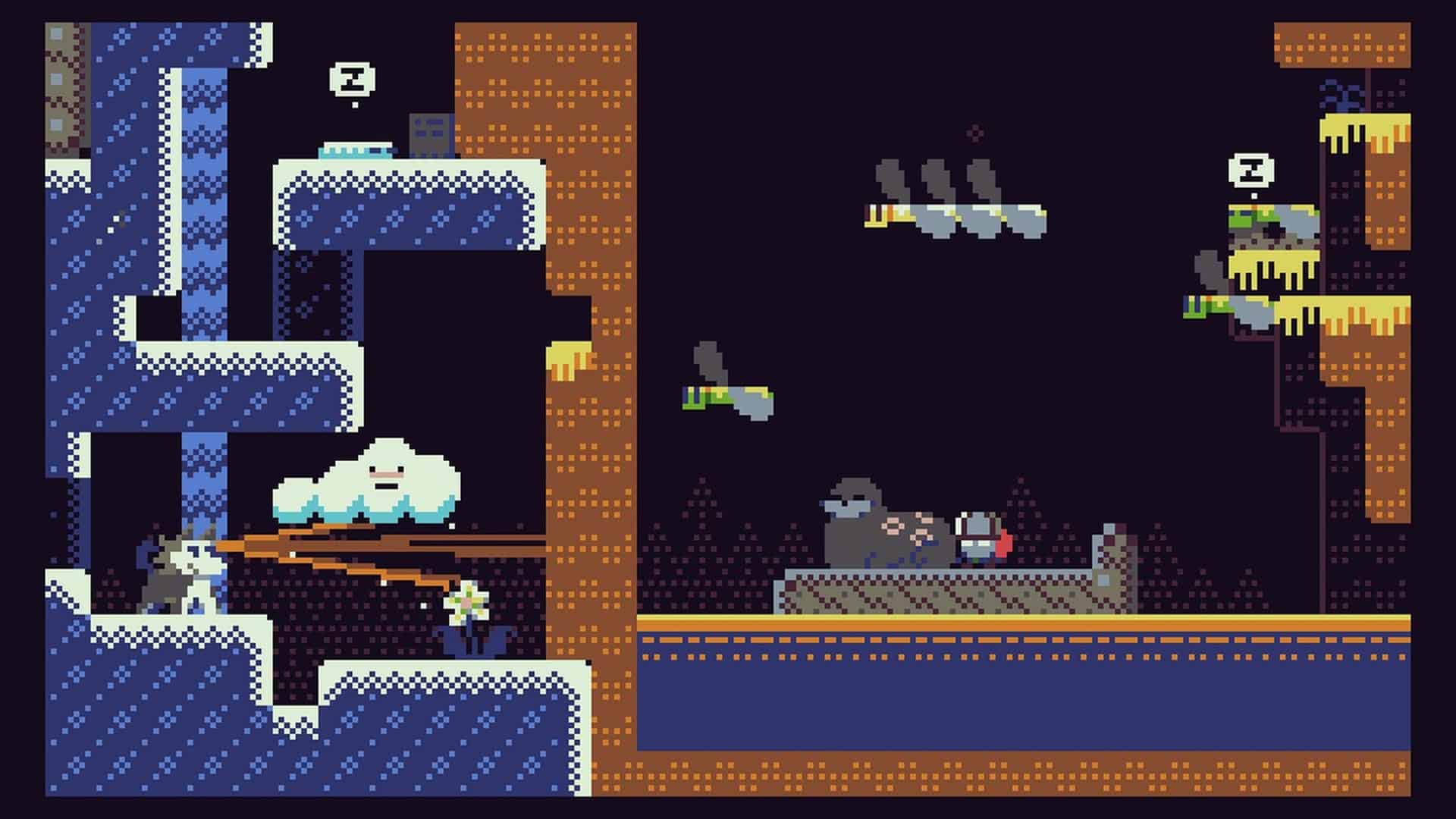
An excellent example of the level of exploration required to find all the secrets in the game comes in its split rooms. One in particular stood out because not only does it requires entering from two different directions, it requires entering from two entirely different sections of the map, and three distinct entrances to interact with a wolf cub to get its parent to start howling, so you can use its howl to jump higher in the room to scan the last Emuurom in the room. You also have to trick that last creature into following you back to that wolf so it keeps howling and you can exit from the top of the room and collect the scans in the corner of the room. The point I am trying to get to with this is that each room is not just a puzzle; each room is several puzzles. There are layers and layers of puzzles. Sometimes the puzzle is navigation, sometimes it’s figuring out how to make an Emuurom appear, sometimes it’s figuring out how to scan an Emuurom before it runs away. This extends to boss fights as well. I know I said EMUUROM is not violent, and that applies to the bosses themselves. Each boss is an extended puzzle, requiring several waves of puzzle solving to defeat it non-violently.
The Developer, Borb, says the game could take up to 30 hours of play time to fully unlock, and I believe it. I have about 10 hours of play in the game, and I’ve still got loads of Emuurom left to find and scan and I’m sure once I do there’s going to be an even deeper layer of puzzle beyond that I have to unlock. If you liked Animal Well, Tunic, or any other information unlocking-style adventure game, give EMUUROM a go.
Tim reviewed EMUUROM on PC with a provided review code. This review is based on the version of the game available at the time of writing and our score will not be changed.
- Score
- 8/10 EXCELLENT - GAMEOBSERVER RECOMMENDS
- Summary
-
Tim says: A deceptively simple puzzle metroidvania, EMUUROM quickly reveals it has layers upon layers to unravel.
- More
- GameObserver's Review Policy