Dream Big. Hop Big. 3D platformers are one of my favorite genres, yet I rarely reach for the biggest names. I’m more than satisfied to wade through the utterly brilliant eccentricities of the indie scene, and even there, I am not fully caught up. Still, I’m a huge fan of A Hat in Time, Demon Turf, Cavern of Dreams, Corn Kidz 64, Smushi Come Home, Cyber Hook, Spark the Electric Jester 3, and more.
Every time 3D platformers seem to gain some momentum, my hopes of people diving into the indie catalogue are quickly dashed. We get some breakout hits, but it feels like the discussion is so dominated by Mario, and now Astro Bot as well, I suppose, that no matter what comes out, it has to face comparisons to these gigantic lessons in high-budget indulgence. Big Hops welcomes this, listing Mario and Zelda titles as huge inspirations, alongside other giants like Sonic Adventure, Spelunky, Kingdom Hearts, Psychonauts, and cartoons such as Avatar: The Last Airbender, SpongeBob, and Steven Universe.
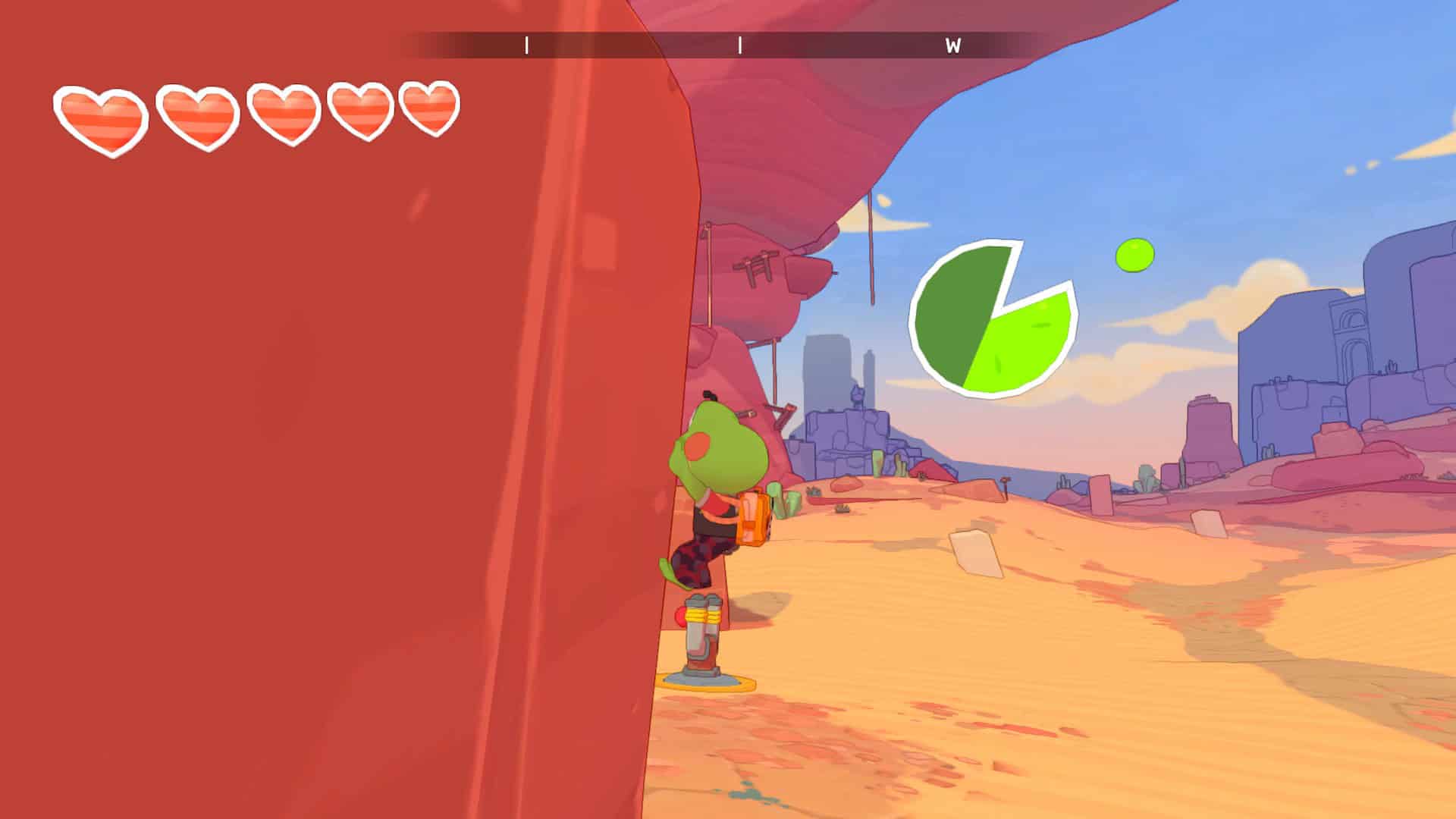
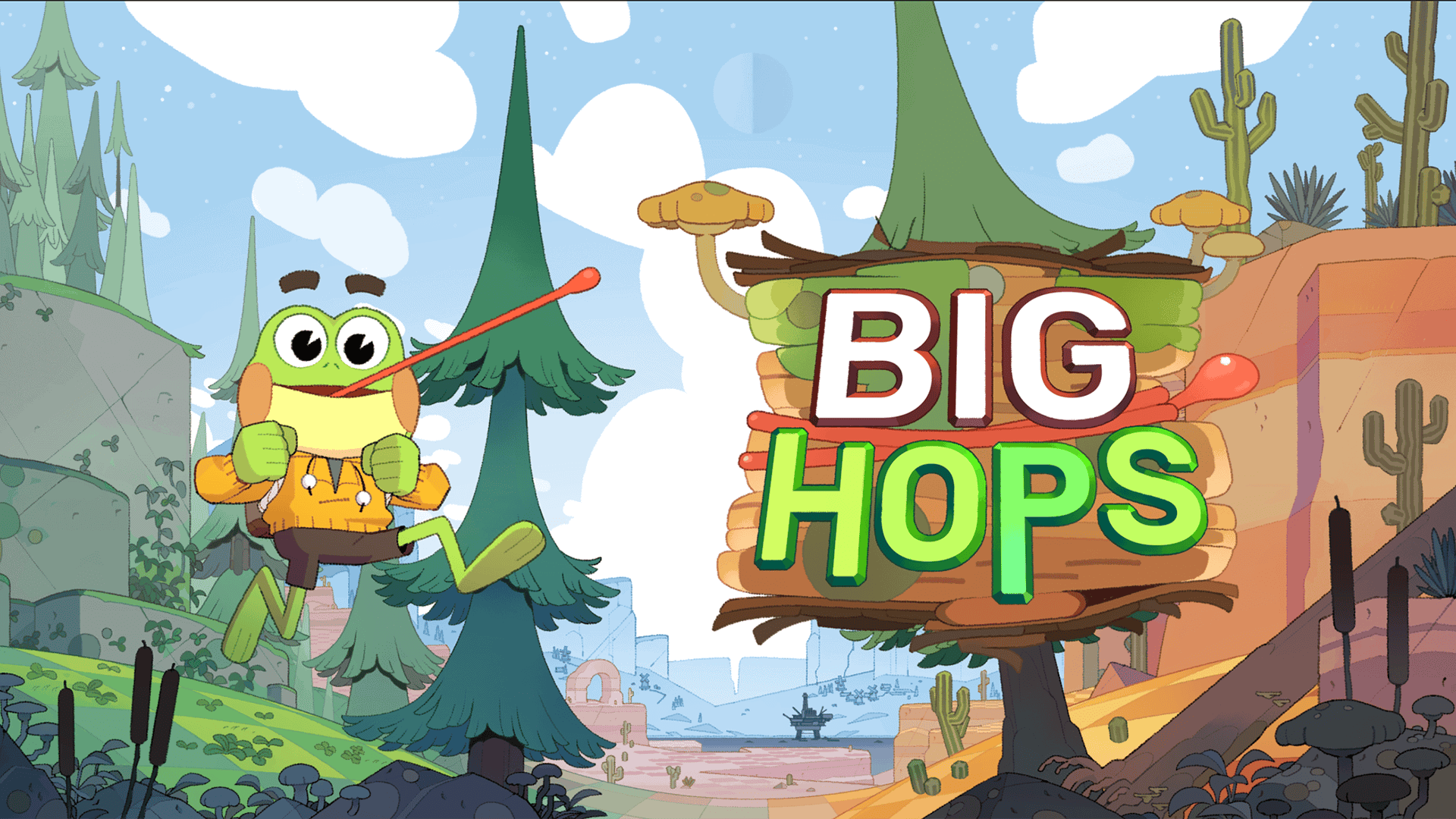
Indeed, Big Hops aims to deliver on the scale of its biggest inspirations. It uses a structure reminiscent of the two defining Nintendo titles this past console generation: sprawling areas filled with smaller collectibles, sub-areas, and special, more focused puzzle/platforming challenges hidden throughout. Each zone is accentuated with a boss battle before the next one becomes available, as Hop the frog searches for airship parts to return to his family following a capture by Diss, a void entity with a dubious, taunting attitude.
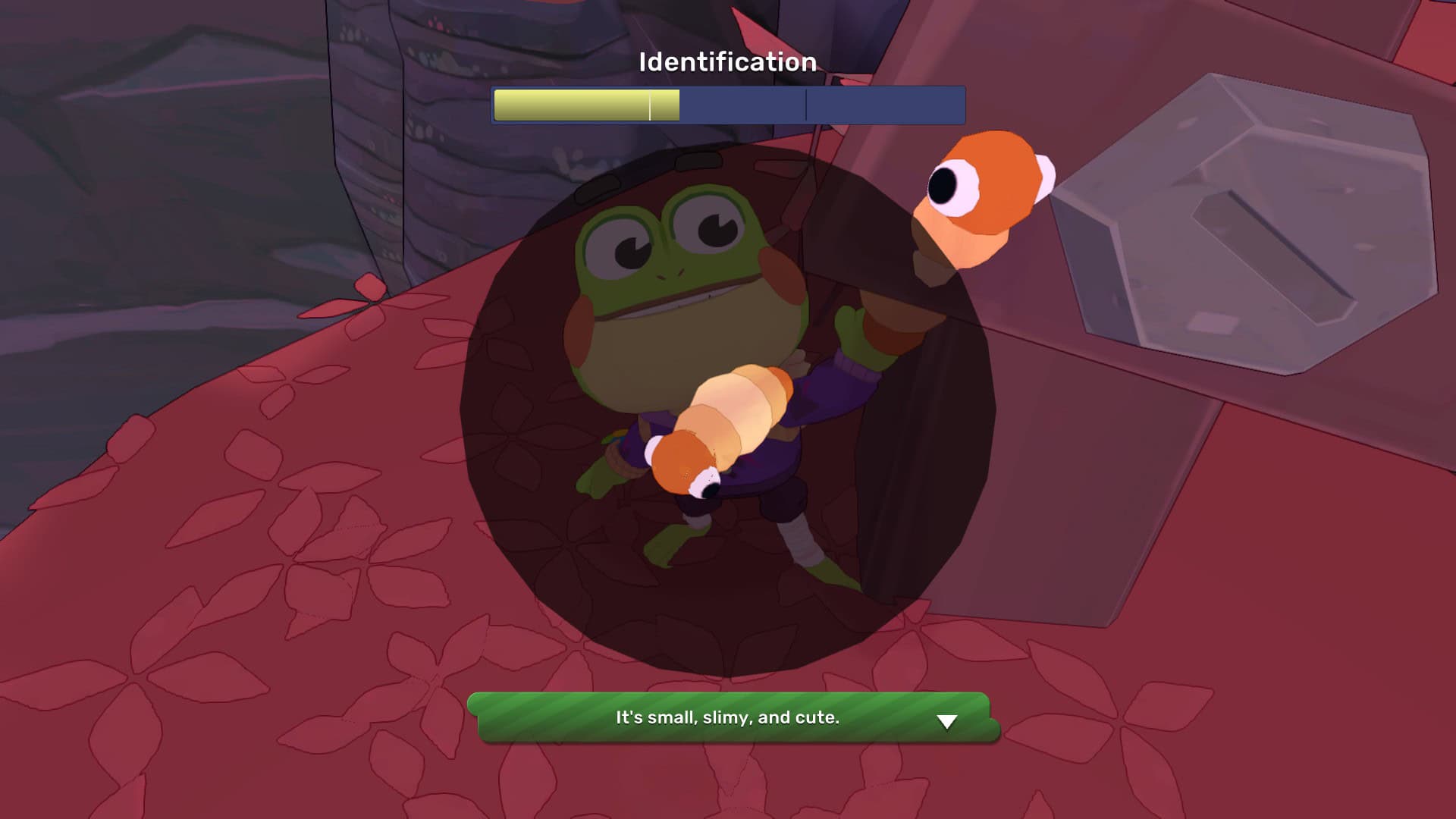
Following a few tutorial areas that already hide a few collectibles, such as bugs which Hop analyzes before revealing their name (and add an extra, single-use stamina bar should you decide to eat them), you enter a huge desert area that really drives home the scale of Big Hops compared to a lot of its indie contemporaries. From the start, this specific design and sense of adventure feels like a new frontier for indies, one that wants to tango with the biggest titles out there and capture the audiences looking for more of that Nintendo design.
There’s a fantastic sense of momentum here, tons of ways to explore Hop’s moveset. One of those challenges focuses on wallrunning, while another explores the speeds of diving, belly sliding, and grapple-hooking with the tongue (fully dependent on the speed you enter the grapple with). Previously, you’d have learned about stamina-based climbing, grabbing, and throwing. Here, you can already observe a bunch of neat interactions: time slowdown when jumping and throwing, the ability to start climbing from the wallrun, the little roll Hop has to do before exiting the dive, and regaining the ability to climb. Some great friction right here, with creative tools for those with the eyes to see opportunities.
In the second half of the zone, Big Hops begins to really explore its verticality. From a small but layered hub town to the tall, industrial hiding place of the villains, it is here where plants—one of the game’s selling points and its greatest mechanic—begin to take center stage. Each type of plant produces different veggies, and each one of those has a unique effect. The vast majority of these assist primarily with verticality, and though some have a few other uses, this is the meat of the game is going forward. Not all appear in later areas, but they can be carried from one to another in your backpack or spawned at one of the stores should their specific brand of getting up suit your fancy.
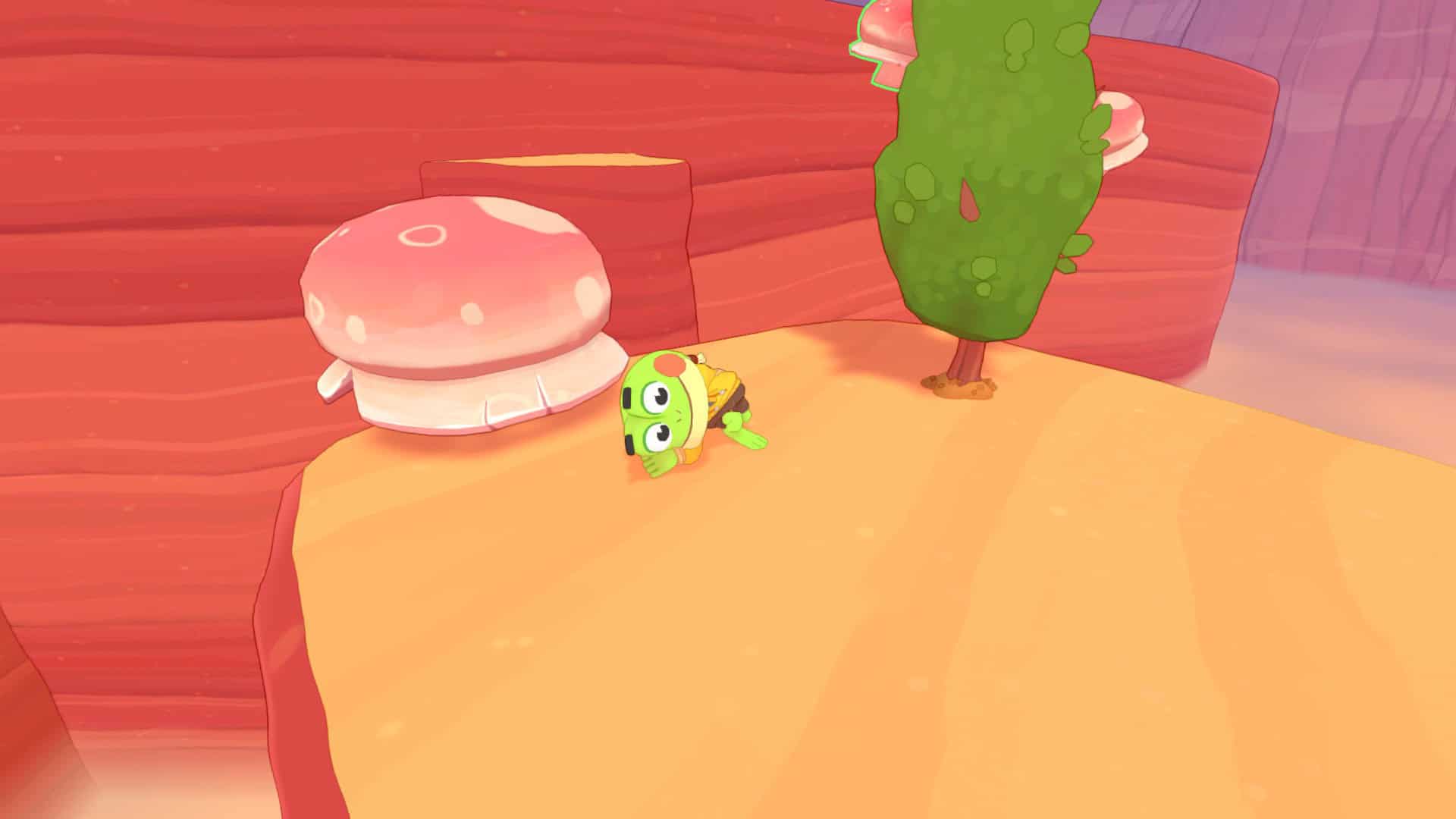
It is a shame, I think, to so quickly move away from the grounded playstyle. There are occasional spaces where you can go all in on belly sliding and gaining speed, but the more verticality there is, the harder it becomes to really take full advantage of the moveset I enjoyed so much in that early stage of Big Hops. At the same time, you cannot say that two spaces ever feel too similar as a result. This is a very varied game, to the point where it cannot stop introducing new gameplay mechanics until the very end.
One thing I cannot help but feel disappointed by, however, is the fact that no subsequent area matches the amount of unique collectibles found here. See, the desert area has seven very varied Dark Drips, collecting which serves as the secondary goal of the game. You finish a race, climb the highest spot, figure out some puzzles, and finish two challenge areas. It’s a very rich start. Unfortunately, these unique drips kind of quickly fall by the wayside, and the majority of the 95 drips I gathered in my near-100%, 20-hour playthrough comes from collecting the minor Dark Bits. Finding enough fills a meter, spawns a Dark Drip, and a log that contains a badge to modify your playstyle.
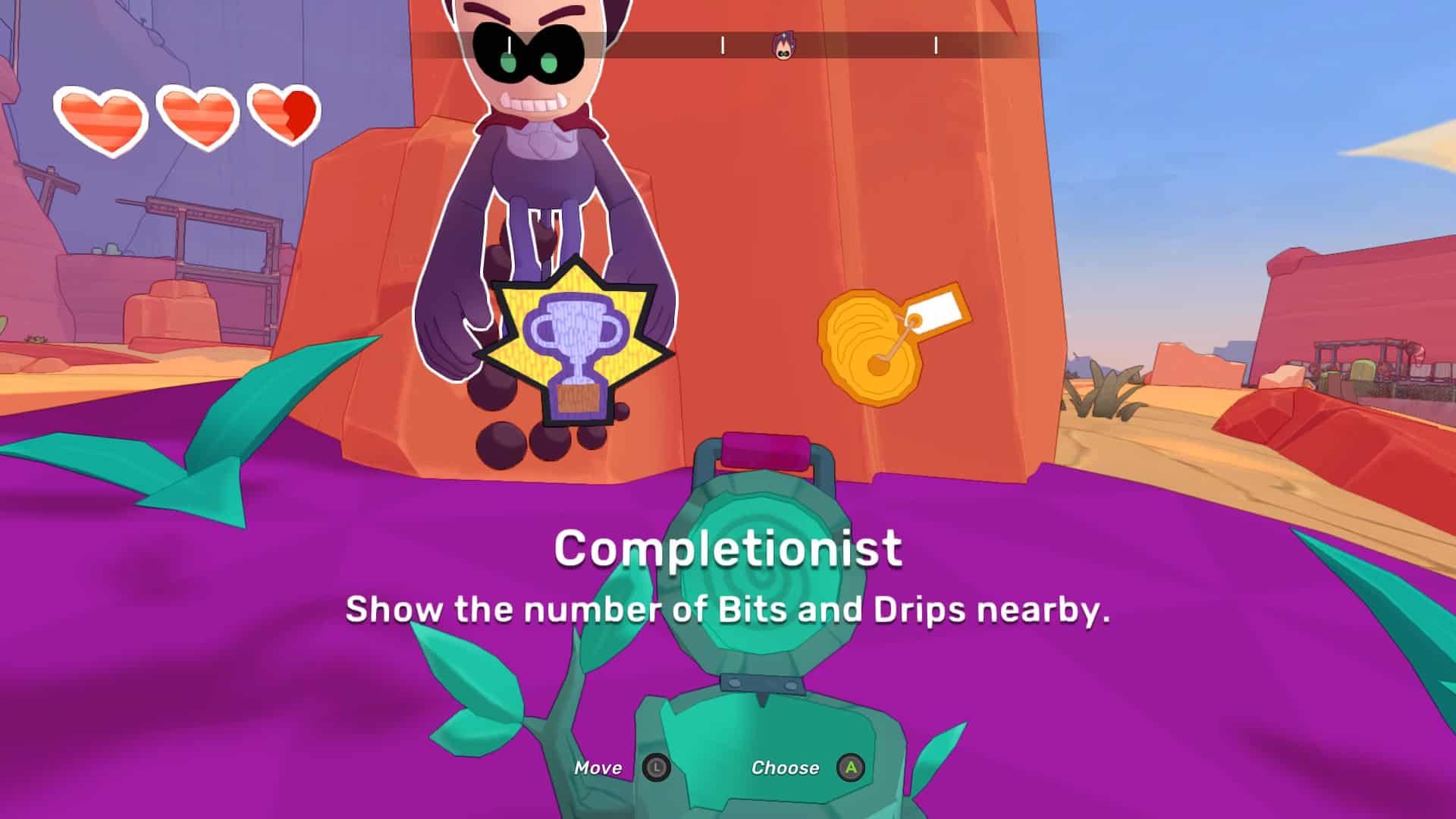
These range from new markers for your compass to upgrades to your stamina bar for various uses. You always get a choice of two, but don’t worry, the other will show up eventually. You cannot miss out on anything as long as you keep collecting. Still, I’m not a fan of this system. It feels a tad disingenuous, as the game’s evolving structure means some quickly fall out of favor.
For example, say you’re not exactly a very exploration-forward person and would rather get the collectible and move to the next stage. With the structure of the first major area and the importance Diss places on the Drips, you’d think tracking those would prove highly useful for finding points of interest. Instead, this tracker only highlights them if they’ve already spawned, which only happens after you complete a quest/puzzle or if they were pre-placed in the overworld. Tracking Drips is much more valuable, as they are aplenty, scattered all over each area, often hidden quite sneakily.
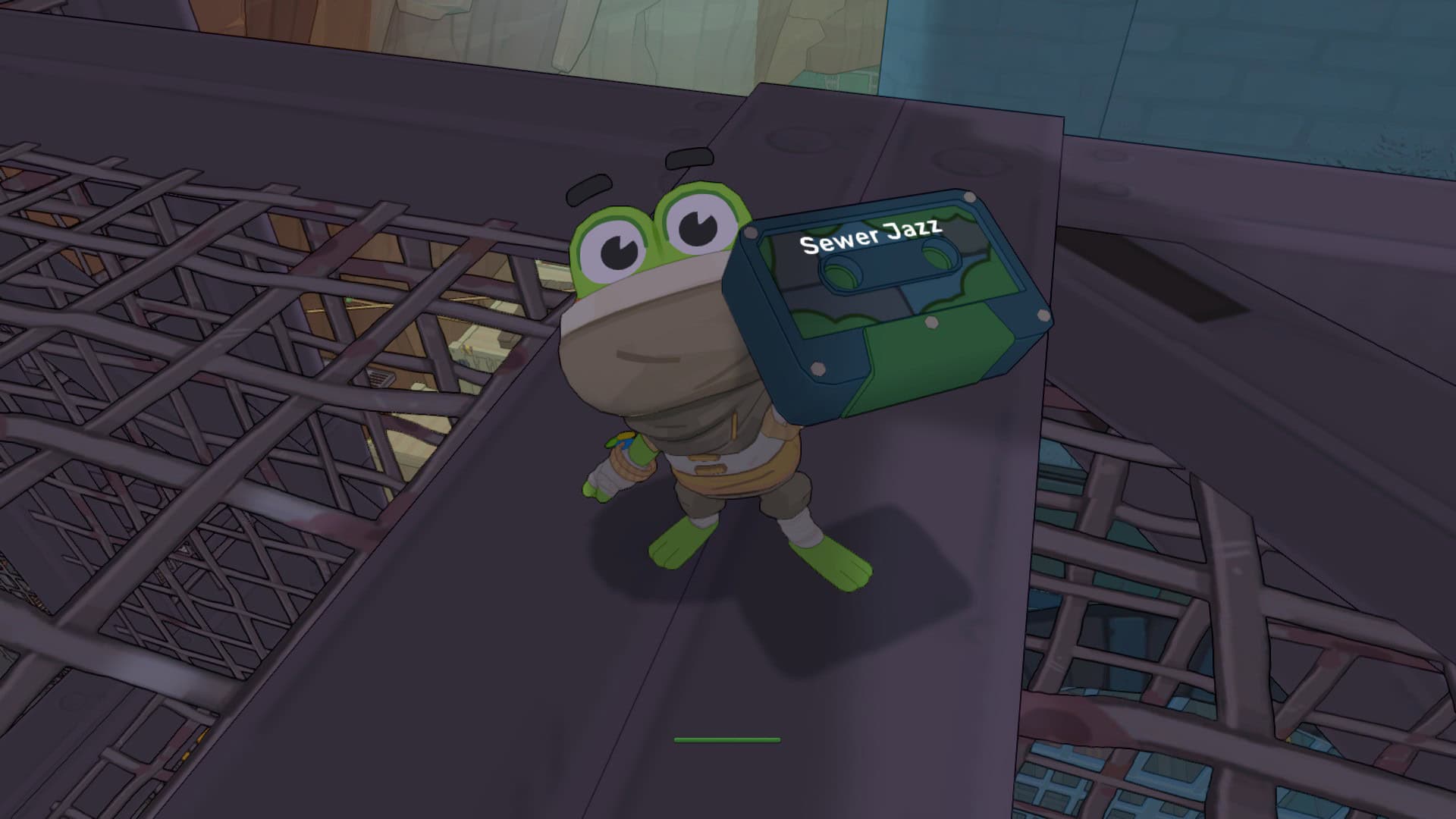
I have also encountered a bug with these badge logs, where, after collecting every badge, I was unable to get out as nothing spawned, creating a softlock that forced me to force quit the game. There were a bunch of other issues when I played: a few stutters or freezes in certain areas, a bunch of messy object or wall collisions, and occasionally, I’d just clip through the floor at random. Not a big deal in the grand scheme of things, and the scheme of Big Hops is quite grand given the size and length of the experience.
Which is also why its small inconsistencies start piling up pretty high. Big Hops is at its best when it is about creatively approaching a space, moments where you look at what it is in your backpack and see the leftovers of the previous world’s veggies, and try your best to figure out how to get up to a ledge using them. In those times, it channels the all-time greats. Not just the inspirations it names, but really the collective effort of players that pushed all these 3D platformers to their limits. A lot of the time, however, Big Hops limits itself too much.

Many of these awesome, unique veggies rarely make an appearance following their designated spots. It makes sense from a worldbuilding standpoint that cactuses or balloon-creating veggie would not spawn on top of a mountain, but they get so little time to shine! You can take a few and carry them into those later stages, but the tools rarely feel satisfying to use in the areas designed for others. It almost feels like, in the chase for variety and player-driven design, the game itself fell into a trap. It created so many unique challenges that it ended up not leaving enough space to let the players use all its tools creatively.
In the third world, there are these trees in the distance, in a seemingly unreachable spot. Yet, if you talk to some NPCs, they point out that something is indeed there. I was very excited to figure out how to reach these distant islands. There is a veggie machine very close by, so I assumed that this would finally bring all these tools together. So I try to use this or that, but nothing works. I start climbing on invisible walls as high as I can to maybe slide and get enough speed to jump through the gap. No good. I’m sure I missed something that I could have done, but really, it feels like the solution is just “find a blueprint for a gadget that just lets you get anywhere, including crossing enormous gaps,” which hides in the same zone, further in.
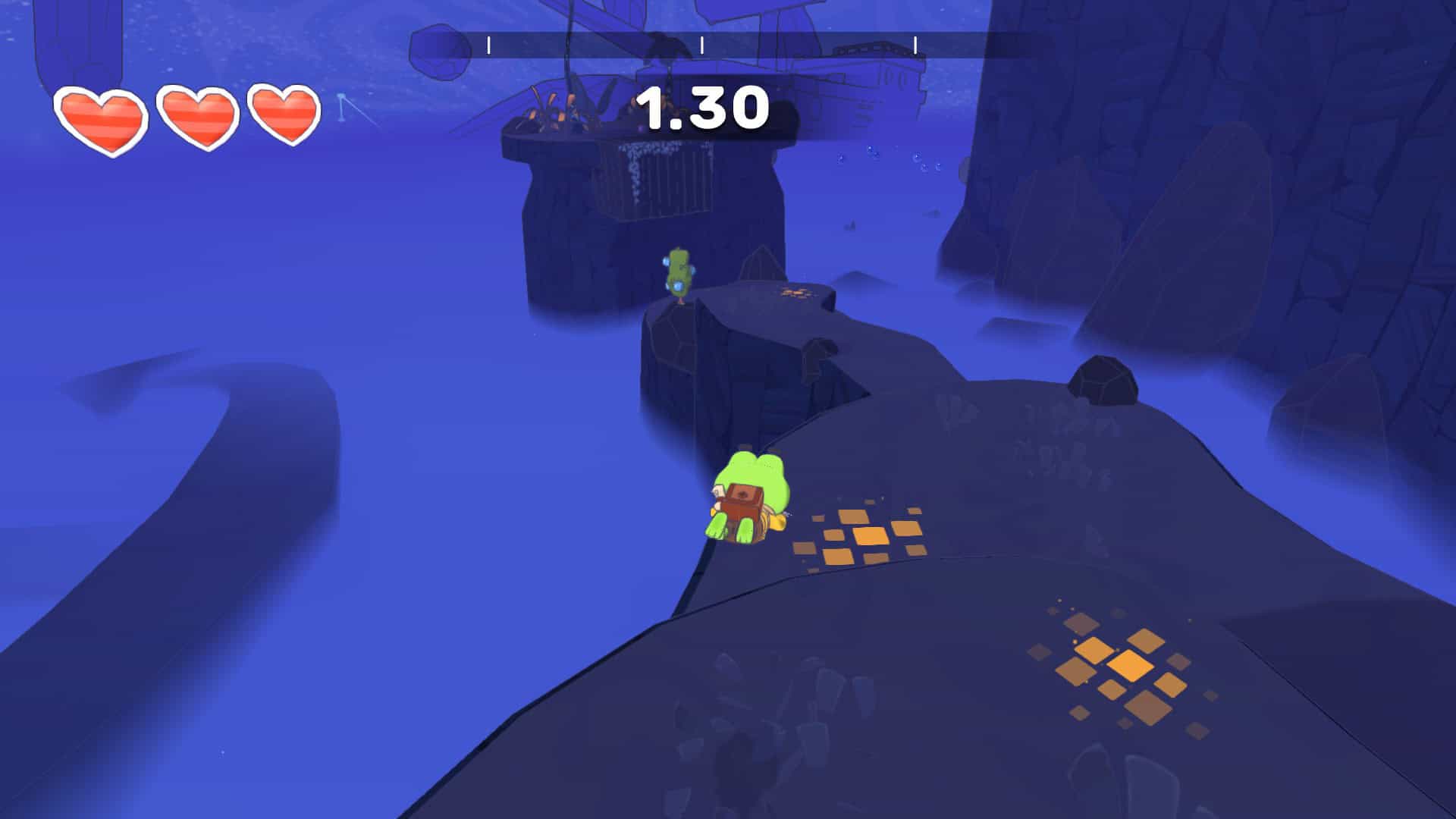
It was deflating to realize my efforts were for naught, but I can concede that maybe I’m just not creative enough to have found a different solution. That is just one example, but as time goes on, the game really leans more into this more straightforward design than it does its puzzles. With so many tools at your disposal, I can’t help but be disappointed with how often an idea just does not work out and I have to use what is given to me then and there instead.
I don’t think I’d have much of a problem here if not for the fact that I spent so much time on each level, forging my path as best I could with these tools, only to fully abandon them later, despite their availability if I go a little out of my way. I found these two, seemingly fully optional veggies that never had stages built around them, and, for the whole game, I carried them without finding a single instance where they’d feel useful. With time and a lot of routing, I’m sure others can find interesting use cases that can make carrying some of these preferable, but the more purposeful design of later stages surely limits these possibilities.
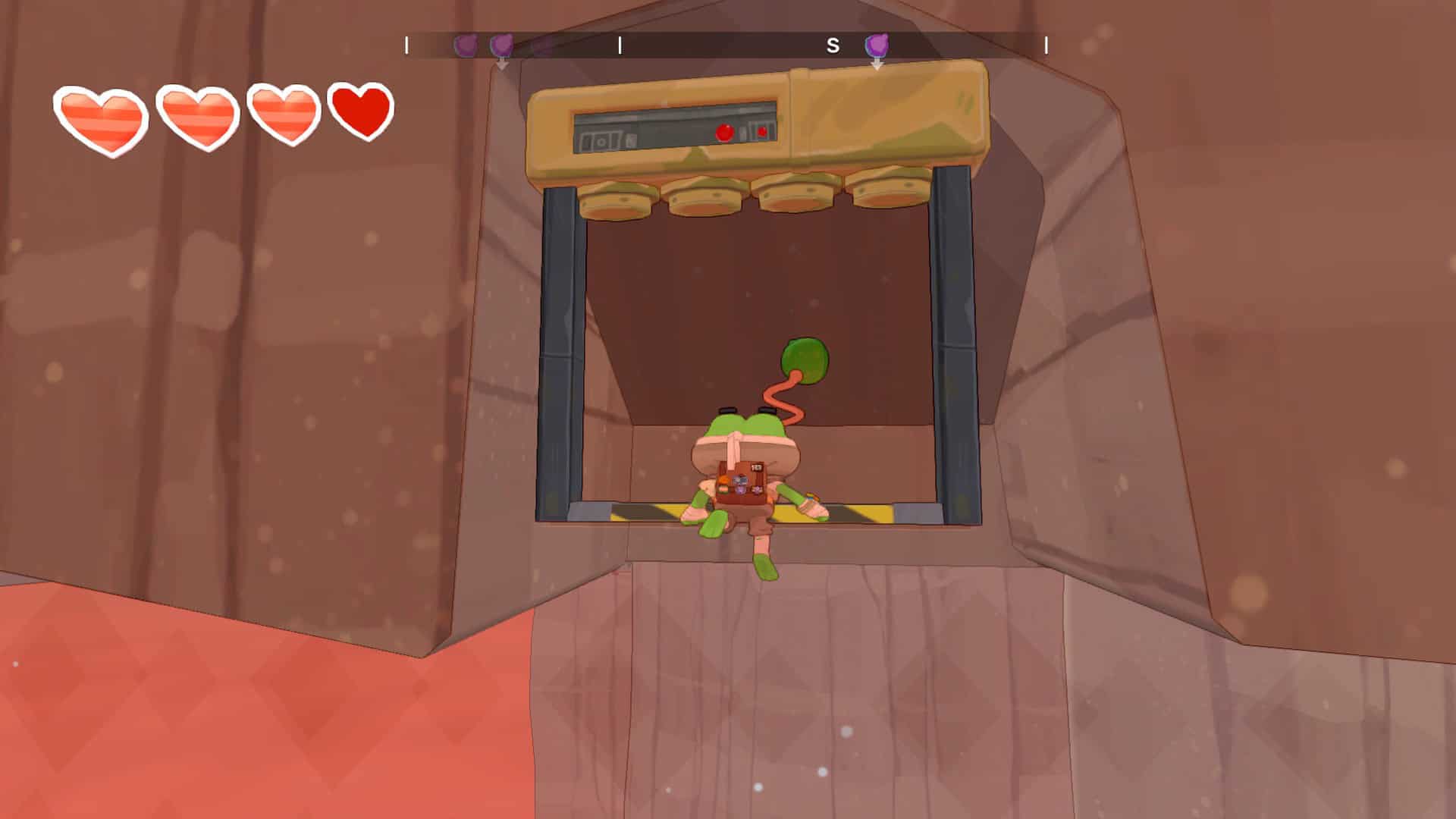
I also never quite got the grasp of the story Big Hops is trying to tell. In an interview with Jason Baigent for So Many Games, Chris Wade, the game’s director, says, “Each world has a standalone story with a different perspective on the question: how do we balance individual pursuit vs social responsibility?” I believe that the aim here is to have a broad sense of perspectives throughout its three worlds, as well as in the conflict between Hop and Diss, but it does wade into some head-scratching territory.
There are a lot of characters that just don’t really face repercussions for assisting in hurting others, all blame usually falls on one villain if anything. Elsewhere, everyone villainizes the only person who holds a corporation responsible for destroying homes in favor of expansion because time has passed and, by now, they have created a proper environment for them to live and provide for them. This person does go to extreme lengths, yet his passion is understandable, and never gets challenged by anyone before he disappears for good. Did this amount to anything? Not for me.
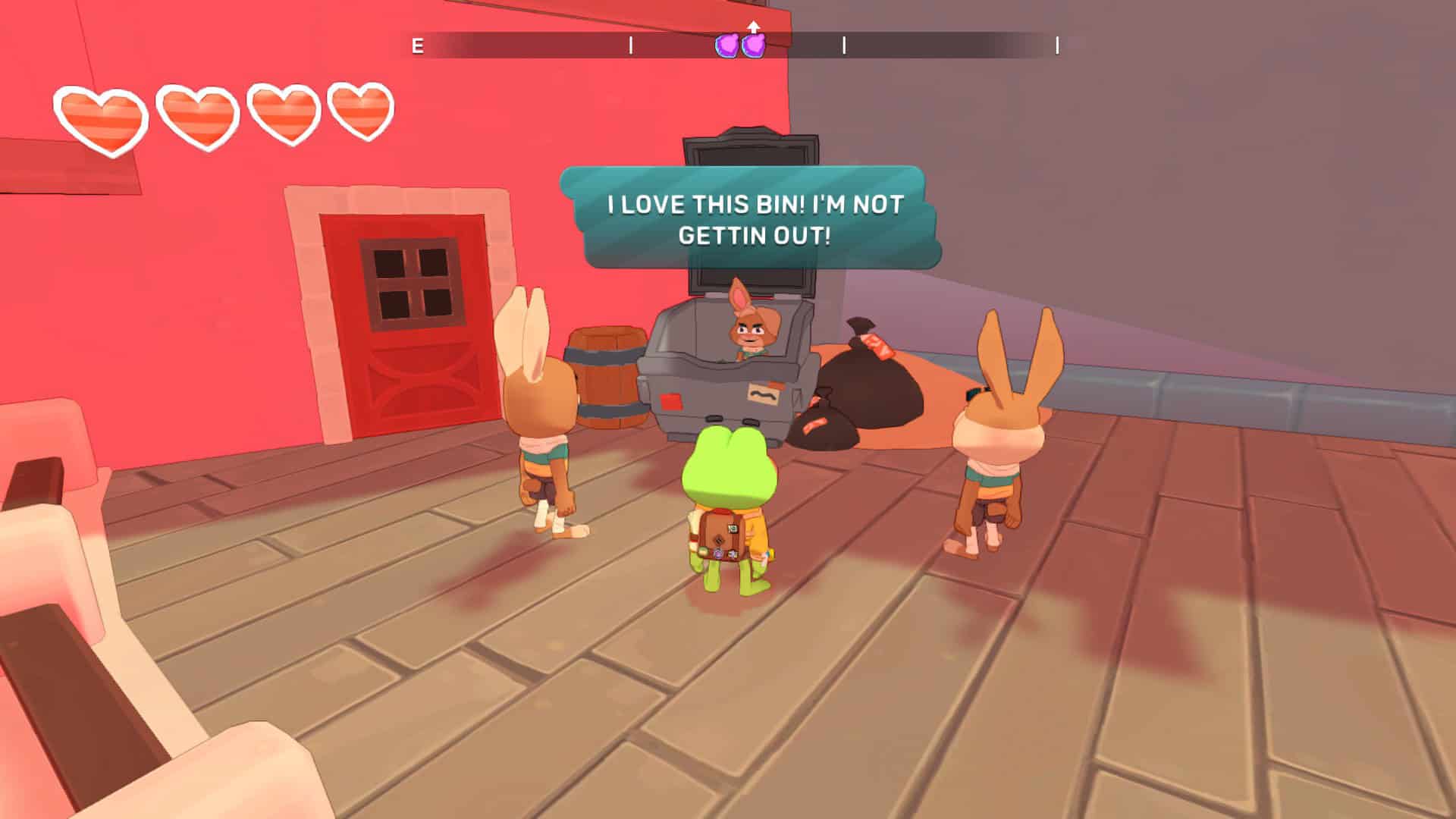
Like all other scenarios, the conflict fizzles out, and Hop goes on his merry way. Rarely is there enough time given to the characters to hash things out or really make an impact past a barebones motivation or some cartoonish evil. I did enjoy how many hubs had a bunch of NPCs with unique goals. It was surprising how few of them rewarded you with a Dark Drip for an action or another, given the amount of dialogue or activities tied to them.
Not that all this really takes up much time, and I have to assume people won’t think twice before going back to the core gameplay, but overall, it does feel like Big Hops is just a bit confused in a lot of important areas. There is an argument to be made that its stop-and-go pace is a bit too stop-heavy, to the point where I often thought it would work best as a mini-puzzle platformer. Elsewhere I wished these puzzle elements were gone in favor of a pure momentum bliss. Given how often my plans came to naught, the friction created by taking the time to execute them felt fruitless, so I thought about all this more often than I would have liked.
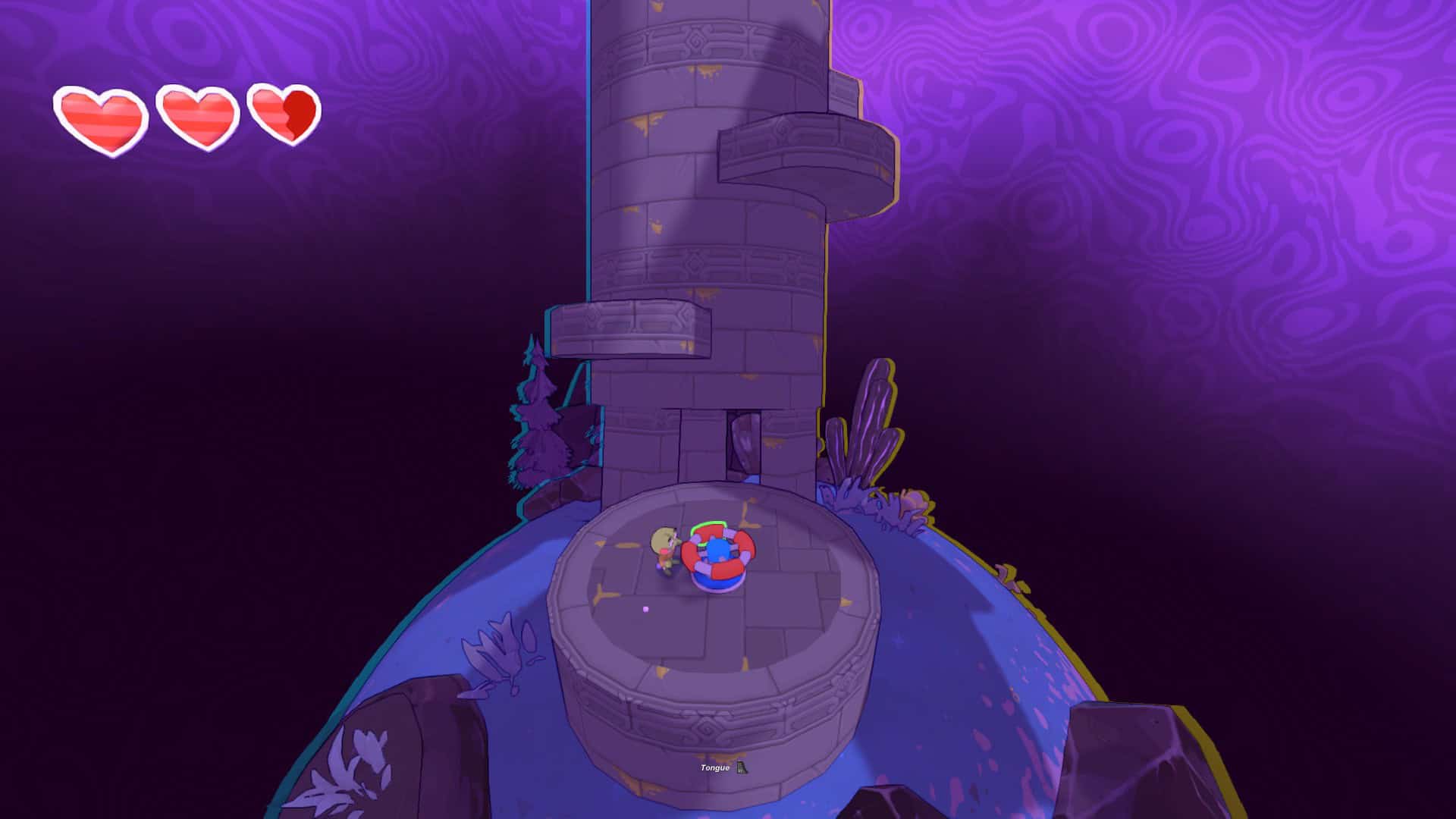
Even the music sort of underlined that, occasionally cutting out in certain places or having these awkward pauses before looping back. The adventure themes left little impression either, often blending in as the yells of each jump Hop makes overtook other sounds. There are tracks here I really liked, usually the more mysterious, twinkly ones found in caves or the void realm. Perhaps my fondness for these more contemplative pieces is a sign that I really would prefer Big Hops to be more puzzle-forward.
Big Hops is unique, so the fact that it did not quite nail its philosophy on the first try is, ultimately, no sign of its quality. It is slightly overlong, possibly too rich, somewhat unfocused, and just a tad unsatisfying at times. It is also expressive, inspiring, impressively vast, and its ambition pushed me to try things I certainly would not in most other platformers. Certainly sounds a lot like its inspirations. Maybe it did not always allow me to be a genius of plant-based platforming, and it stumbled in the story department, but I think the spirit of creativity, experimentation and freedom it instills is, overall, an amazing success.
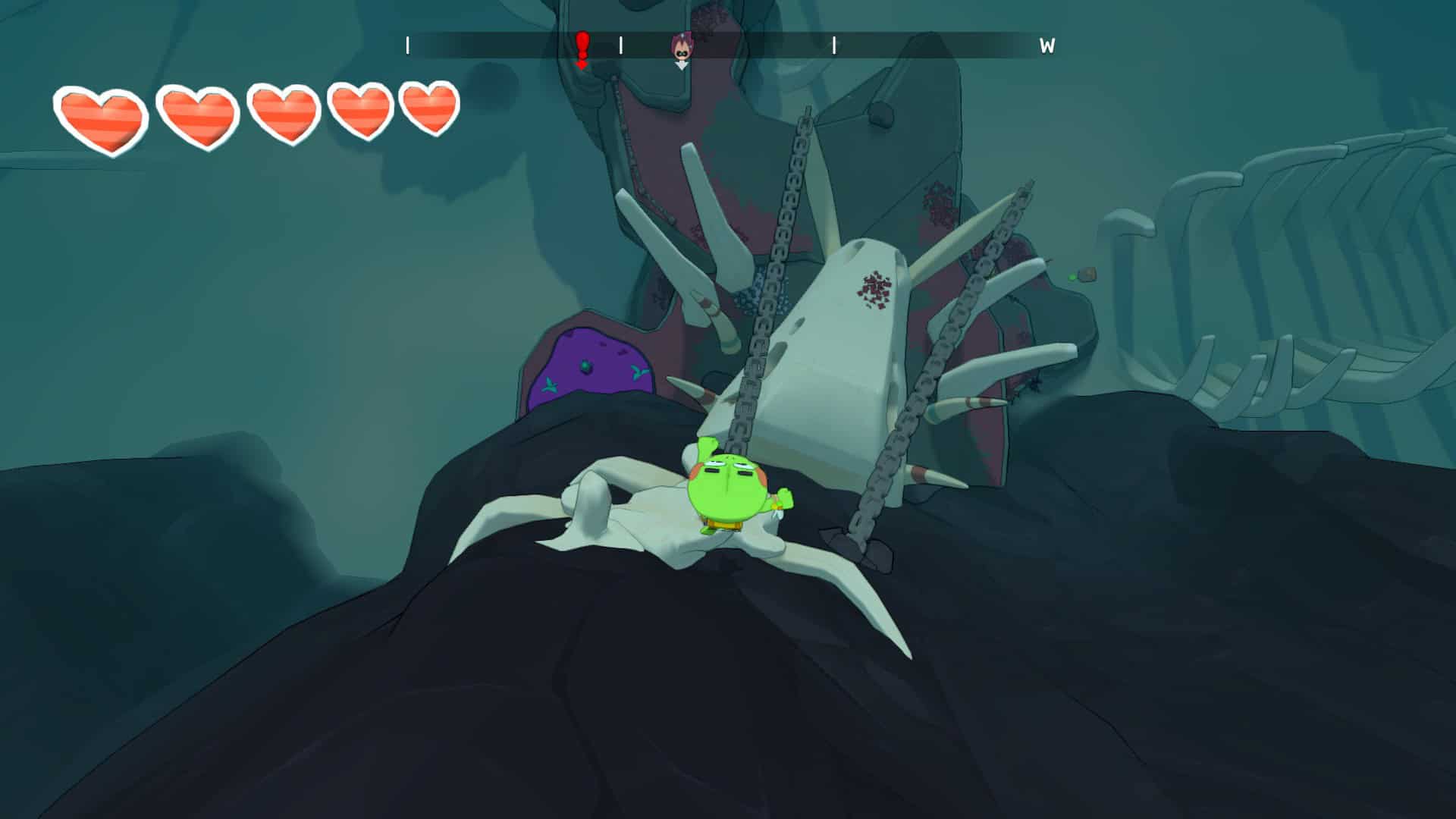
I really want to see more of Big Hops. I want to know what else can be done if it is even richer and the creators can go further with the momentum-based platforming, the physics of the grapple-hook tongue, the utility of veggies, and their possible use in future puzzles. Too rarely do we allow projects this cool to truly reach their potential, so if you truly loved all these 3D platformer offerings from major companies as of late and want a bright future for the genre, do not let Big Hops hop you by.
Mateusz reviewed Big Hops on PC with a provided review code. This review is based on the version of the game available at the time of writing and our score will not be changed.
- Score
- 7/10 Solid - Mateusz Recommends
- Summary
-
Big Hops dreams big, challenging the giants that are its biggest inspirations, instilling an equally impressive sense of creativity into the player, even if it doesn't quite nail everything first try.
- More
- GameObserver's Review Policy