REVIEWS -- Witcher 2: Assassins of Kings (The) -- PC

Witcher 2: Assassins of Kings (The)

EDITOR AVERAGE

90

USER AVG

--

Can’t wait for The Witcher 3

by Tim White


Fun factor: Fun

Worth to: Buy

Engaging and memorable, ‘The Witcher 2’ stumbles at the start and finish lines, but the middle is amazing enough to make up the difference.

The Witcher was one of few games to successfully translate a book to a mouse and keyboard, and while it was well-received and offered a darker, more mature take on fantasy RPG’s, it had a few blemishes that held it back from a platinum medal. The Witcher 2: Assassins of Kings revamps and corrects most of the first game’s pitfalls, but unfortunately adds a few new ones. The result is a deep and powerful adventure that is well worth $50, as long as you keep an eye on your blood pressure during a few rare sequences that may make you squint at your monitor and ask “Why the hell would you program a game this way?”

Story

It’s not necessary to have played The Witcher to understand the sequel, but I’d recommend it. Geralt’s story and the characters he hangs out with in the first game continue to grow in the second, and knowing the history makes it more enjoyable. If you do have a save file from the first game, you can choose to import it, which will start you out with the same weapons and armor you had at the end of The Witcher, as well as occasionally referencing a few of the world-changing choices you made. Long story short, the word “witcher” is a job title for humans who have been genetically enhanced and trained since childhood to slay the terrible monsters that accost the general public. Paladins they are not. Witchers seldom work for free, and are content to move on to the next village if the locals can’t scrape together the price of werewolf removal. Witchers have bills too, after all, and it’s dangerous work. Nevertheless, Geralt again finds himself being drawn into a larger struggle in which nobody can afford to pay him, and must decide to what extent he’s going to get involved.


At the start of The Witcher, Geralt has been stricken with almost total amnesia, but since then he’s been gradually recovering pieces of his memory. This trend continues in the sequel, and at key points in the story you’ll be treated to a niftily-drawn cutscene revealing a newly recovered memory. It’s a tale of political upheaval and never really knowing who your friends are, and it’s a refreshing switch from the done-to-death vanilla fantasy plots common to so many role-playing games.

Geralt is by no means a hero, but he does have a strong sense of right and wrong; he just usually isn’t in the mood to dive head-first into other people’s problems. Though his demeanor is that of a professional poker player, he has occasional flashes of emotion that reveal how conflicted he is. Geralt just wants to recover his memory and get on with his own life, but he’s having trouble ignoring the ever-growing number of people who could really use his unique set of skills. It is this subtly but powerfully communicated theme that serves to organically blend the optional side-quests with the main story, successfully avoiding the familiar scenario of “Yes, I know the dragon is eating your wife, but this side-quest is only available for a short time.”

It’s hard to reveal much about the story without spoiling parts of it, but at the end of the first game, King Foltest was nearly assassinated, saved only by Geralt’s sword. Reluctantly serving as a bodyguard for the time being, Geralt is still at the king’s side, but not for long. As the title Assassins of Kings may reveal, there will be more attempts on crown-topped heads, and Geralt’s unique talents and witcher’s authority will be key in getting to the bottom of it. He doesn’t really care if people want to kill each other for stupid reasons, but the constant warring is tearing apart the lives of the middle and lower-class, and Geralt can’t abide good people being sacrificed to the fatal whims of others. He’s also making progress toward recovering his memory, so the campaign is balanced between these two objectives, with satisfying monster-hunt side-quests popping up here and there.

The game is broken up into a prologue, three chapters and an epilogue, though the first two chapters comprise the most satisfying bulk of the adventure. Chapter 1 focuses on pursuing the villain, while chapter 2 expands the story as Geralt learns more about the players and their motives. With such a well-paced and interesting setup, you’re prepared for an epic finale once chapter 3 rolls around, but The Witcher 2 closes with a halfhearted whimper instead of the bang it deserves. 30 hours’ worth of questions are built up, and when it comes time to have them answered, they are, but vaguely and with a general aura of cop-out. Adding to this feeling of disappointment is the entire third chapter, which is much shorter than the first two and contains virtually no side-quests. It feels more like a pit stop on the way to the (also disappointing) final boss than a proper narrative climax. Nonetheless, while it should have been so much more, the ending is a competent enough cherry on the whole breathtaking sundae that I have no reservations about cracking open my wallet for The Witcher 3 to see where Geralt ends up next. Enough itches are left unscratched that I find it impossible to believe that his story will end here.

Gameplay

The first installment of Geralt’s tale featured a combat system which veered away from traditional click-until-you-get-carpal-tunnel sword swinging in favor of an almost quick-time event style; some people loved it, others hated it, and there seemed to be little in the way of a middle ground. The Witcher 2 keeps the same skeleton, but layers new muscle and skin atop it. The controls are basically unchanged, but gone is the dance of rhythmically timed mouse clicks that conveyed a sense of enemies in the first game politely waiting for you to finish your combo. Geralt now leaps, dives and rolls across the battlefield, landing a hit when and where he can before twisting away to a new target. Whereas, in the first game, you could get away with buffing your stats and taking the hits all day, you very much need to play defense this time. Most enemies aren’t much of a threat by themselves, but then again, they rarely appear by themselves. Even two baddies can quickly wallop you from both sides, and big crowds are a shortcut to your last checkpoint if you run in like Leroy Jenkins. It’s imperative that you watch enemies carefully to learn their patterns and timing so you can slip in between blows, land one of your own, and get out.


As fun and challenging as the combat is, it’s got a steep learning curve. Not because the concepts are particularly difficult or demand insane dexterity, but because you’re dropped neck-deep into it with one of the least helpful tutorials I’ve ever seen. The result is that you’re basically left to alt+tab over to a wiki and read up on it, or figure it out yourself – in which case, be ready to die. A lot. No, I don’t think you understand – a lot. I had the game pre-ordered and was playing it within hours of release, so there was no wiki yet, and I nearly punched a hole through my monitor until I finally started to figure out the new mechanics. As wonderful as most of this game is, I cannot fathom why the devs decided to design the intro the way they did. Tutorial windows pop up infrequently or not at all, and when they do appear, you’ve got maybe two seconds to read them. Just to be obstreperous, they never appear again, even if you reload a save from before you saw it. Finally, most of them don’t appear until you actually perform the action they’re describing.

To recap: the first time you click the mouse with a weapon drawn, you swing your sword. As you might imagine, such things usually occur in combat. Once you click, a teeny-tiny window pops up explaining the different attacks and how to use them. Problem is, you’re already in combat, so your choices are: a) divert your attention to the window and catch a halberd to the jugular, only to discover the window is already gone, or b) ignore it and press on, flailing wildly. Either way, the end result is the same: reloading your checkpoint with a partial or non-existent understanding of the technique you failed at performing. Add to this the fact that the pitched-battle scenario that is the prologue is difficult even on normal difficulty, and even for seasoned vets of the first game, and you have a recipe for frustration. It gets better, though. The wiki is now mostly functional, so save yourself an aneurysm and read up on the controls and tactics before you start. Once you become comfortable with combat, it becomes much more enjoyable, but rarely easy. The level of challenge past the prologue is perfect; most battles require you to stay on your toes and switch tactics on the fly, but if you’re patient and observant, death should be fairly uncommon.

As far as your options go, they’ve been expanded in some ways and limited in others, streamlining what was overly complex and adding some welcome variety where previously things got stale. Geralt now has access to all five witcher signs from the start, and for the most part I was much more inclined to use them than I was in The Witcher. With the exception of Axii, which rarely works in combat even at higher levels, the other four signs are tremendously helpful and nicely complement Geralt’s swordplay. Gone are the strong/fast/group styles, replaced by fast or powerful swings mapped to the left and right mouse buttons respectively. This may cause some confusion: when the game advised me to use the strong style against armored foes, I spent five minutes hunting for the style-select menu before figuring out it just meant I should right-click. Geralt can still dodge by hitting the space bar combined with a direction, though you can also double-tap the desired direction, a method I found to be much more natural and comfortable. Signs are, by default, mapped to Q, but if you have a gaming mouse with programmable buttons, remapping is a wonderful way to keep magic and sword functions intuitively grouped together on the mouse. Using Q to cast signs necessitates moving your finger off of A, which means you can’t move to the left while casting.

If you played The Witcher, you know it broke some new ground in terms of buffs and healing. Healing potions not only restored health gradually as opposed to instantly, but were also toxic; drinking too many too quickly could stack up penalties than ended up outweighing the benefit of the healing. This is still true, but Geralt can no longer drink potions in combat; rather, he must meditate while not in battle. The meditation screen lets you drink potions, whip up new ones, craft bombs and traps or rest until a certain time of day. I love this approach, because it promotes careful planning and caution, knowing you can’t just quaff a rejuvenating elixir mid-parry. Each potion lasts a few minutes, usually five or ten, and also increases Geralt’s toxicity. I’m assuming that allowing toxicity to climb too high results in nasty side effects, since that’s what happened in the first game, but I don’t honestly know; I was careful never to let it get above 50%.


The battle-pause mechanic has also gotten a facelift. Holding down Ctrl now opens the quick-select menu and slows time to a crawl, but doesn’t stop it entirely. This gives you a moment to make your choices, but you can still be hit, so it maintains a sense of urgency while steel and sorcery are flying all around. Geralt can still throw bombs and set traps, a few of which are always helpful. Most, however, aren’t worth the effort unless you specialize in alchemy. Topping off Geralt’s combat repertoire, he can throw daggers and swap between steel and silver swords as the situation warrants. (If you didn’t play the first game, know that silver swords are for monsters and steel is for humans; the tutorial doesn’t make this clear.)

Last but certainly not least is the new adrenaline system, which is certifiably awesome. Each of the three skill trees (swordsmanship, magic and alchemy) terminates at a skill node which unlocks a type of adrenaline skill. You generate adrenaline using the prescribed methods, and when the bar is full you can tap X to initiate a whirlwind of destruction. Each skill requires at least 8 (of a maximum of 34) skill points to acquire, but they are well worth it. Best of all, if you have more than one unlocked, using an adrenaline bar unleashes the effects of all of them. Prudent use of adrenaline can turn the tide in your favor quickly.

Outside of combat, dice poker and fist fights are entertaining ways to earn a few extra coins, but the arm wrestling is just stupid. It involves nothing more than keeping a hyper-sensitive mouse cursor in a prescribed area for a few seconds, but the game doesn’t tell you this, so kiss your gold goodbye until you figure it out. It also doesn’t feel like arm wrestling at all, which is of course hard to convey in a game, but sitting motionless and making nearly undetectable mouse movements isn’t a good way to convince me that average-size Geralt is out-muscling a dude with biceps the size of a school bus.

Finally, the interface and menu systems are largely improved, but they do present a few things I’d like to see changed in the next game. I have no complaints about the combat menu, but outside of battle the menu needs some work. You can sort your inventory by category, though “vendor trash” is not an option, which is mildly annoying since there are items which exist for no purpose other than to be sold. Most of these items are worth so little you may prefer to just not pick them up as opposed to laboriously hunting through your entire inventory manually selling them off one by one. A system like Dragon Age’s Junk tab would have been much better, which enables you to sell all of your vendor trash with a single click. Another design faux pas takes the form of molasses-slow auto-scrolling info windows in the inventory. If you want to see the stats on a weapon or the items required to craft something, hover over it and get comfortable; there’s usually a lot of text, and it takes roughly two lunar months to scroll all the way to the bottom. My third and final complaint involves shopping; there’s no way to easily compare items in a shop with what you currently have, so I found myself jotting down what I had on scrap paper so I could compare it to the shopkeeper’s wares. All of these are bad design decisions, but not intolerably so. The menus are otherwise easy to navigate.

Technical

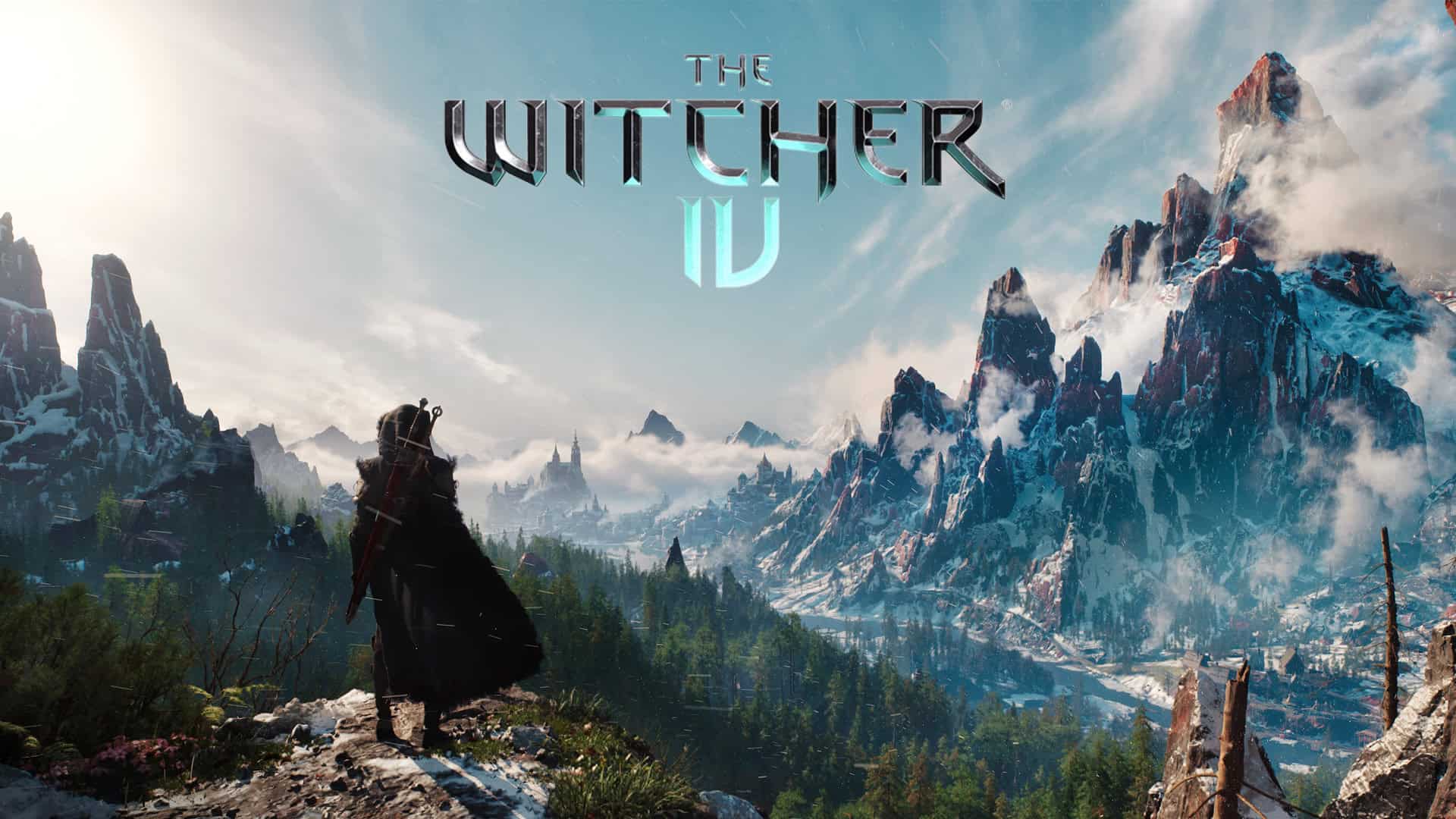
The Witcher 2 is pretty taxing on hardware, so gamers with mid-range rigs may want to drop the settings a bit, and lower-end PC’s may not be able to run it at all. However, if you can run it, it’s beautiful. Lighting is some of the best I’ve seen recently; a cozy fire in the common room of an inn casts flickering shadows of the guests across the dusty floorboards, and bright patches of hazy sunlight filter through gaps in a lush forest canopy. The first game was dark almost to the point of being silly; not so in the sequel. While you will occasionally venture into pitch-black dungeons, most of the action takes place in areas where you can at least see comfortably. When it does get too dark to press on, you can chug a Cat potion to grant Geralt temporary black and white night vision. This has the added bonus of making the veins and arteries of enemies glow a bright orange, an effect made even cooler when you can see them being severed during a brutal finishing move.


Characters move fluidly and realistically, and there are a few sequences involving gigantic creatures which are truly jaw-dropping in their intensity and coolness, though there is a downside. When there are a lot of enemies on screen, or sometimes with just one really big one, collision detection seems to suffer. Once in a while Geralt may take a swing or throw a dagger which obviously doesn’t go anywhere near the target, and yet blood sprays and the bad guy drops all the same. Still, it’s preferable to the opposite effect of perfect hits not registering.

The music is very nice indeed, if a bit lacking in variety. Battle hymns complement the action well without being distracting, and mellow tunes accompany exploration sections. I liked the jaunty stylings of the entertainers found in inns best of all, which offer a festive break from the tense work of monster eradication. At times, even a total lack of music is well-played; a massive, ancient forest is completely silent save for the humming of insects, the breeze swaying the branches and the quiet roar of a distant waterfall. Voice actors range from competent to talented, with only Geralt and Triss coming up a bit short. Geralt’s performance is forgivable – at least his gravelly tone matches his gruff exterior – but Triss is rarely convincing.

Glitches aren’t common, but they happen, and the ones I experienced were pretty jarring. Geralt sometimes disappears entirely for a few seconds, and on two occasions the game just completely shut down with no warning or obvious cause. Alt+tabbing out of the game can cause it to completely lose its mind when you return; on one occasion, doing so brought me face-to-face with a horrifying floating set of teeth below phantasmal eyeballs where Geralt should have been, his two swords drifting lazily through the air like it was no big thing. Reloading a save fixed the issue, but did nothing to salve my mental scars. Lastly, and most irritating of all, I counted no fewer than 3 broken quests, tasks that couldn’t be completed because they’d either crash the game or disappear entirely. It’s not so bad that I’d accuse the developers of deliberately releasing an unfinished game, but these are still things that never should have made it past beta testing.

Summary

Games are rarely perfect, but they don’t have to be flawless to be enjoyable. The Witcher 2 is a godsend for gamers like me, who love RPG’s but are burned out on the idea of badly translated teenagers saving the world with impractical weapons and strange outfits. The Witcher 2 earns its mature rating with nudity and plenty of gore, but these elements are – for once – used appropriately, to tell an adult story in a believable context. It’s refreshing to see a not-for-kids game that doesn’t feel the need to be controversial just for the sake of being controversial.

After a rough start, this compelling tale of an imperfect man doing his best to protect an imperfect world blossoms into a must-have addition to the collection of any who call themselves fans of a great story. Though it leaves many questions unanswered, the things it does well vastly outnumber the things it doesn’t, and when I have time I’ll definitely go through it again. CD Projekt Red has demonstrated a willingness to learn from their mistakes as well as a knack for effective innovation, and if this trend continues, The Witcher 3 will undoubtedly blow both of its predecessors out of the water.

ESRB M Rating

Publisher: Atari

Developer: CD Projekt Red

Genre: RPG

Release Date: May 17, 2011

Review Date: 23-06-2011

Numbers of Players: 1

Players Online: No

Co-op: No

Notes:

All Witcher 2: Assassins of Kings (The) reviews

100

GRAPHICS

If you’ve got the hardware to handle it, The Witcher 2 is stunningly gorgeous. Mouth movement is stiff and awkward during conversations, though to be fair I think I’m just spoiled by L.A. Noire.

85

GAMEPLAY

Battle mechanics have been reworked for the better, all but one of the mini-games are fun enough to tinker with, and the 50+ quests are varied and organic. Points lost for some irritating quirks in presentation – see review for details.

80

PRODUCTION

A few broken quests and other annoying glitches aren’t game-breaking, but they do mar an otherwise captivating experience.

95

SOUND

The sounds of battle are epic and are best experienced with good headphones. Music is very well done, and voice acting is mostly good, though Triss sounds like she’s trying too hard and Geralt seems incapable of strong emotion.

90

LASTING APPEAL

At 30+ hours if you finish every quest, it’s still worth a second round if you’re a fan of solid RPG’s. Several important choices made throughout the game change the plot enough to make it worth seeing a second time from a different angle, although knowing exactly how to finish each task takes some of the fun out of it.

90

OVERALL SCORE

GALLERY PREVIEW -- Witcher 2: Assassins of Kings (The) -- PC

ADVERTISING