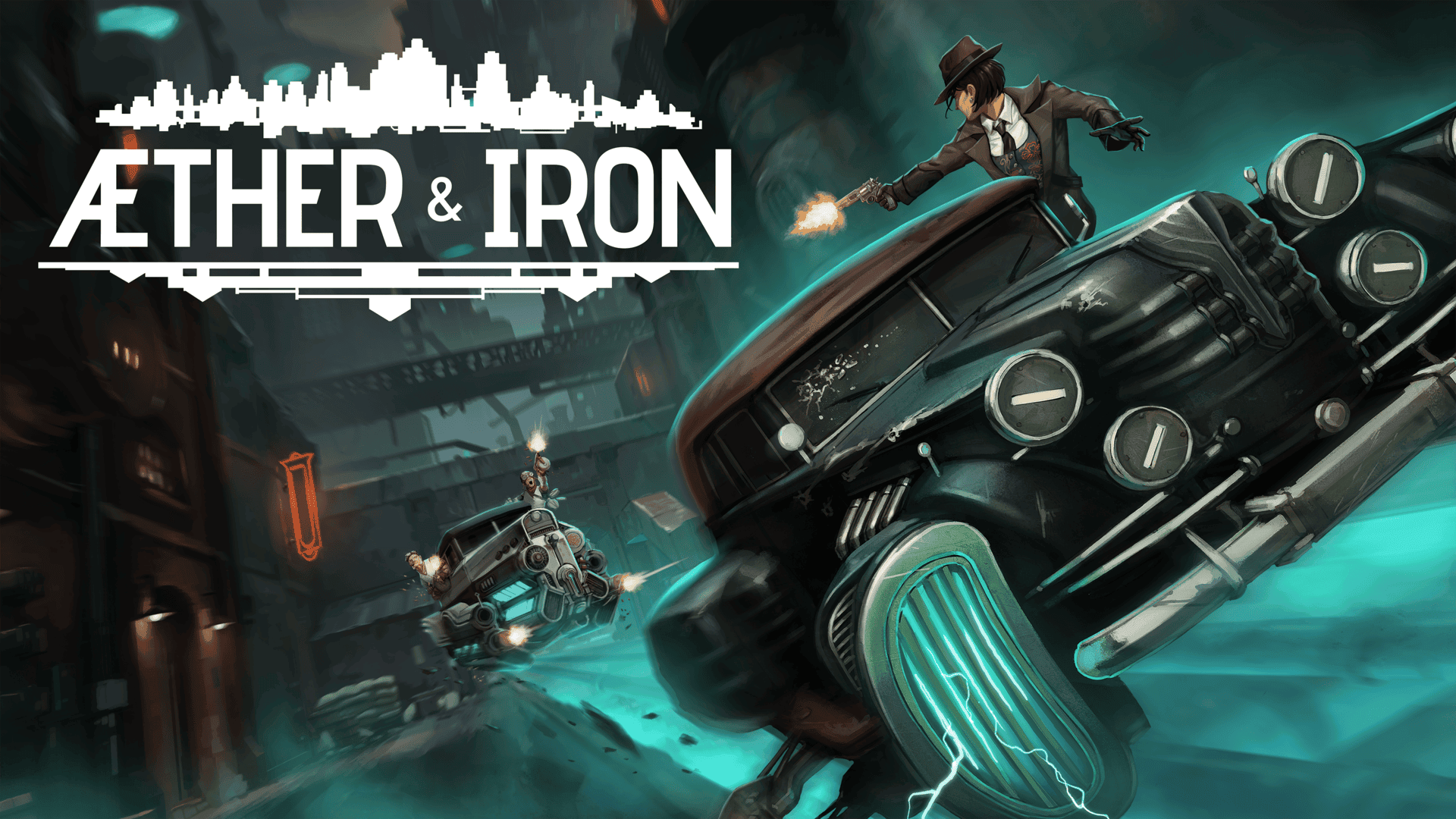
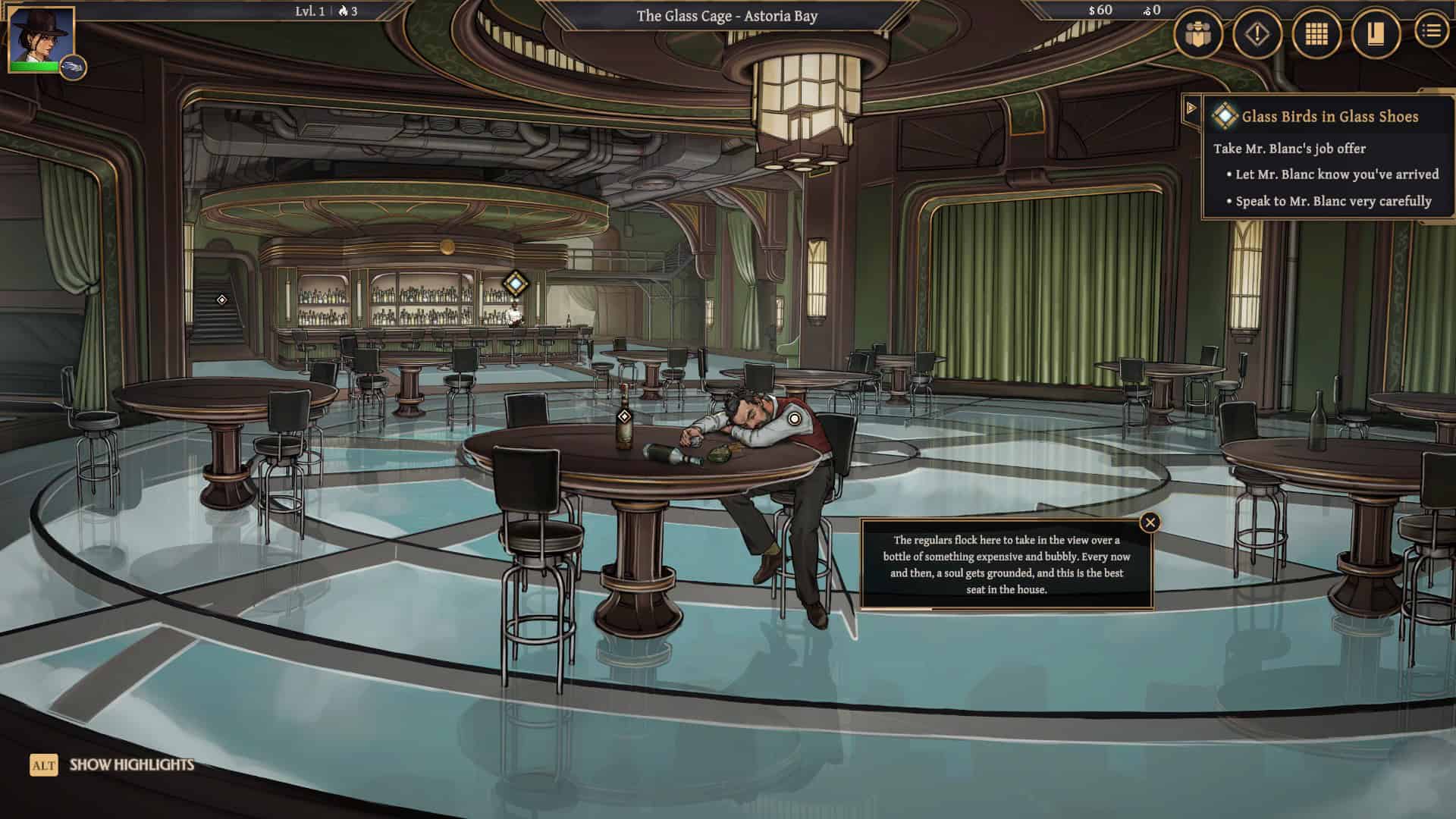
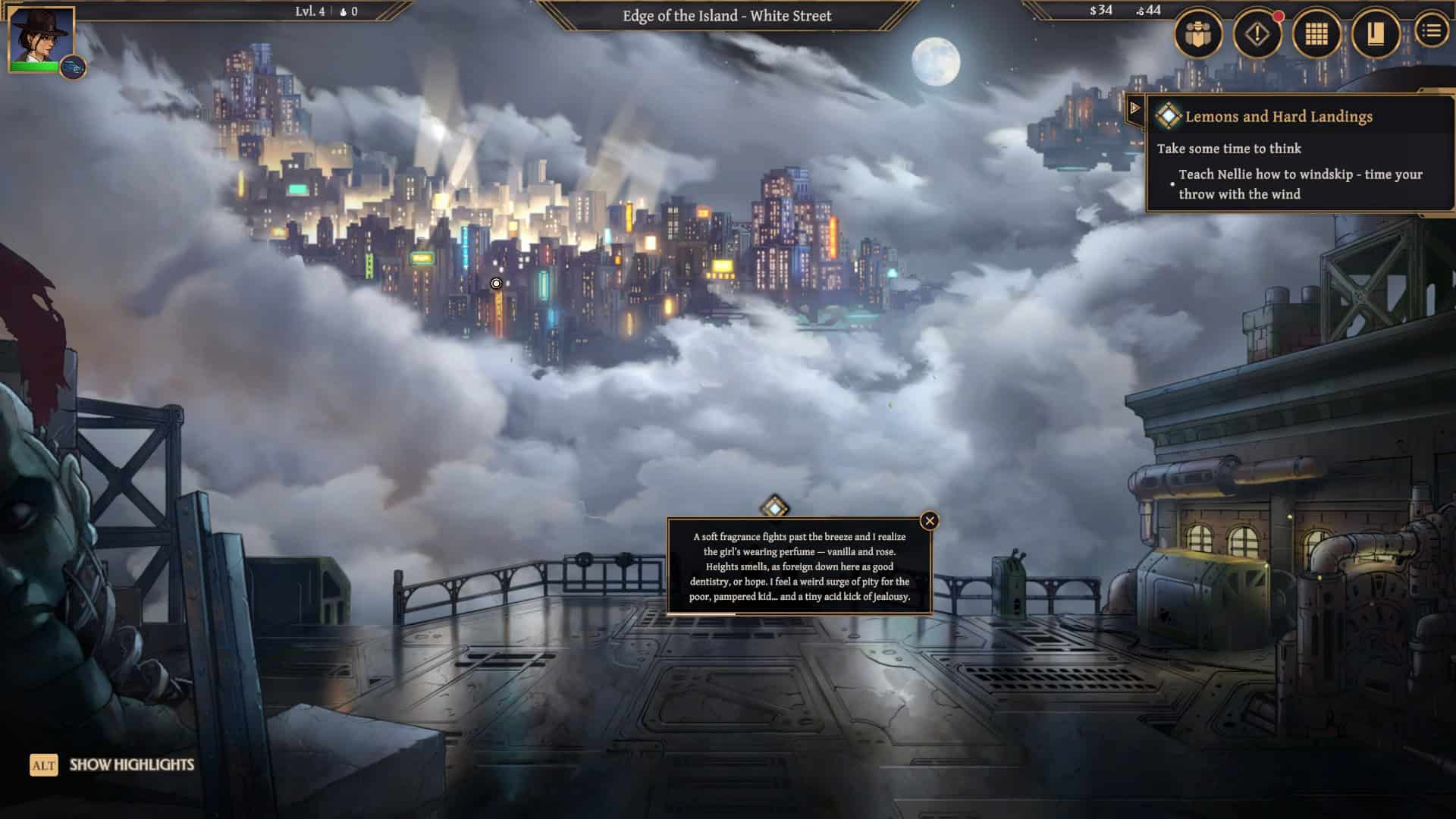
Gotta admit. I was enamored with this shindig at first sight. It had it all: unique combat and setting, full voice acting, a fantastic sense of style, and a weight to those first choices. Aether & Iron’s Gia Randazzo buttered me up with distinct, detailed descriptions from a veteran smuggler down on her luck, filled with both the panache of a worldly, well-read progressive and the uncompromising attitude of a seasoned survivor. In the floating city of an alt-history, decopunk, 1930s New York, I searched for the next great indie RPG.
It is frankly shocking that Aether & Iron is a self-published title. The first hours are unbelievably rich, not to mention how many of the aforementioned features it had on lock. It immediately dazzles with the art, the vision it has for this version of New York, and an incredible performance by Rhiannon Moushall in the lead role—a mysterious criminal living among the city’s underbelly, disgraced by the killing of her last, high-profile client.
The opening is quick, doesn’t overexplain, and gets right into the action. It familiarizes you with the dice mechanics, the car-based combat, and the RPG elements that provide bonuses to both. When I played the game’s demo a month ago, I couldn’t wait to see how it all expanded. The setup is excellent, and it largely continued as such. Thing is, so much of the game is just that. Setup.
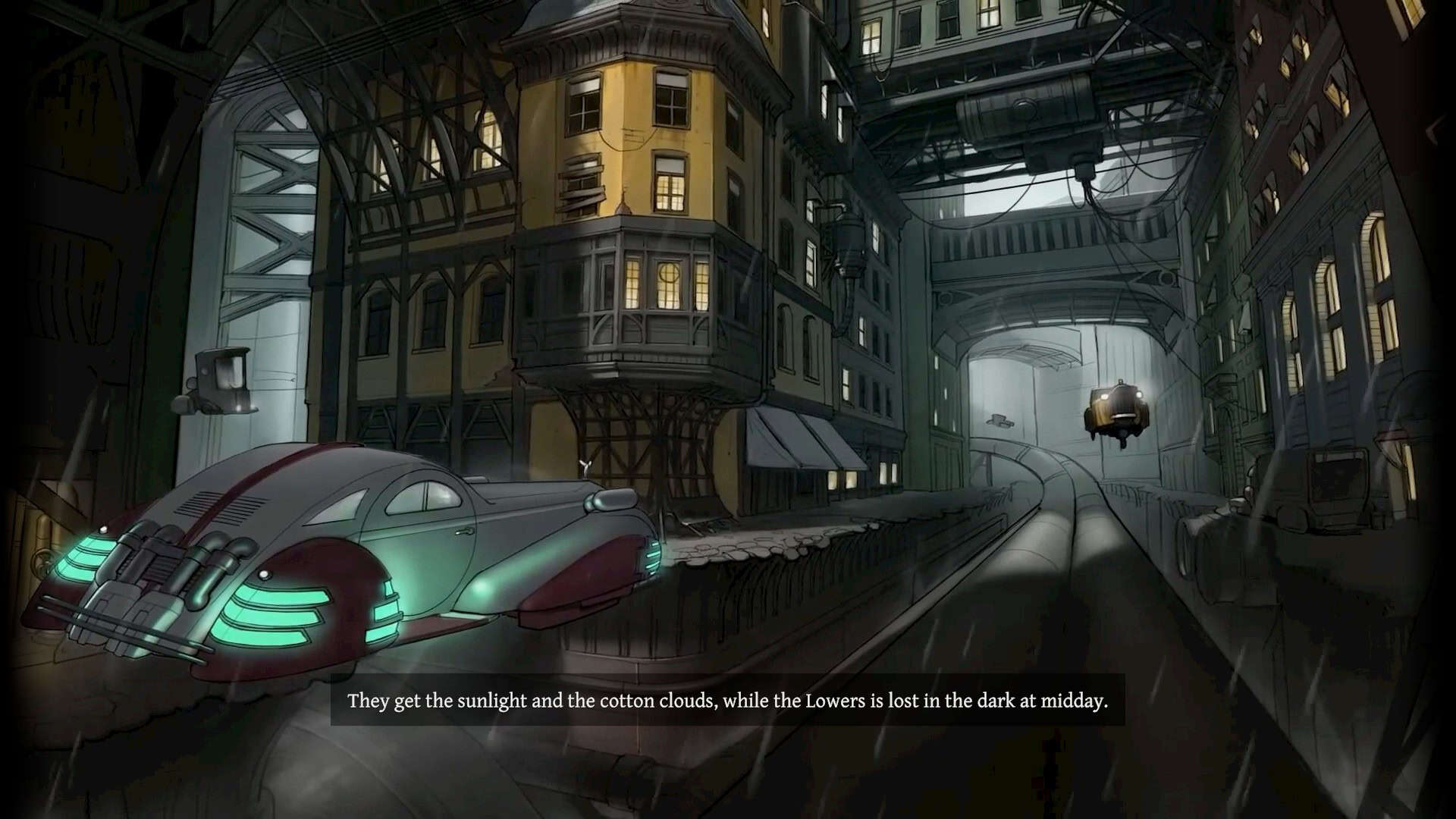
The structure here is heavy on switching between areas, setting up characters and plotlines from the ground up in each act. Ultimately, it becomes clear that while Gia Randazzo is the game’s voice, the real protagonist of Aether & Iron is the retrofuturistic, glowing, and floating city of New York. Split between different baronies, each with a ruler whose distinct vision for their piece of land has to be understood by the player, more so than Gia herself, who has, at the very least, passing familiarity with each faction or concept.
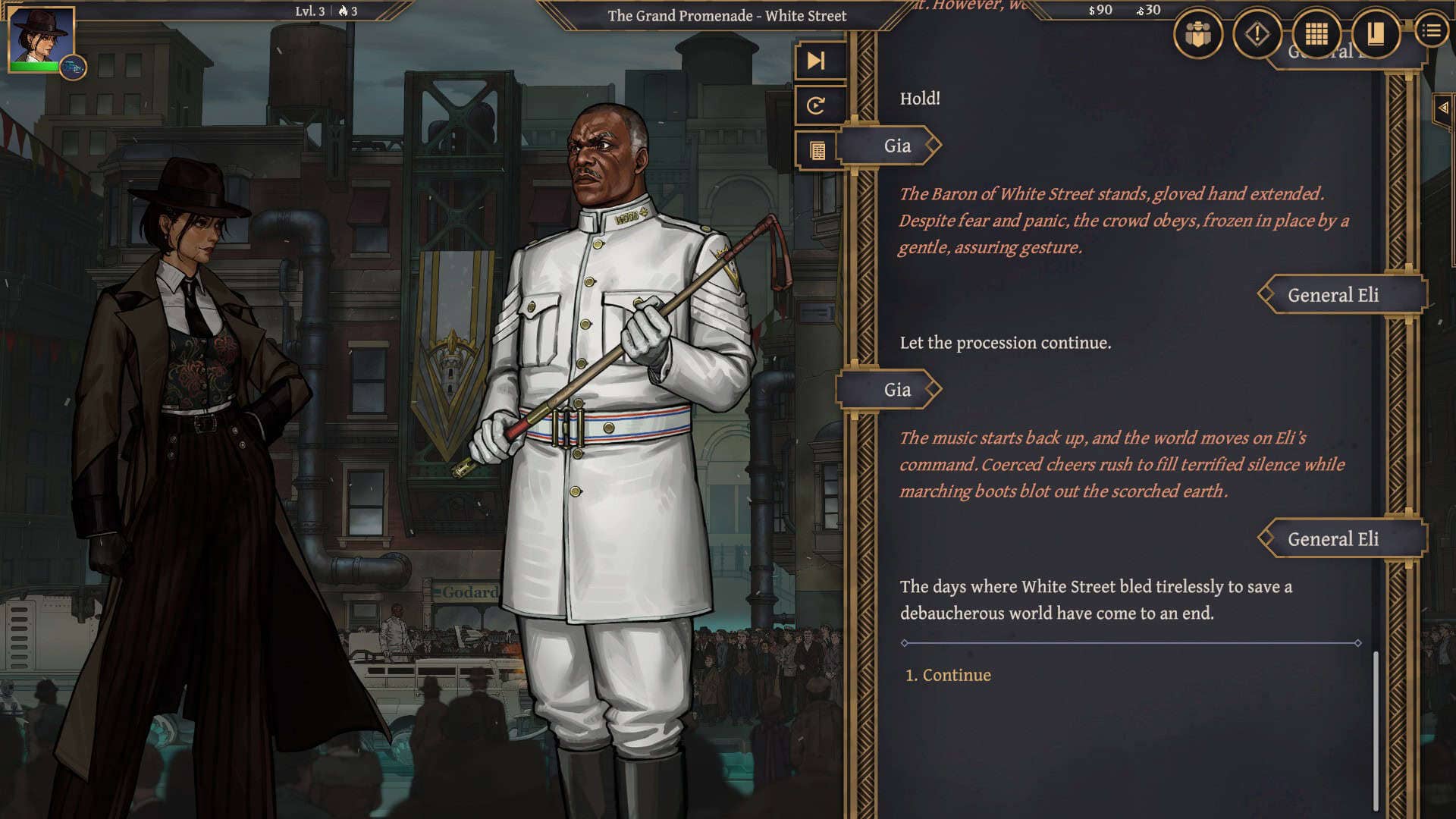
Here’s where the cracks start to show. Despite taking so much time on the setup stage, the view of each barony feels limited. Each area has two civilian groups of sorts that you get to infiltrate, ones that rarely ever return to impact future chapters. Companions you end up bringing with you have little impact on any given scenario. Shame, because there’s some stellar voice performances to be found here too, particularly Brent Mukai as Luca Mazzi with his impassioned speech and regretful recollections. It feels like goals are always shifting, and rarely are there moments for all the pieces put into place to do their magic outside of their designated playtime.
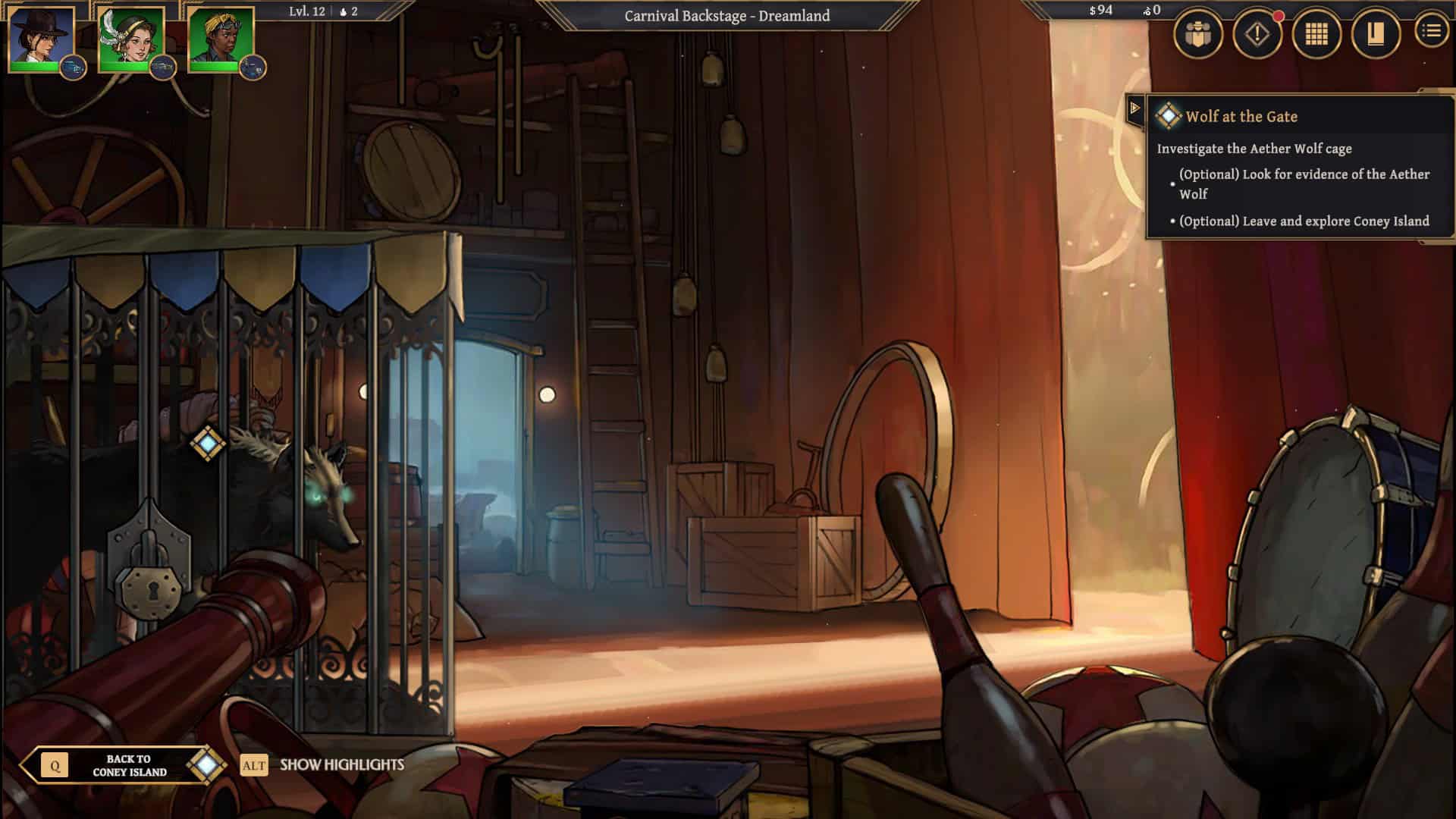
As a result, much of Aether & Iron feels weightless, as if also propelled by the titular Aether technology. The best moments are the times a character takes initiative and pulls away from the larger conflicts. When Gia becomes weirdly fascinated by an Aether-infused wolf stuck in a circus cage. When she, and an assassin sent after her escortee, find each other’s stories not so different. When she and a companion travel to a run-down neighborhood, and she’s forced to pick between two kids to join the brutal tutelage of the local baroness’s enforcers.
In most other scenarios, the decision-making and the dice rolls lack impact. There is often a severe deficit of real fail states that becomes increasingly more noticeable as the game goes on. The first act allows for one possibly impactful choice on the barony that feels more like an introduction to the concept of choices and consequences, as well as one personal choice for Gia. The rest of the act unravels in a way that feels fully out of your control, but it makes sense, tying back into Gia’s backstory. Future acts are not always as lucky.
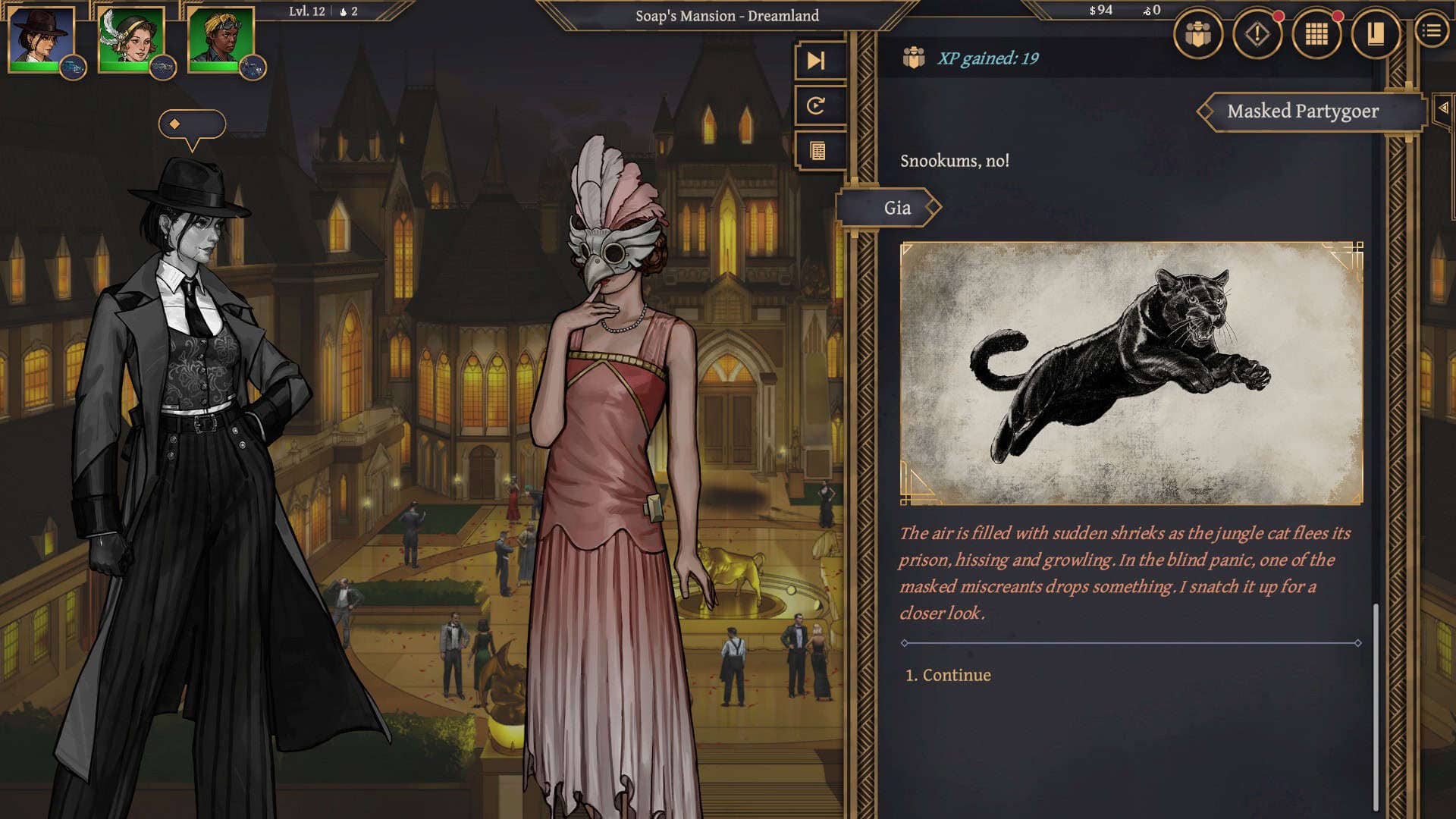
To paint a picture, in preparation for the final quest of an area, Gia is tasked with infiltrating a party to speak with an influential man. There are two roadblocks set up; one on the outside of the villa, and one inside. Both require passing at least one of the available checks and interacting with some activities before completion. All in all, a lengthy introduction to the character through the eccentricities of his guests. The encounter itself? Gia goes in, places a bet, and loses it. You’d think that would fail the quest, providing issues in the finale of the act. But instead, a character steps in out of nowhere and is simply so cool that the person she worked so hard to meet, folds instantly and agrees to her terms.
In these kinds of games, failure has to be as interesting as success. If we are to let a nebulous choice or a dice roll decide where the story goes, then either path must not lead to the same place too often. At the very least, change the implications—don’t let successes be the only path to meaningful interactions. One way of doing that could simply be by letting the player miss out on something.
In a different scenario, I lost out on one of the most fascinating quests up to that point because I clicked on one clue before another, which was unprecedented in the game. While that may have hurt, I can say that at the very least, I thought about what could have been. It was impactful. I made a choice, and it was the wrong one. Moments like this kept my interest in the game, but it was an increasingly difficult battle.
Around the same time, a lot of other systems started falling apart. For one, the idea of “heat.” This meter serves as the primary punishment for failing skill checks, but higher heat can be beneficial, as it makes the more daring options easier to clear. It’s hard to really gain, though, as most scenarios provide several different options that your companions may also assist you with, lowering the check’s difficulty. Unless you consistently, intentionally pick the hardest checks, you are likely to never experience this high-heat state.
Higher heat may lead to more “random” scenarios. These pop up on the roads between locations and are initially presented as chance-based, but often end up as clearly pre-planned combat encounters or quest-starters. There is also a whole system based around illegal cargo that can be concealed with special vehicle enhancements, but, once again, I never once got to meaningfully interact with it. One relatively cheap investment can essentially eliminate a whole system from the equation.

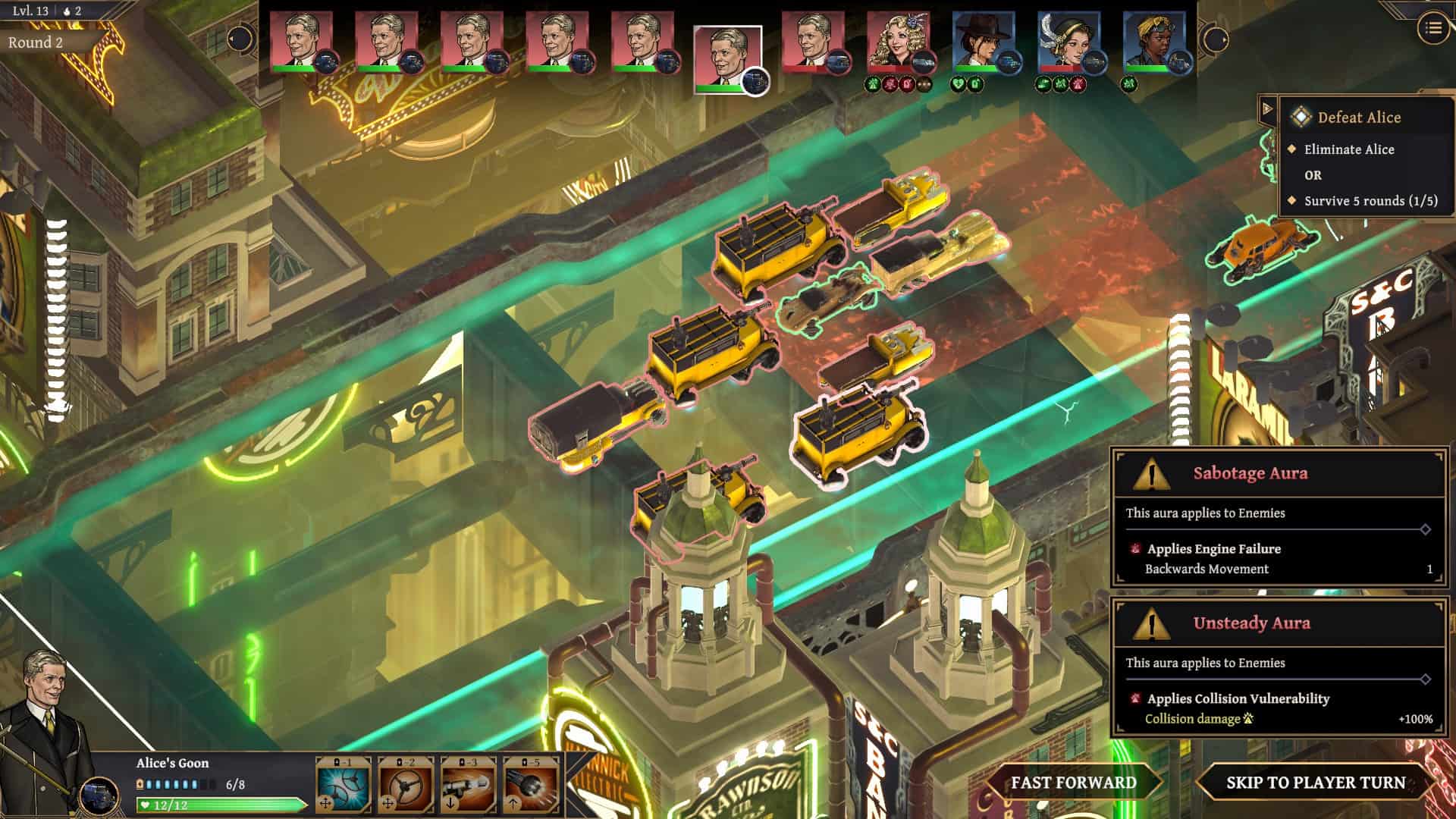
Other enhancements assist with combat, which was consistently my favorite part of the experience. There are quite a few unique systems at play here, based around manipulating position and energy. Even though enemy AI isn’t always necessarily challenging, the various tactical combat weapons are very satisfying to use, such as pushing vehicles into oncoming rubble or even a roadblock that results in an instant KO.
However, after the aforementioned party scenario, I was hit with such an unbelievable encounter that I was forced to lower the difficulty for that one encounter. See, the game has a “no save scumming mode” of sorts, which allows you to only load up your most recent autosave. Without loading up older saves, however, you can’t necessarily prepare for specific encounters, as you never know what kind of resistance you’ll meet.
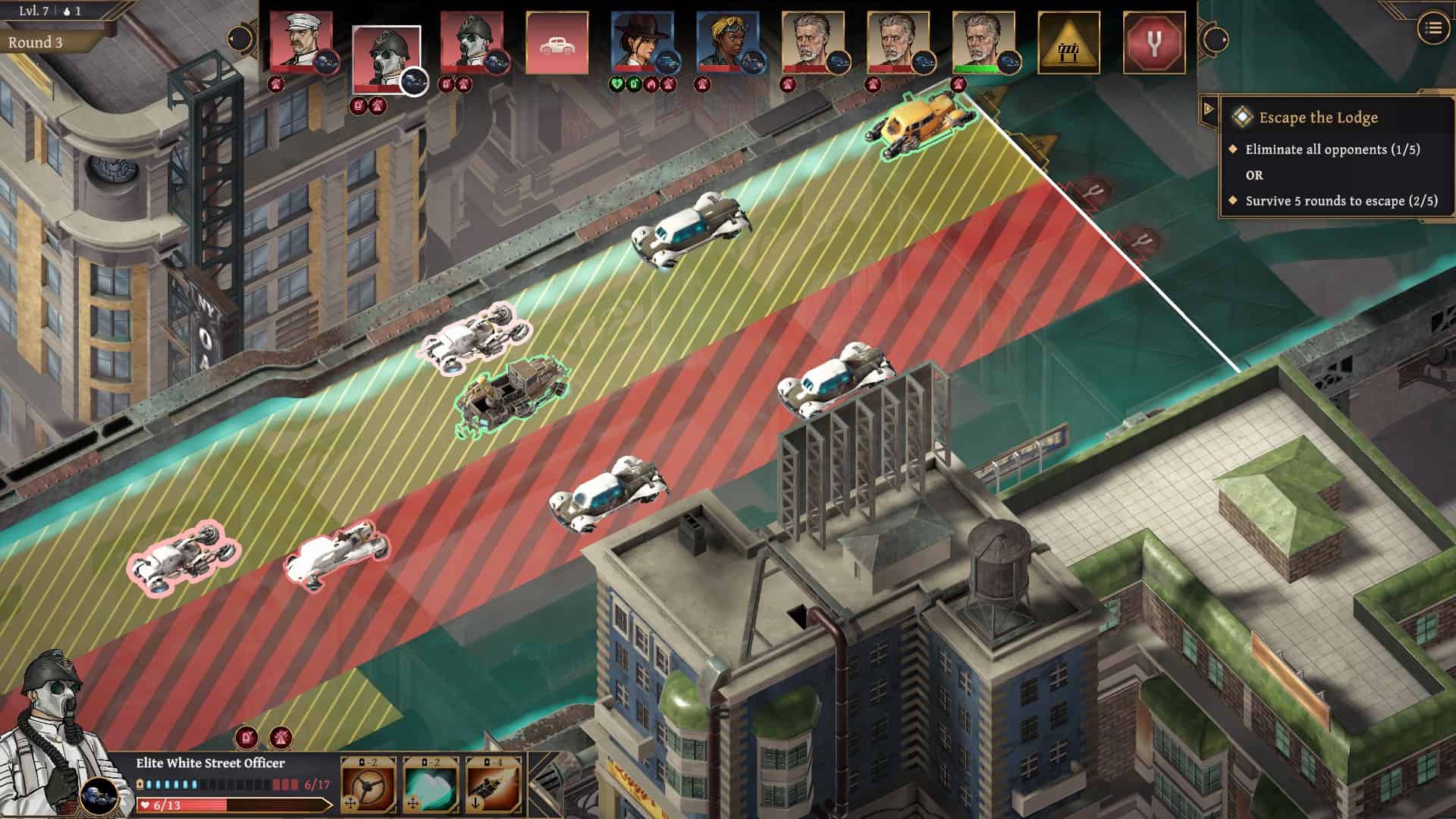
Those kinds of descriptions are rarely a part of prep. While you may assume a party will require some lying or a sneaky exit and prepare by buying items to reroll specific checks, rarely is such a thing provided for the associated combat encounters. Obviously, you’d want heavy weapons that hit multiple enemies for encounters with many smaller, faster cars, or more single-target damage for one tank-like truck. Instead, you’ll usually be caught off guard by a chasing party or an unexpected squadron, so I would always end up with a multi-purpose party.
So, imagine my shock when my measly car with under twenty health and its two companion vehicles, all equipped with the strongest weapons and best armor I could fit, get annihilated in one turn by an onslaught of six enemies with several dozens of HP points to boot. No other way around it, I had to lower that difficulty, at which point the fight ended almost comedically, with me winning in just two turns. From completely unbeatable to challengeless.
Perhaps I would have some more firepower if not for the fact that my items would tend to disappear. Occasionally, when swapping out parts from a vehicle, some would be removed from the game wholesale instead of returning to a car’s inventory. The general controls of that UI feel weirdly imprecise in general, with some not responding to certain clicks, or items not landing in the slot you just dropped them in. For as much as I was enamored with the richness of the game initially, it all began to die down.
Eventually, the game started to sort of fall apart completely. Characters I haven’t met started appearing in scenes back at the hideout, the game misrepresented what the most emotionally impactful decision I had made, and the final companion ended up being a mind-boggling, though ultimately just unimpressive choice for a game with vehicular combat. The beautiful language became somewhat of a crutch, with some descriptions veering into unnecessary lengths. Elsewhere, characters began to spell out things way too plainly. The inventory of my main upgrade provider got filled up by all the stuff I sold her, and thus, I had little access to new stock in the final act. The finale also did very little for me.
I couldn’t help but eventually think about what was missing from Aether & Iron. Why did I feel so little when all was said and done if I was so engrossed in it at the start? For one, I think the reactivity was really disappointing. You never know if a choice really means anything after being subjected to a couple of contrived scenarios. Companions offer little insight past their admittedly charming introductions and a finish of their goals soon after. The few bugs and that one difficulty spike certainly took me out a little too.
Ultimately, Aether & Iron lacked a moment where it could truly shine. Where systems, plot points, characters, and something truly unexpected could come together to blow the game wide open. Instead, I remember the few vignettes of a fascinating world that I would love to see more of without the constraints of a world-end narrative. Aether & Iron has a devilishly fascinating setting, a beautiful art style, and the voice talent to deliver some seriously impactful scenes, but the structure completely muddles its strengths, characters lose their voices too quickly, all the while its systems end up leaving too little of an impact on the experience. There was never a moment when I thought Aether & Iron found its footing as a video game.
Mateusz reviewed Aether & Iron on PC with a provided review code. This review is based on the version of the game available at the time of writing and our score will not be changed.
- Score
- 5/10 It’s Fine - Mateusz Doesn't Recommend
- Summary
-
Aether & Iron offers a fascinating setting, a beautiful art style, and voice talent that delivers strong performances. But the structure, weak systems, and characters that quickly leave the picture completely muddle its strengths.
- More
- GameObserver's Review Policy