While many games will go to great lengths to scare players – offering huge, intricately designed maps for players to explore and uncover the horrors within – sometimes, the simplest of ideas are where the true horror lies.
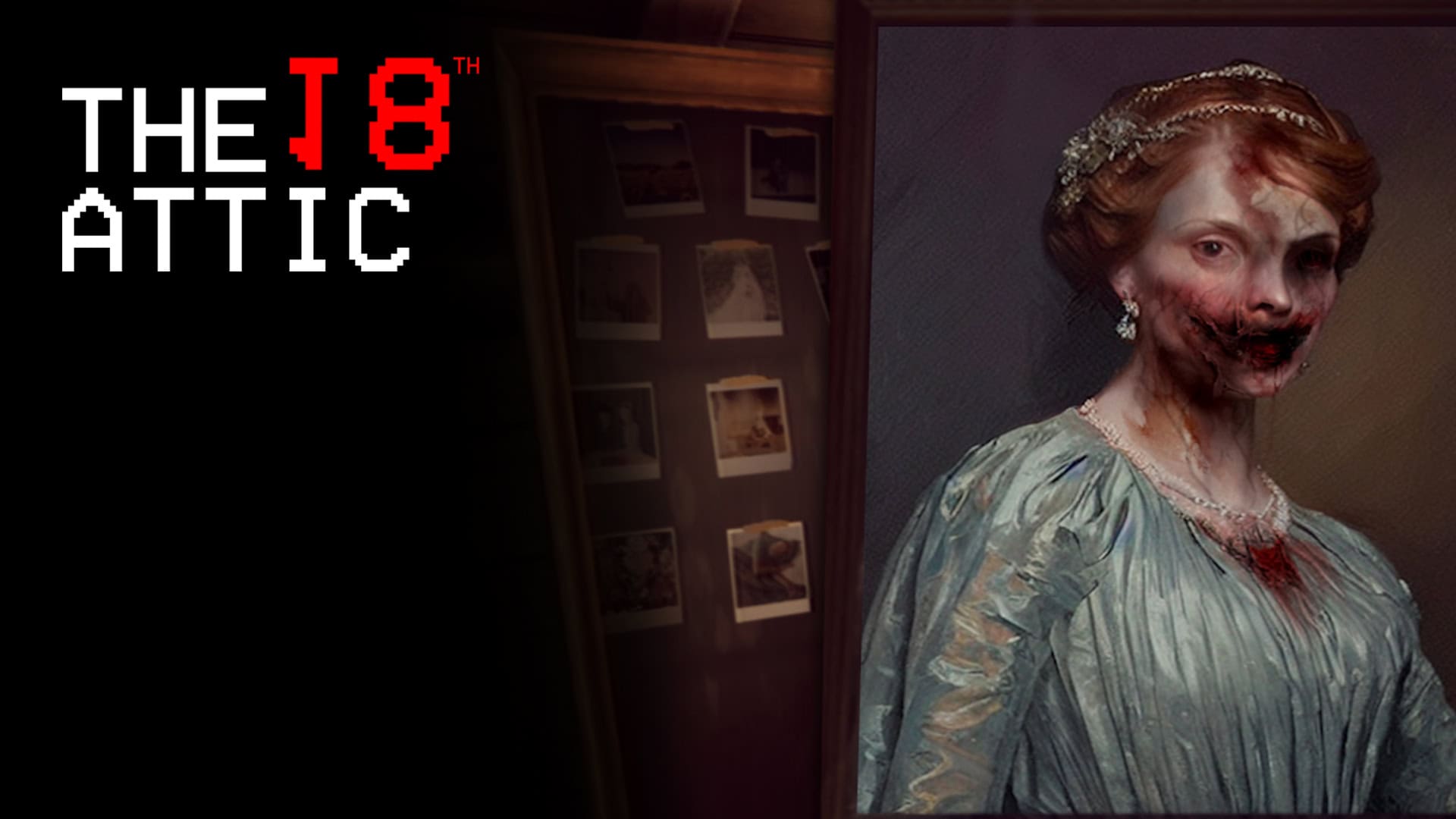
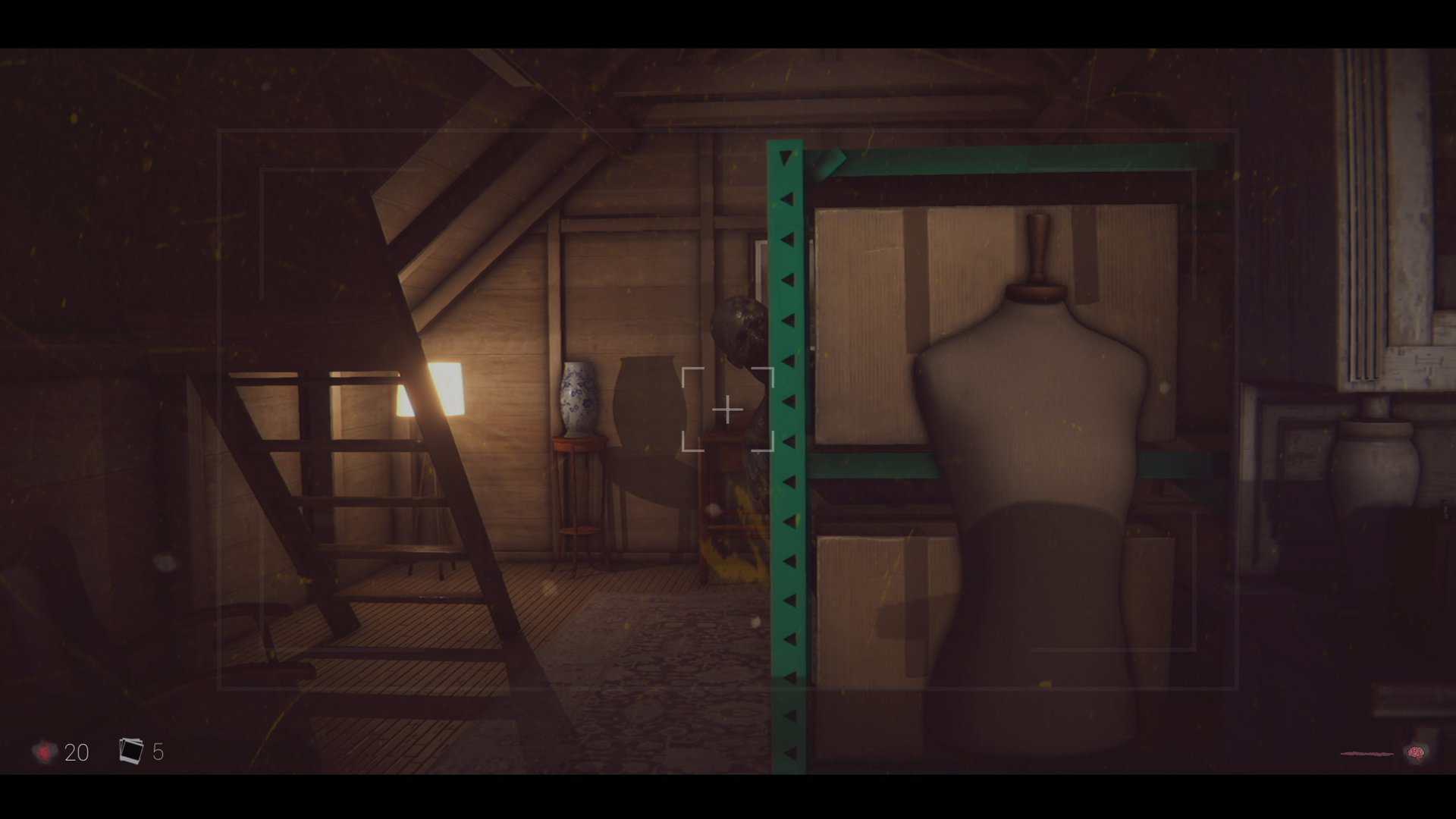
The 18th Attic is a psychological horror game by solo developer Steelkrill Studio. We play as James, who starts the game in the downstairs bathroom of his house. The shower is running and his wife calls for him from the attic. So, we head up the stairs (without turning off the shower, maybe James’ water bill is where the true horror lies). But our wife isn’t in the attic, only our beloved cat. After a quick pet, we grab our camera and head towards a second set up stairs, seemingly leading to another floor of the attic. But upstairs is an exact copy of the floor we were just on. Caught in a loop, we must climb every set of stairs until we reach the top, and hopefully find our wife. Each floor is infested with anomalies which will tear at our sanity unless James captures them with his camera which will also unlock a memory of his past.
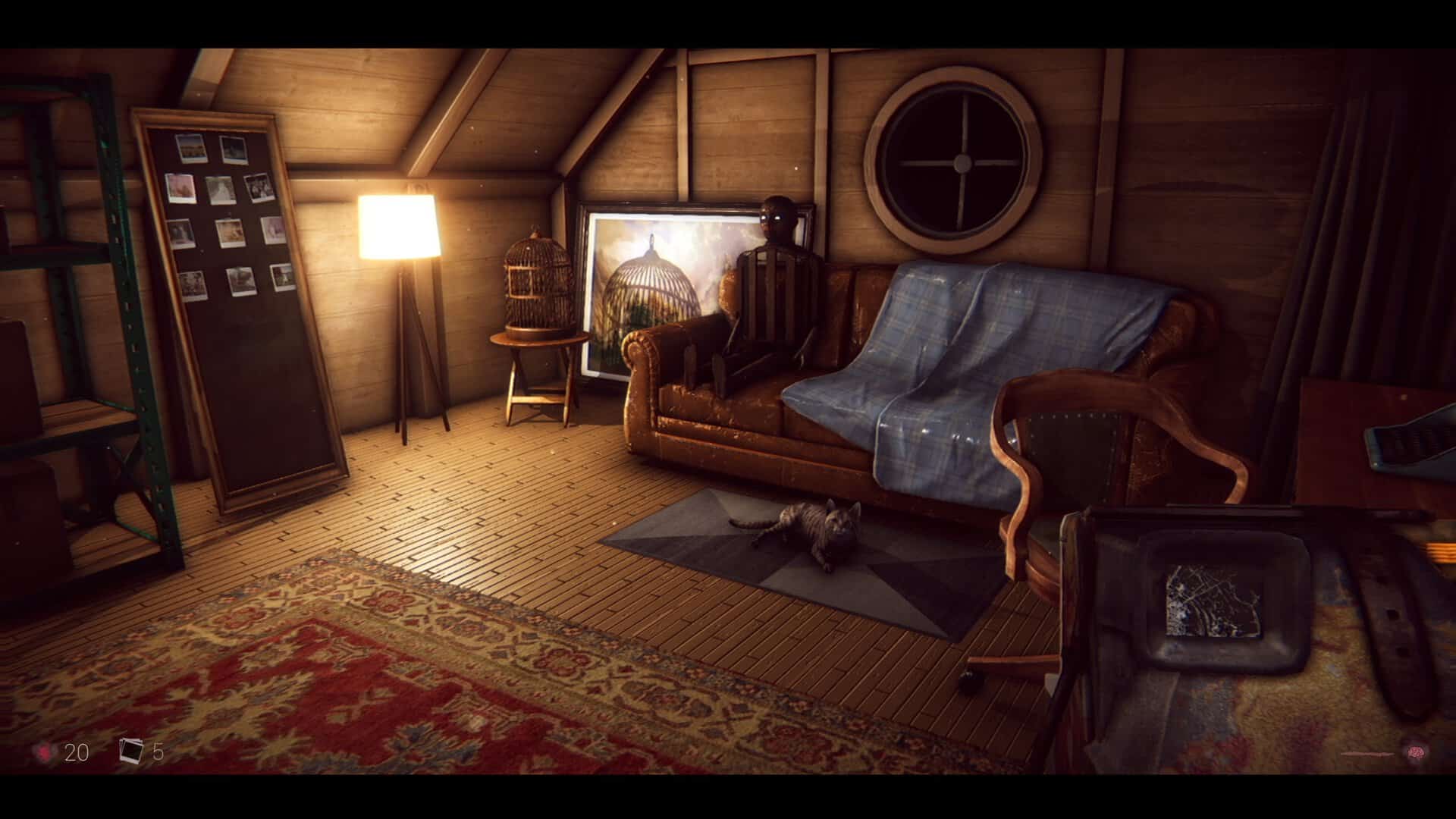
The 18th Attic is essentially a game of Spot the Difference; each time we enter a new floor, we must keep an eye out for anything that’s changed within the attic – missing items, something that wasn’t there before, flickering lights, and even moving objects. We must then take a picture of the change, ensuring we are close enough for the camera to pick it up (just taking a picture of the whole room won’t fly in this game), and we’ll then be told whether it was an anomaly or not. If it was, then we can safely proceed to the next floor. If it wasn’t then we either need to keep searching, or it may be the case that this floor doesn’t have an anomaly on it. In the event that we try to proceed to the next floor, assuming there was no anomaly, and it turns out we just missed it, then a jump scare will occur and James will lose health and sanity.
Losing our sanity causes James to hallucinate which makes spotting anomalies more difficult. We can replenish our sanity by petting our cat, who will be lounging on the rug of every floor. The player will die if they lose all of their health, which could set them back by quite a few levels depending on when the last autosave was. We also have limited film cartridges to take pictures with, and running out will mean we won’t be able to take a picture of an anomaly – and who knows when we’ll next find a film cartridge?
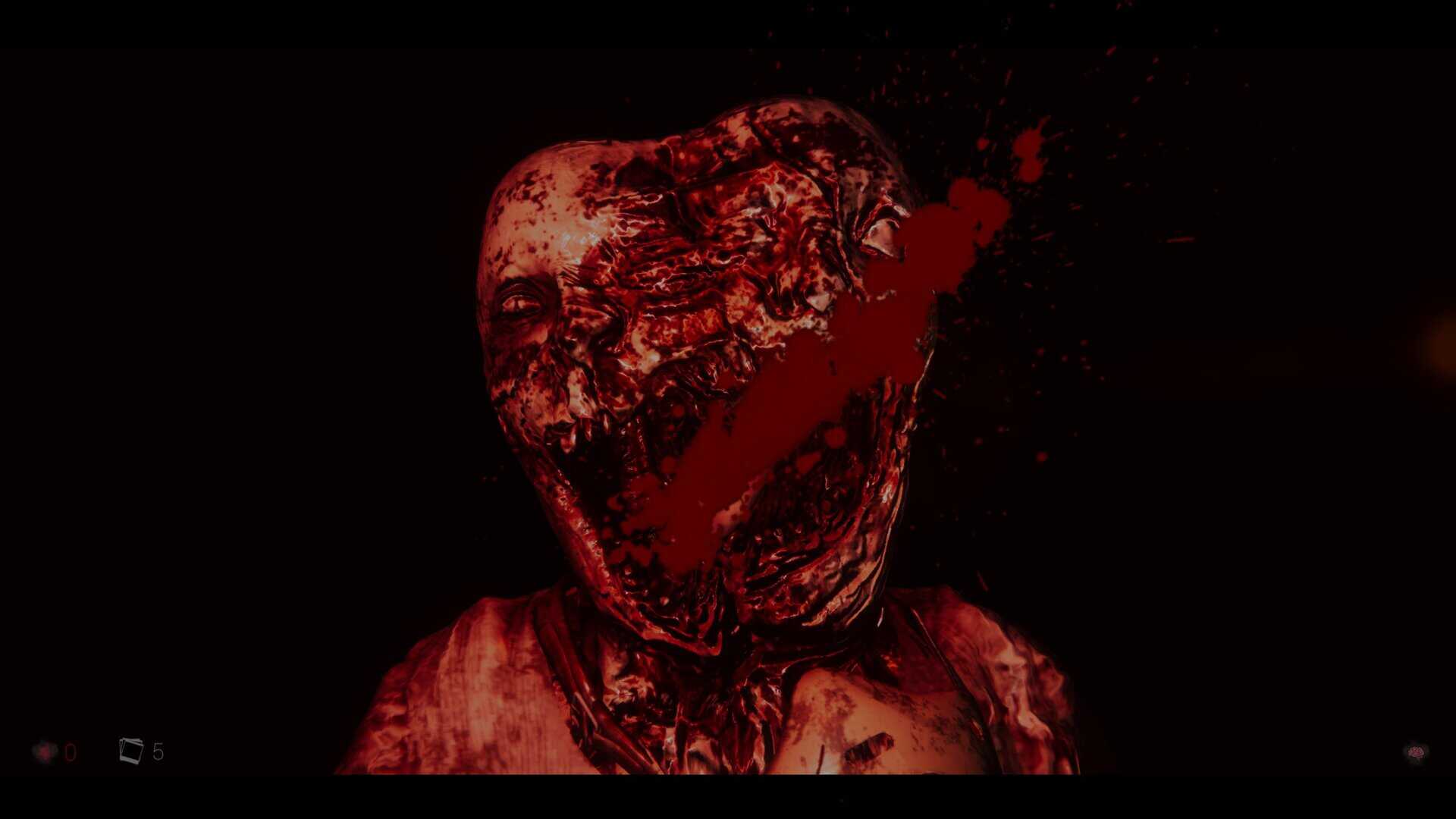
The 18th Attic has two difficulty modes: Chase Mode and Story Mode. Chase Mode is the original experience, offering a greater challenge as an entity will be hunting the player as they search the attic for anomalies. Each time they turn their back, the entity will get closer. Story Mode does as it says on the tin and offers a more relaxing experience for players looking for a more story-focused experience, it removes the entity so that players can search for anomalies in peace.
I actually found that Story Mode still offers a challenging experience that will still entertain horror fans who are maybe just not in the mood for being chased around. This is mostly because The 18th Attic’s premise is incredibly effective at building tension just by leaving the players to second guess themselves. Its simplicity is its greatest strength; as players grow accustomed to the layout of the attic and keep scrutinizing the same environment over and over again, they’ll also start to memorize its layout more accurately and maybe begin to notice the more minute details and question whether they were there before – wait a minute, have I seen that speck of dust before?
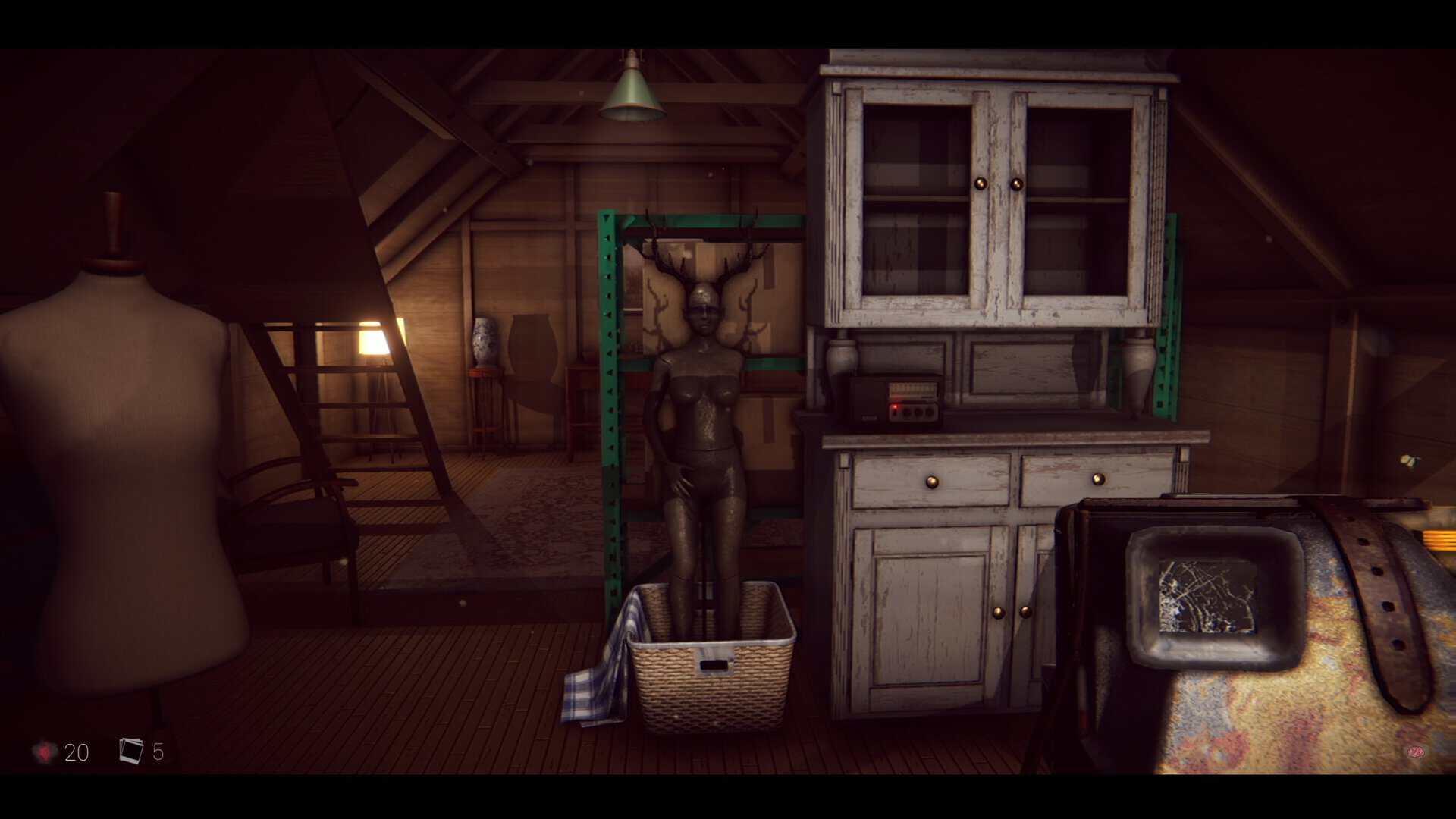
Finding the anomalies can be very difficult as well, as sometimes the change will be something that you maybe wouldn’t usually be focusing on – such as the rug suddenly being different. Who usually pays attention to rugs in video games? There were plenty of times where I swear I had scanned the room with a fine tooth comb and had still been caught out. This then adds to the anxiety of choosing whether to move on or not; in fact, I started finding myself flinching when approaching the stairs after deciding that there wasn’t an anomaly on the floor, anticipating that I may have just missed it and bracing for that jump scare.
There is also limited inventory space, and while in Chase Mode this adds inventory management to the pressure of finding the anomaly while being chased, in Story Mode it felt really pointless as inventory management didn’t make things more challenging, just more annoying. It would also make gameplay smoother if film cartridges were automatically loaded into the camera in Story Mode as there’s also not much point to manually loading these in besides making room for more inventory space.
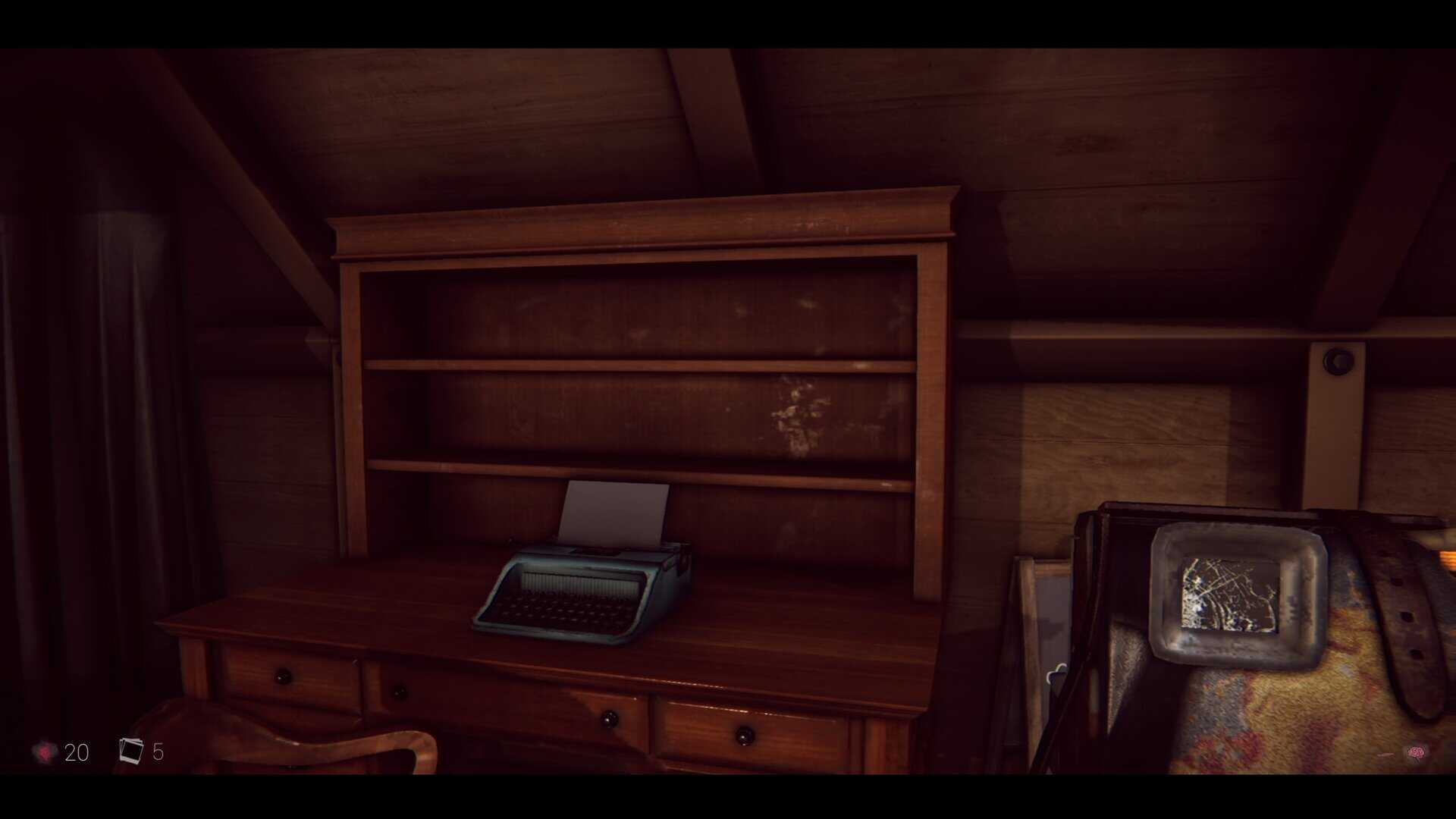
Unfortunately, despite being a story-focused game, the storyline is where The 18th Attic fell flat for me. It took a little over two hours to complete which was just enough time for an enjoyable short horror experience, and brief enough that the repetitive gameplay didn’t outstay its welcome. This could have been enough time to also dive into a really interesting story – it took me the same amount of time to finish Wrong Organ’s Mouthwashing which had a fantastic storyline – but unfortunately the game just doesn’t utilize its time well in terms of the narrative. Each time we discover an anomaly, we get echoes of a memory associated with the item that has changed, such as revealing who the typewriter belonged to and what it was for. These echoes revolve around James and his wife, Emily, and the absolute bulk of the narrative is simply happy memories of their life together. Of course, this is a narrative-focused horror game, so I kept waiting for that moment where things would inevitably go wrong for the two, and waiting, and waiting… The turn is revealed right at the end. Of course, by this point it doesn’t dwell enough on this to feel that effective and as a result the story is heavily weighted towards cliche lovey-dovey moments that just don’t fit in well with a horror game.
While the gameplay design itself is superb at building tension, the “scare moments” were mostly jump scares which didn’t happen frequently enough to truly scare me. I felt like more could have been done to involve horror elements in the environmental design, as there were only a couple of occurrences where objects fell off tables or broke as I moved through the room. As a horror game, there really should have been more instances of the attic feeling haunted, such as knocking on the walls or windows, lights shutting off – it’s cliche but I even spent the entire game anticipating that the radio would suddenly turn on by itself as I walked past it and that never happened either.
While The 18th Attic has a great gameplay premise which builds tension by making the player question their own judgement, as a horror game it very much lacks actual horror elements that fans of the genre would expect from the game. And while its length isn’t a problem on its own, with other games of a similar length being among the best in the genre, it’s not handles well in terms of its story and build up towards the narrative climax.
Jess reviewed The 18th Attic on PC with a provided review code. This review is based on the version of the game available at the time of writing and our score will not be changed.
- Score
- 6/10 Decent - Jess Recommends
- Summary
-
The 18th Attic has a great spot-the-difference gameplay premise which builds tension by making the player question their own judgement. But it very much lacks actual horror elements that fans of the genre would expect and its storyline, which the entire length of the game is spent building up to, ultimately falls flat.
- More
- GameObserver's Review Policy