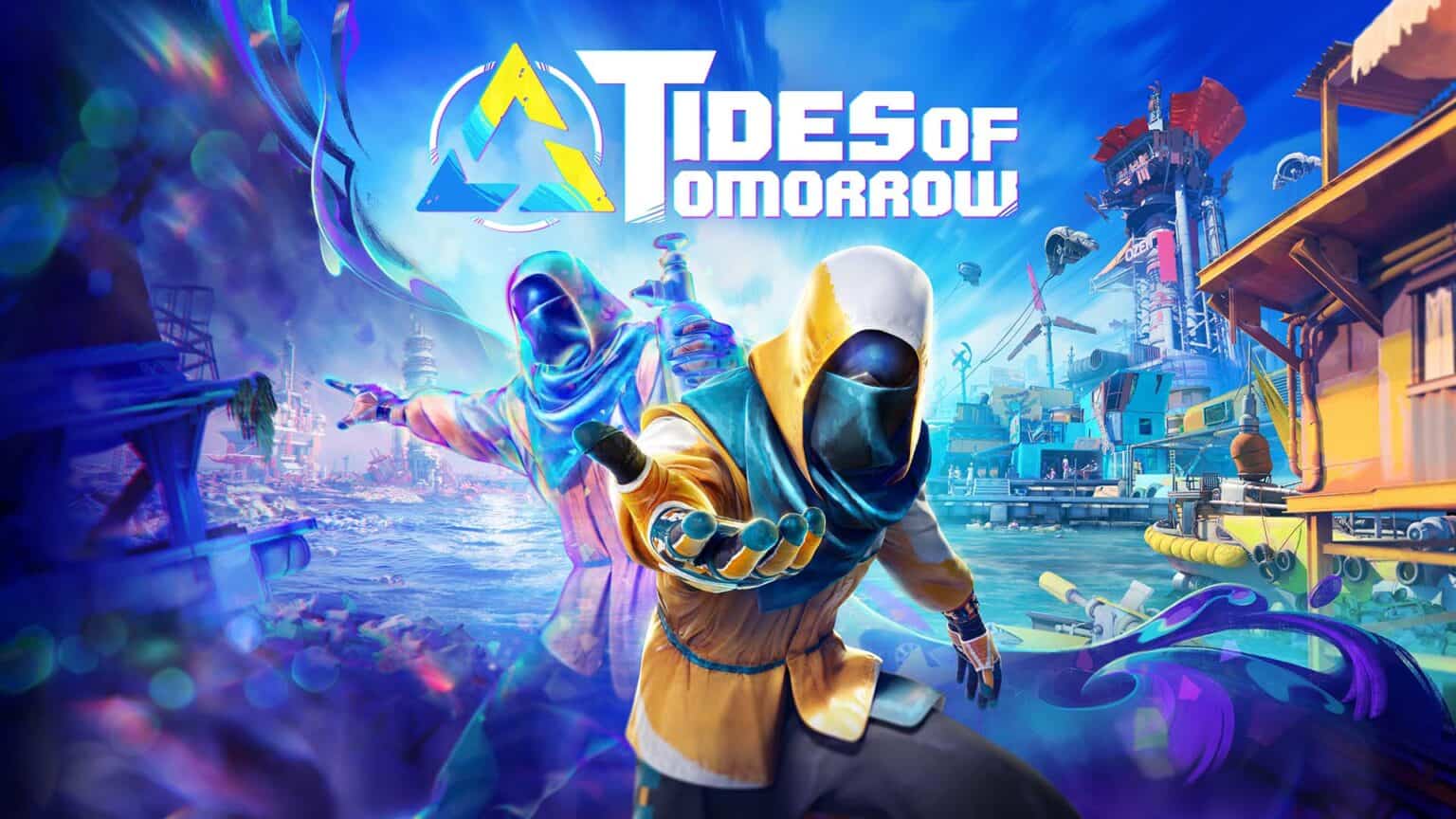
In 2021, French indie developers DigiXArt roared onto the scene with their debut title Road 96. This “narrative rogue-like” game truly innovated a new type of game, where dialogue decisions and player actions generated new paths on each run so no two were ever quite the same, and each subsequent teenager the player controlled lived in a world influenced by the actions of the last kid’s run. Their follow-up, Tides of Tomorrow, promises an equally innovative new type of narrative game in the form of an asynchronous dynamic world.
Tides of Tomorrow is hard to explain, which could definitely prevent people from picking it up – asynchronous multiplayer games are in short supply, and outside Death Stranding games no one to my knowledge has really experimented with a dynamic single-player world influenced and physically built by other human players. While it isn’t particularly fun to play the half-baked stealth and boat combat sections, Tides of Tomorrow is surprisingly good at the asynchronous multiplayer storytelling feature it is selling.
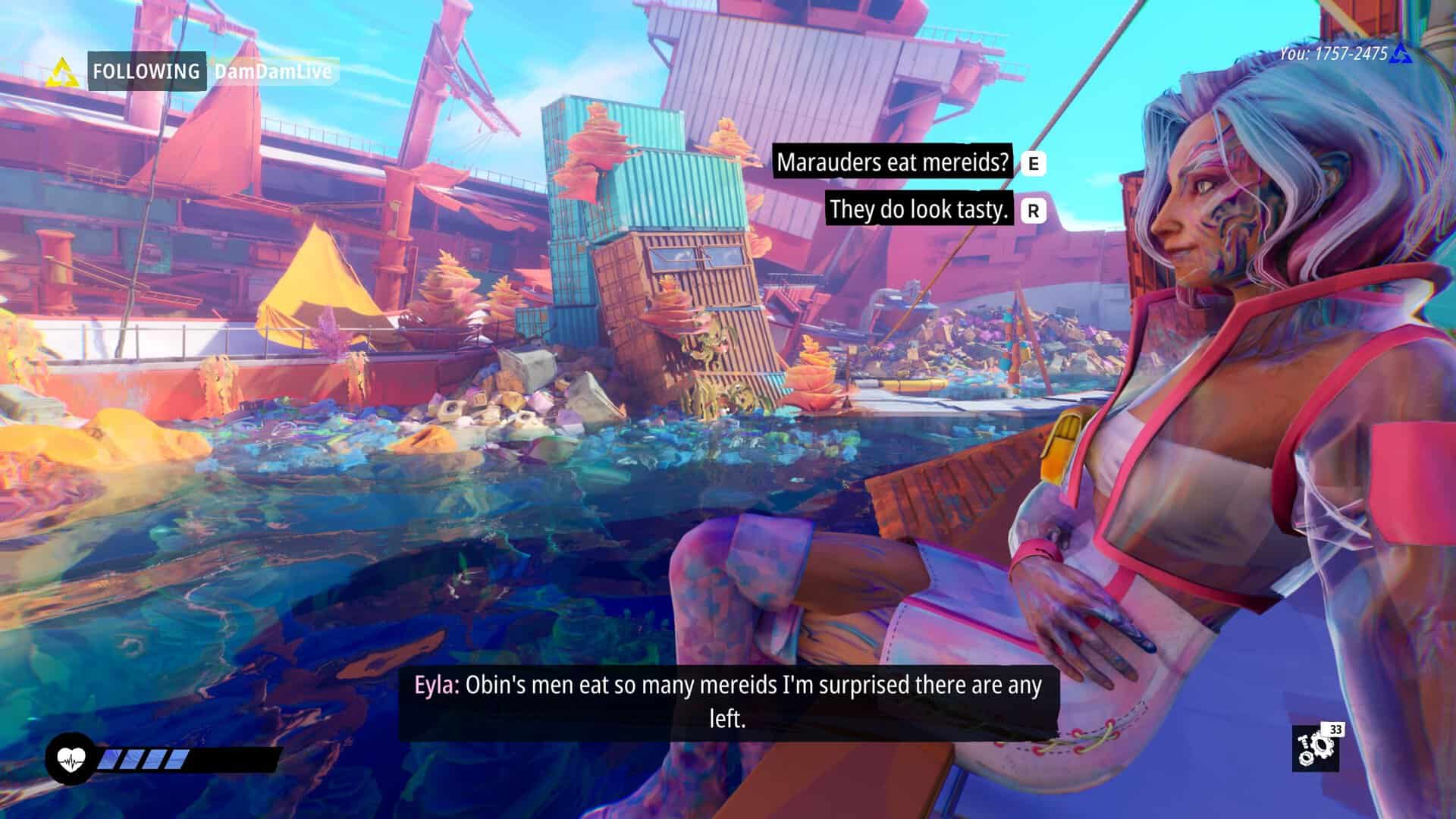
In a post-apocalyptic world I can guarantee is unlike anything you’ve ever seen before, the world has been inundated with a great flood, leaving pockets of humanity alive on the surface on floating junk heaps made of plastic, cargo containers, and scrap metal. This technicolor world is perhaps brighter and more vivid than any I’ve seen in a game recently, with so many colors it may honestly hurt your eyes. More interestingly, a horrifying disease called plastemia has begun spreading through the last vestiges of humanity in an attempt to wipe us out for good. I’ve seen several people call this aesthetic “plasticpunk”, and it’s just about the only descriptor that fits the look.
Plastemia slowly turns the bodies of those infected into bright, colorful plastic. It’s an interesting deviation from Game of Thrones‘ dragonscale disease, that slowly turns a person to stone, which might actually be scarier. As the infected become worse, they gradually lose the ability to move and finally meet their death as rainbow-colored plastic mannequins scattered around the street like trash. I truly think it’s about as scary as a disease could possibly be. The only way to combat plastemia is ozen, a drug distributed exclusively by a predictably greedy businessman named Obin.
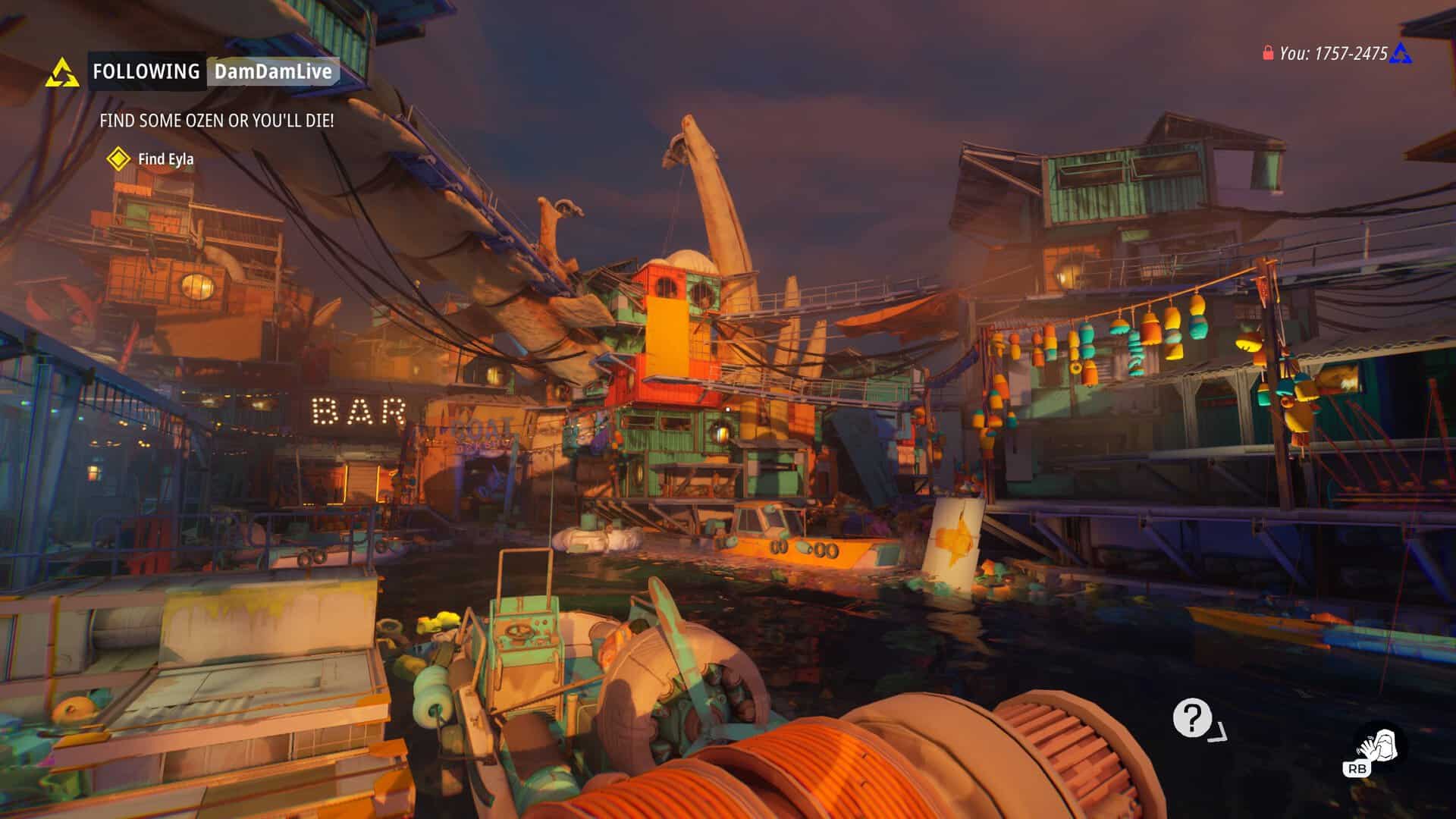
Obin and his traitorous right-hand-woman Nyx lead one of the three factions in the world of Tides of Tomorrow, the Marauders. The Marauders are basically as the name suggests; a militia made up of bullies that hold all the ozen in their control. It’s important to note that ozen only staves off plastemia for another few days, and does not cure it by any means. On the other side of the turf war is a cult called The Mystics, lead by the self-righteous Mother Voot, as well as a faction of freedom fighters called the Reclaimers. Roughly, the Marauders control medicine and supplies, the Mystics worship relics of the past world, and the Reclaimers are fighting to distribute resources equally. You are of a fourth mysterious faction, the sparsely numbered Tidewalkers, who have innate abilities to see what happened in the past to other Tidewalkers at your location.
While on the surface, it seems like the Reclaimers are the obvious “good guys” to side with, I found myself working with the Marauders more simply because the characters were more interesting. In my run I ended up working mostly with Nyx to usurp her boss, accidentally betraying the Reclaimers, having a close partnership with Obin’s daughter Kass, and avoiding the Mystics entirely for much of the story. You, the player, also need ozen to stay alive, and if you let the plastemia meter on the left hit zero you will freeze into plastic and get a game over. Much of the game is finding, stealing, and buying enough ozen to stay alive while also getting it to people who need it.
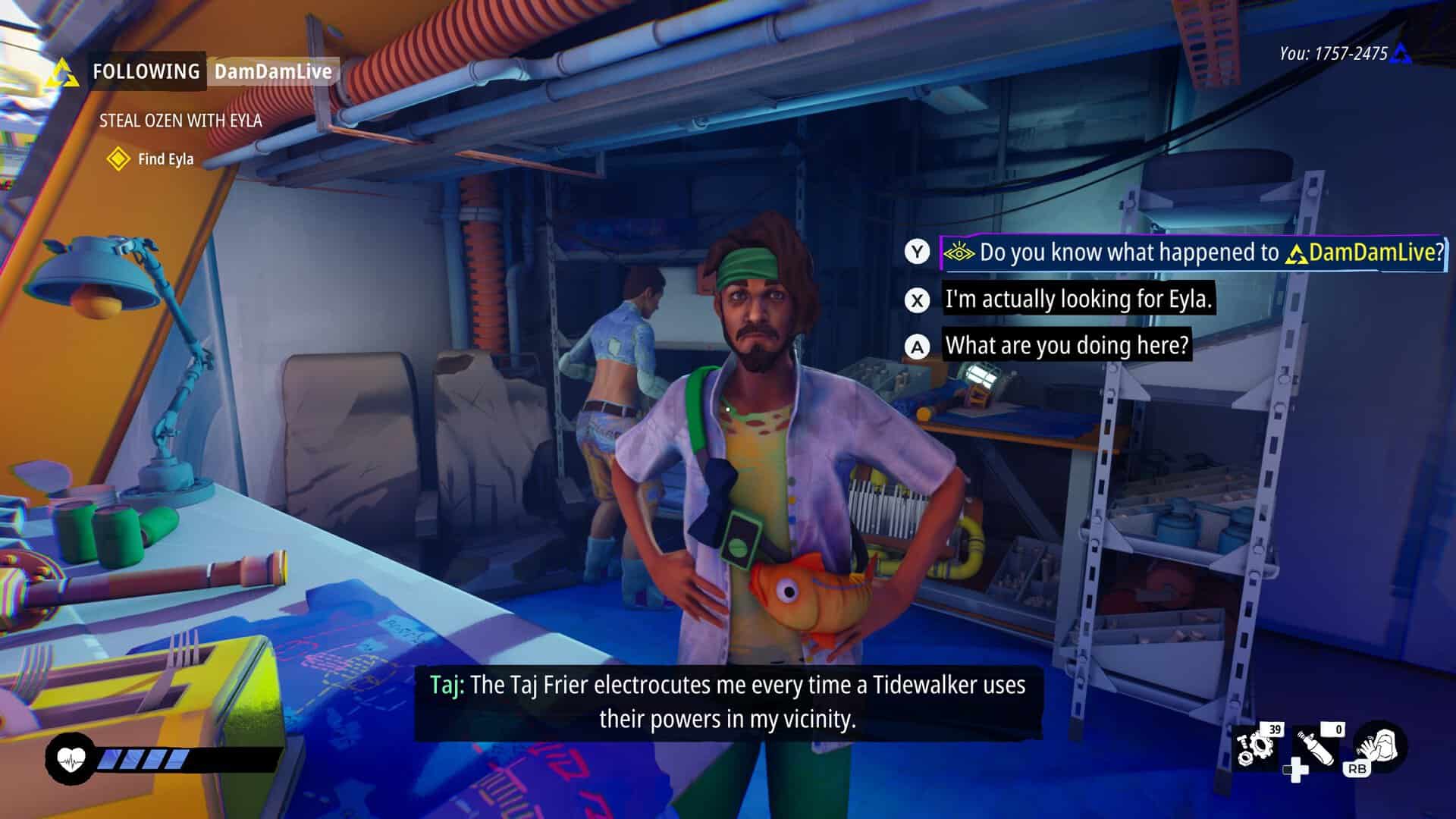
As I stated before, Tides of Tomorrow is very hard to explain in a single sentence. At the beginning of the story, you’ll choose to follow either a random player online or a friend by typing in their Tidewalker code. As I began this playthrough before launch, for most of my run I was stuck following DamDamLive, the account of one of the DigiXArt developers. Tides of Tomorrow immediately is more attractive a proposition if you can follow a friend, so I recommend pulling in a buddy if you decide to play. That player’s decisions and actions in each zone directly change not just the population’s attitude toward Tidewalkers, but how tight security is, which doors are open or locked, how much merchants charge, and even which characters are enemies or allies upon meeting them.
This is what I mean by asynchronous multiplayer storytelling – since the person who I’m following went to a town and won the big boat race, when I arrived there I was greeted like a champion and hyped up as a kind of celebrity. There are definitely some weird prejudice undertones in the fact that everyone assumes that if one Tidewalker is cool they are all cool, and vice versa, but it was an easy way to make use of this mechanic in a noticeable way. Regardless, it means that each time I get to a new zone it plays out totally differently front to back than any other player, and that in itself is very cool.
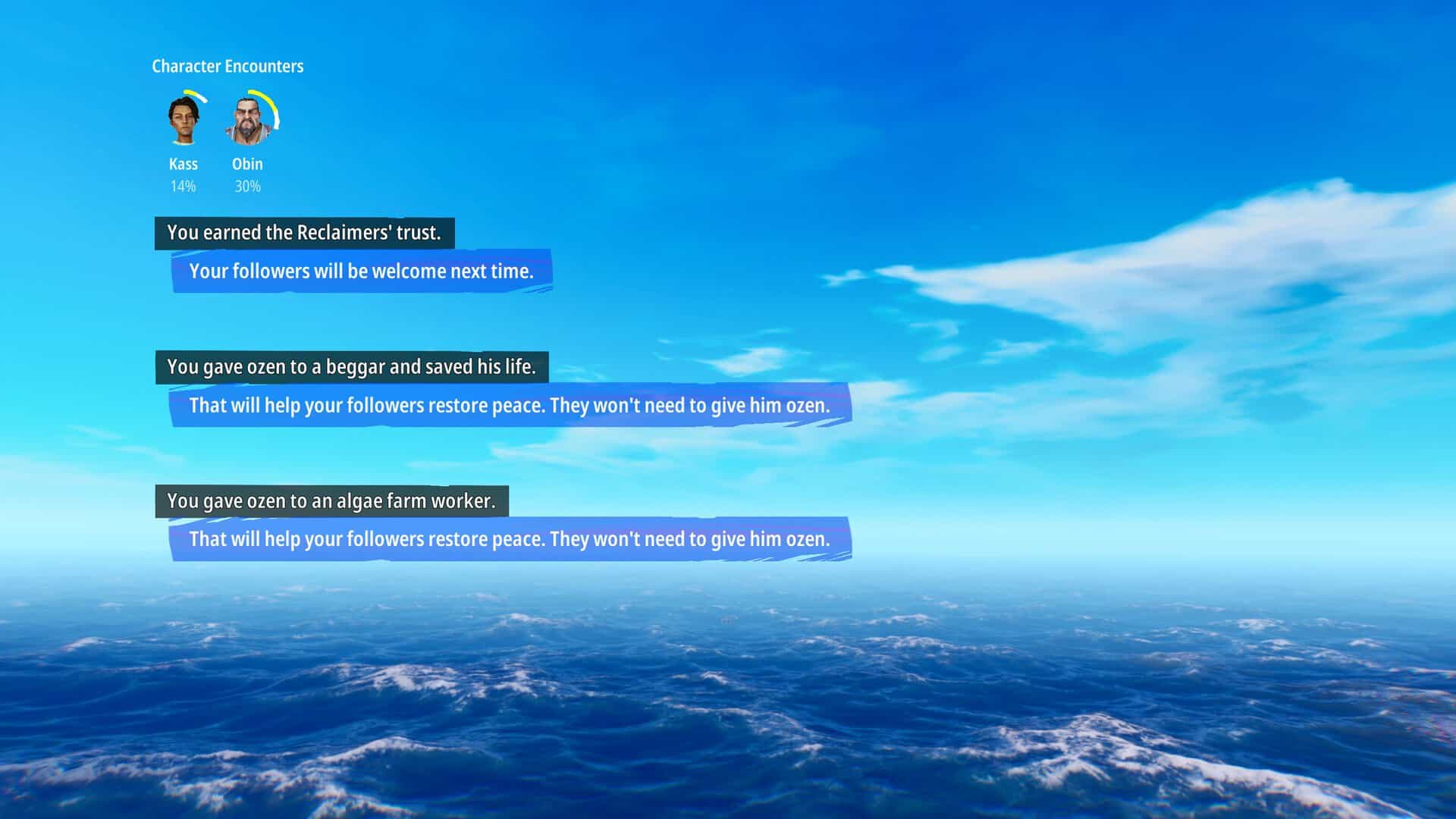
You might be wondering how a story could possibly have any structure at all if it’s this malleable, and the answer is pretty clever. There are several acts of story, and during each act you’ll sit out in the ocean on your boat and survey through a telescope anywhere from two to four zones you can visit to progress the story as well as one procedurally generated Ocean Event you can use to get more scrap (currency) and ozen. Surveying each zone will show you not only which Tidewalker (other human player) was last there, but additionally what values their decisions show. For example, someone might be marked as “Pro-Environment” and “Survivalist”, so you know what they’re about before jumping in after them. In each zone, you can hold down a button to see short recordings of what the previous Tidewalker did to get clues or hints. After finishing all the zones in the act (in any order you choose), the story progresses and you move to the next act.
One thing I love about Tides of Tomorrow is that it understands that it is a narrative game, not a resource management game, so it never over-complicates itself with items and inventory. You have scrap and tanks of ozen – scrap can be traded as currency for favors, secrets, bribes, or ozen, while ozen can either be consumed by The Tidewalker or given or sold to someone else. The simplicity of this system is a carry over from Road 96 that I greatly welcome. If the gameplay were essentially restricted to walking around, dialogue trees, and decision points, I think I’d have genuinely loved Tides of Tomorrow.

As it is, Tides of Tomorrow is hampered greatly by the parts of it that require actual gameplay. The stealth sections are pretty poorly constructed and happen somewhat frequently, but are always pretty short. Much of the gameplay ends up being driving your motorboat around that functions as a home base and shooting other boats; I would generously call these segments clunky. The shooting is bad, the boat control is bad, the boat racing tracks are poorly constructed, and it even feels sluggish just to walk around. There’s no shortage of small platforming segments, but thankfully the ledge hitboxes are large enough that the clunkiness never means falling down randomly. The levels are also not designed in such a way to encourage pathing you towards story points; it all kind of feels random. These cities are literally built out of plastic waste from the ocean, so maybe that’s intentional, but it also makes it easy to get lost.
Despite liking the characters a lot, I had a hard time getting into the story. The narrative is, by necessity, fragmented and vaguely structured so that it can bend around whatever decisions both you and the player you are following make throughout the game. It’s hard for it to communicate anything in the way of theming, and with seven different endings ranging from good to bad it seems like it’d be very easy to end up with a dissatisfying narrative that’s only loosely threaded together across acts; that’s how my playthrough felt. I also imagine you could end up with a great story structure, though, which makes Tides of Tomorrow the ultimate “your mileage may vary” game. I also noted a few logic chains breaking where characters I had met acted as if we were first meeting, and characters showing up twice in the same zone forgetting we had already spoken seconds ago. The pronouns in the voice line also were mixed up constantly, with alternating NPCs calling me “him” and “her” in the same conversation.

Despite my concerns with the thin narrative threads and clunky gameplay, Tides of Tomorrow has a lot going for it in its presentation. In addition to the incredible visuals and plasticpunk aesthetic, it undoubtedly features one of the best soundtracks of the year. Road 96 composer Alexis Laugier returns accompanied by Lou Corroyer, the Belgian band Doodseskader, and the Congolese band KOKOKO! to create an unbelievably varied soundtrack that flips between Caribbean pop, Afro-pop, industrial metal, grunge, synthwave, and nu metal at the flip of a coin. Doodseskader brings both vocal and instrumental songs I can only describe as Nirvana meets Nine Inch Nails meets Korn; KOKOKO! is famous for making instruments out of scrap metal and brings Afro-Caribbean hip hop and EDM beats I cannot resist dancing to. It’s a miracle that the fusion works, but it really, really does. Even if you don’t play Tides of Tomorrow, I implore you to listen to the soundtrack.
Tides of Tomorrow ran very well on high graphic settings at a locked 60 FPS on my PC. I played in 1440p on my rig with the following specs: 12th Gen i9-12900K, GeForce RTX 4070. I experienced no frame rate drops, bugs, or glitches outside of the logic chains breaking here and there. PC settings seemed up to snuff, with full key rebindings and full controller support. Considering that Road 96 ran very poorly on launch, this is a great step up for the studio.

Tides of Tomorrow is not very fun to physically play most of the time, but looking back over the nine hour campaign I feel that fact is outweighed strongly by everything else it has going for it. Gamers looking for “vibes” will probably fall in love with it, as the music, world, and visuals are strong enough to make it worth checking out alone. I wish the story held together a little stronger rather than feeling like each act was its own vignette, but I can’t imagine how a game like this would exist and do that at the same time. As it is, I admire the ambition of DigiXArt in creating an entirely new kind of game, and the fact that the part of it that no one has done before really works is enough to make me recommend it. I wish it had lived up to Road 96, but nevertheless I’m excited to see what new kind of narrative game this team makes next.
Nirav reviewed Tides of Tomorrow on PC with a provided review code. This review is based on the version of the game available at the time of writing and our score will not be changed.
- Score
- 7/10 Solid - Nirav Recommends
- Summary
-
Tides of Tomorrow's boasted asynchronous multiplayer storytelling really does work, and despite clunky gameplay the soundtrack and visuals carry it to the finish line.
- More
- GameObserver's Review Policy